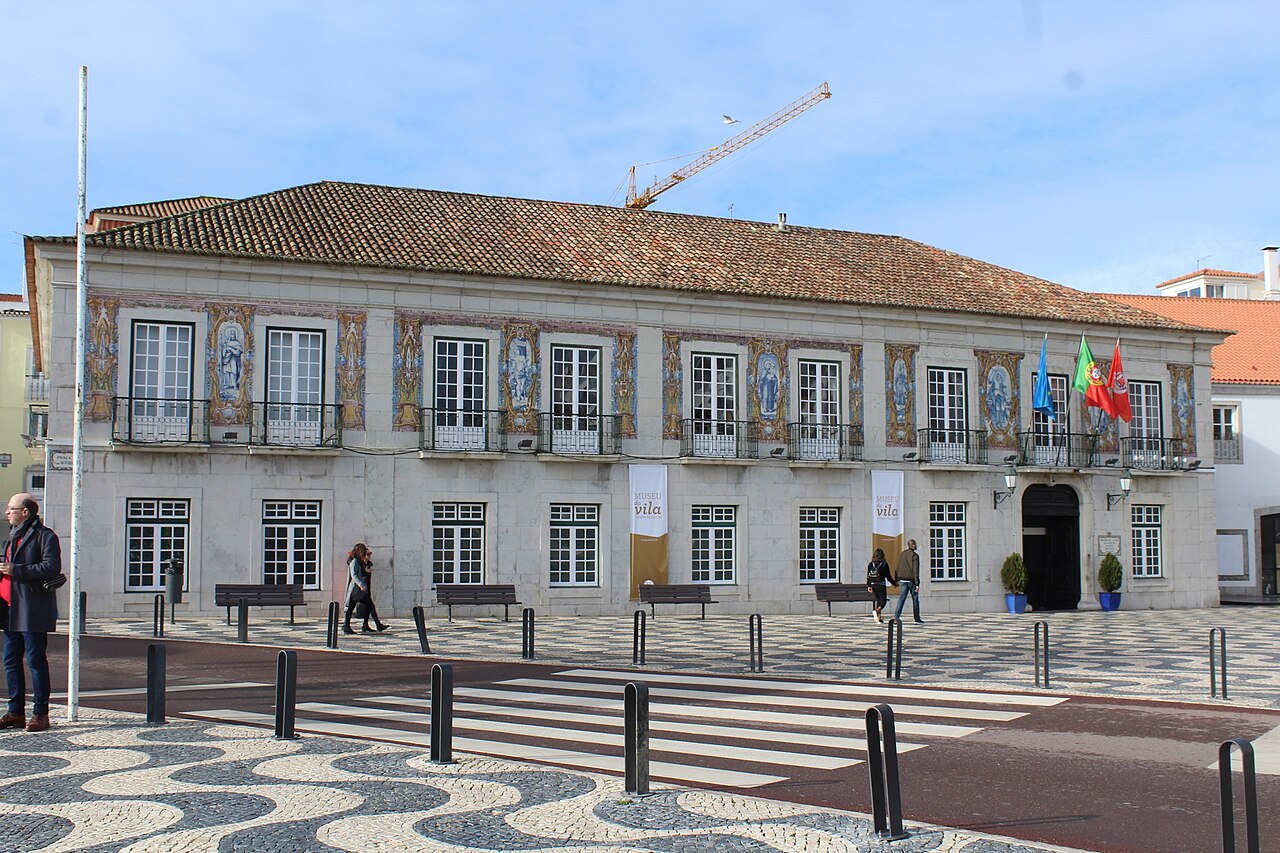
Praça 5 de Outubro 9, 2754-501 Cascais · View from the square. Municipal offices and the museum have separate access arrangements; respect working areas.
Commissioned by Inês Antónia da Cunha in the late eighteenth century, the palace later belonged to the Counts of Guarda. Religious tile panels distinguish its secular facade. Sold in 1917, it had several uses before becoming the town hall in 1940; the ground floor now includes the town museum.
A contemporary cultural reading by Xiaoxiong inspired by the I Ching, not architectural intent, historical fact or divination. History and location use public sources; on-site audits are not yet complete.
Compare front and side tile panels, then identify the museum and office entrances.
I Ching · Independent reading
Yi · Increase
The position of this readingPublic benefit depends on who can actually share it.
A contemporary editorial reading through the I Ching, open to discussion and challenge; it does not represent the building’s original intent or the venue’s position.
Explore the I Ching reading
The classical text and the building
HEXAGRAM 42
42Yi · IncreaseYi · Increase
Zhou Yi · Image · Excerpt and editorial translation
风雷,益。 Wind and thunder: Yi.
Yi moves attention from the palace’s prestige to public use. Clear entrances, understandable information and participation make that change concrete.
01
From ownership to use
Public ownership is a beginning; access still needs practical answers.
02
Visible and accessible
A recognisable facade needs equally legible services.
03
Whose town history
Town history should include everyday lives as well as prominent names.
Another perspective · I Ching
A contemporary cultural reading by Xiaoxiong inspired by the I Ching, not architectural intent, historical fact or divination. History and location use public sources; on-site audits are not yet complete.
 XIAOXIONGMARKET