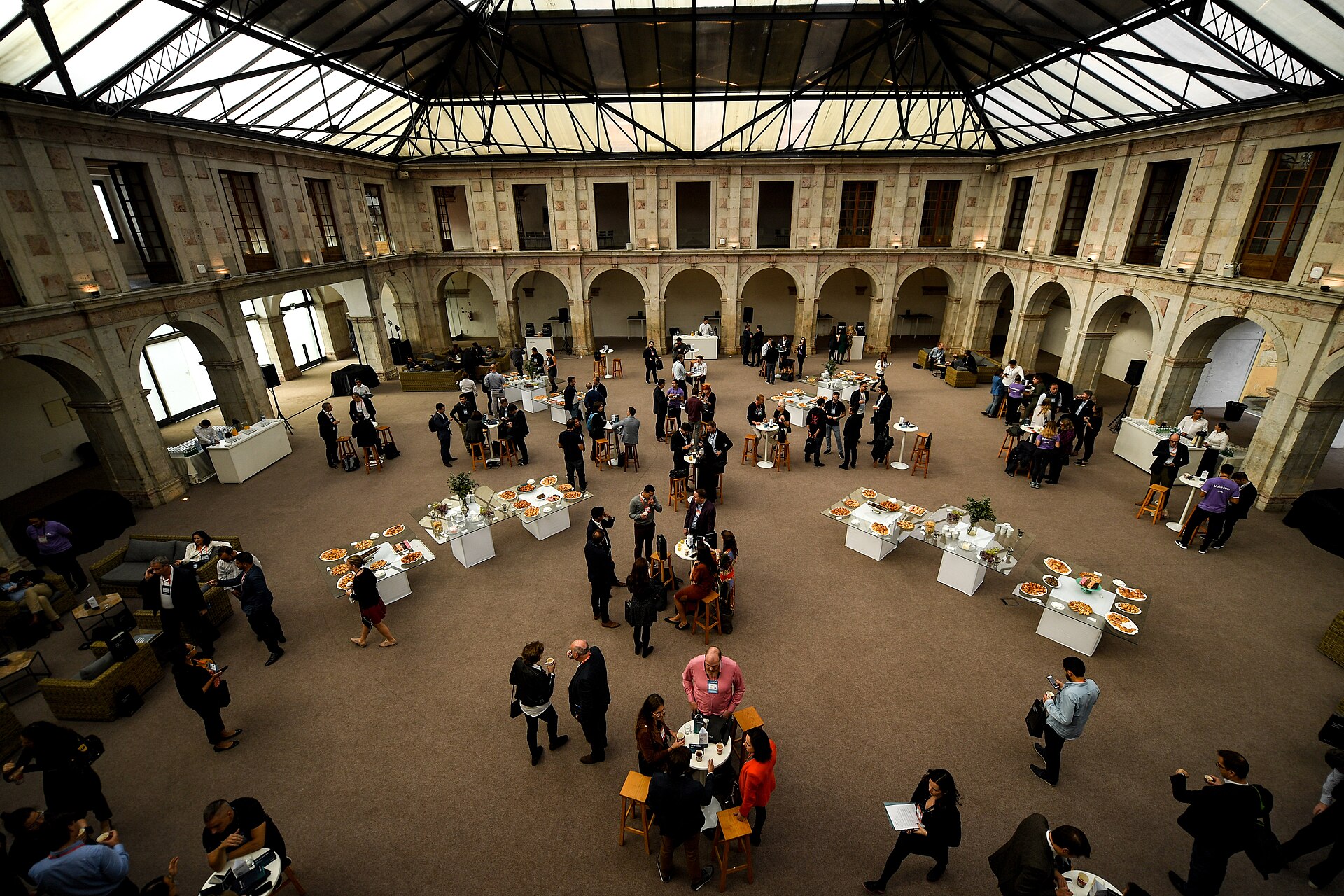
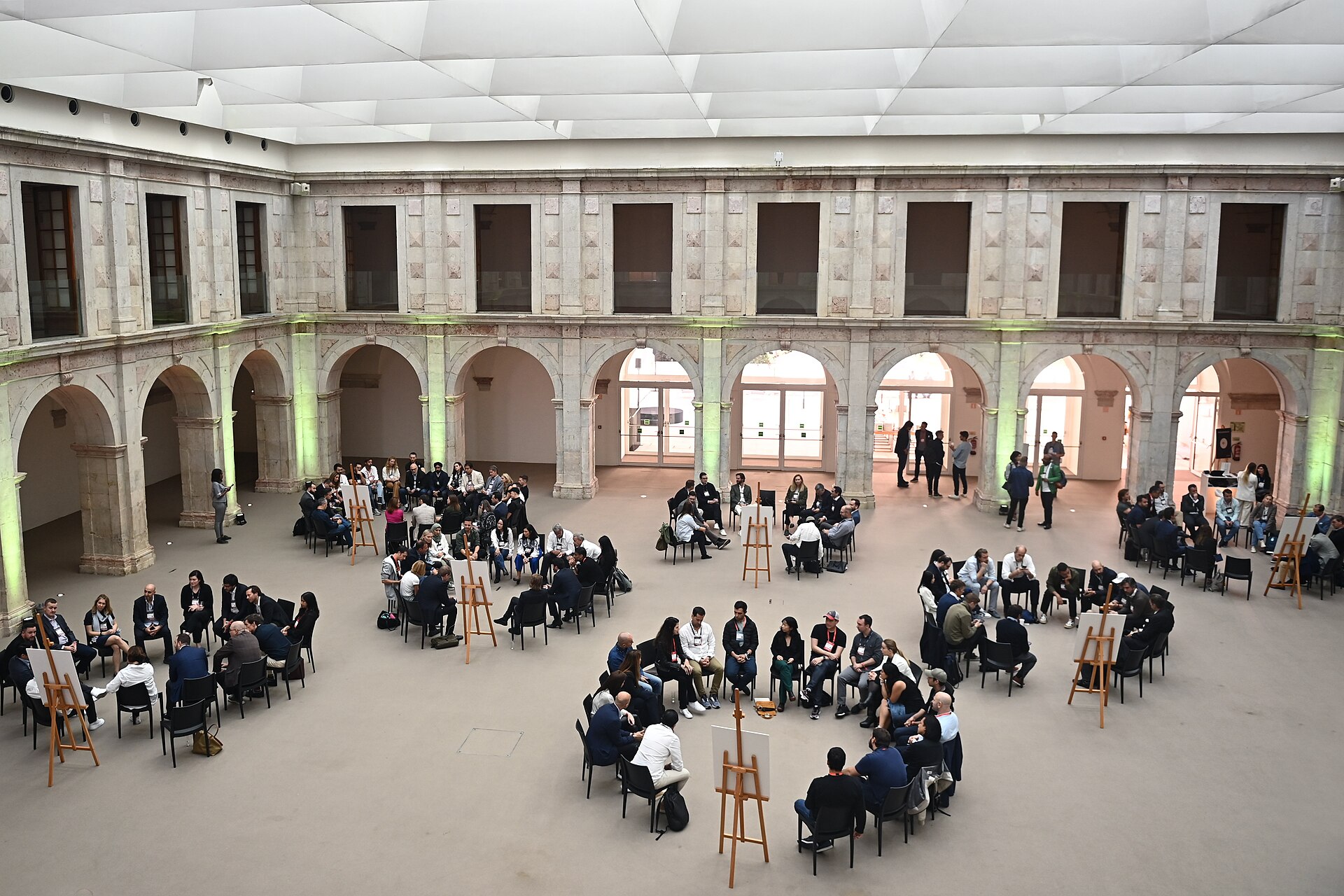
It has been convent, hospital and factory, and is still learning to be public space.
Convento do Beato grew from a fifteenth-century religious foundation, expanded in the sixteenth century and showed resilience in 1755. After the orders were dissolved, it became a military hospital, industrial site and event venue.
View the full timeline
15th century
The Crown supports a religious house in Xabregas; an early hermitage becomes the basis of the later convent.
16th–17th centuries
Beato António advances the new building; cloister, church and family pantheon take shape.
1755
The complex suffers relatively little earthquake damage and shelters religious communities from ruined neighbours.
After 1834
Following dissolution, part serves as a military hospital and later a factory associated with early steam-powered production.
1984–today
Listed as a Property of Public Interest, it is restored for cultural, conference and community gatherings.
Look at the arcades and stone columns. Discover new uses for an old convent.
Notice the rhythm of the arches and the relationship between stone columns and adapted spaces. The venue also hosts events, so check access before entering. From outside, you can still observe how the old building connects with today's neighbourhood.
Ge does not drive out the past; it makes room for new life when an old form no longer suffices.
I Ching · Independent reading
Convento do Beato. Changing purpose does not mean losing oneself.
The position of this readingBeato’s reuse gives Ge a question: whose problem does change solve, and who loses their place? Keeping walls is a beginning; a new use owes responsibility to memory and to its users.
A contemporary editorial reading through the I Ching, open to discussion and challenge; it does not represent the building’s original intent or the venue’s position.
Explore the I Ching reading
The classical text and the building
HEXAGRAM 49
Upper Dui · LakeLower Li · Fire
Hexagram 49GeLake over Fire · Ge
Zhou Yi · Image · Excerpt and editorial translation
“Fire within the lake: Ge.” Recognising time makes change intelligible.
Why do we read Convento do Beato through Ge?
Ge asks about timing and legitimacy: when to change, what to transform and what to retain. Beato lives between major shifts of use and material continuity.
01 / TIME
Purpose follows its period
Religious, medical, industrial and event uses arrive in sequence, each answering new social conditions.
Time · Recognise the moment02 / BODY
Stone retains identity
Cloister, stairs and materials allow each use to remain a chapter in the same architectural life.
Form · Change without severing03 / USE
New use must keep the building alive
Preservation is more than avoiding demolition; change gains legitimacy when space is used, explained and shared.
Today · Renew for public value
FACT AND INTERPRETATION KEPT SEPARATE
The convent history, earthquake, hospital, industrial use and listing are verifiable facts. Ge is a contemporary editorial reading about changing purpose and material continuity.
 XIAOXIONGMARKET