Devotion and pilgrimage grow around the hermitage.
 XIAOXIONGMARKETLIS-032 / LISBOA
English
Carnide and Largo da Luz
Church and Convent of Our Lady of Light
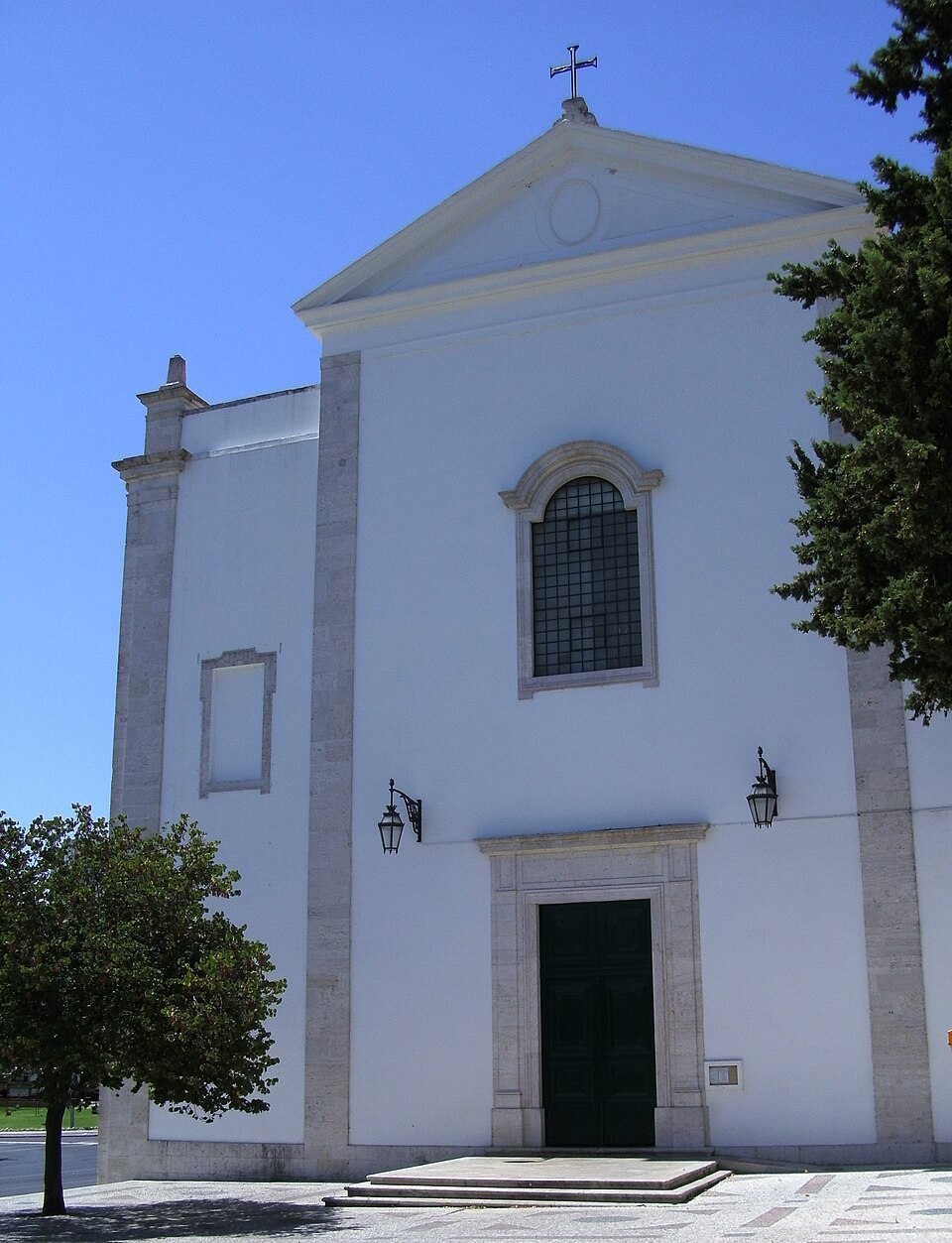
Walk from the square towards the church. See how its white façade connects with the neighbourhood.
Before entering, confirm opening hours and visiting conditions with the venue.
01 / BUILDING HISTORYFACTS BEFORE INTERPRETATION
Pilgrimage first gathered people
and the new church gave the place a centre.
In the later fifteenth century pilgrimage grew around the first hermitage. Infanta Maria, daughter of Manuel I, promoted the new church, begun in 1575 and consecrated in 1596 as a major Mannerist work; after damage in 1755, parts including the front were rebuilt.
View the full timeline
The church sponsored by Infanta Maria is built and consecrated.
Earthquake damage brings repair and a rebuilt front.
Historical sources and verification
Historical sourcesOfficial heritage register ↗Official institution · history ↗Wikimedia Commons · licences ↗Supplemental audit source ↗
CITY ANCHOR AUDIT · v1.0
FORMAL ANCHORLIS-032 · FORMAL AUDIT PASSED
Official source
Public heritage, government, archive or responsible-institution records have been checked.
Independent support
At least one separate institutional, professional or academic source corroborates the dossier.
Time and place
Key dates, coordinates and administrative location can be checked against public records.
Facts kept separate
Verified building history is clearly separated from Xiaoxiong's contemporary Eastern reading.
Accountable review
The reviewing team, audit date and next review date are publicly recorded.
02 / WHAT TO LOOK FOR
Walk from the square towards the church.
See how its white façade connects with the neighbourhood.
From the square, look at the white façade and the relationship between the church entrance and neighbourhood walking routes. Compare changes before and after the earthquake. Inside, respect worship and posted access guidance.
A common resource does not endure by itself; well, rope and rules all need people.
Another perspective on this building
Our Lady of Light. Roads change and the city grows; the common well still needs care.
Jing does not chase the crowd; people move and must still return to maintain the source.
03 / EASTERN EDITORIAL READING · AN EASTERN WAY OF READING THE CITY
HEXAGRAM 48Hexagram 48JingWater over Wind · Jing
Commentary on the Image
“Water over wood: Jing.”
The attentive person works with people and encourages mutual help.
Why do we read this pilgrimage church
through Jing?
Pilgrimage, ritual, square and neighbourhood form a community around a source; value depends on maintenance and fair sharing.
Explore the interpretationXiaoxiong editorial interpretation
Pilgrimage creates common direction
Repeated arrivals turn a hermitage into a regional centre.
Relation · The well nourishesEarthquake demands care
Damage in 1755 shows the vulnerability of a common centre.
Action · Repair the wellThe square brings the source into daily life
Church, market, streets and neighbours organise life together.
Community · Mutual helpKEEP WALKING WITH THIS HEXAGRAMWho maintains a community's “well”,
Who maintains a community's “well”,
and how does it remain available to later arrivals?
Pause in Largo da Luz and see church, streets, residents and services orient themselves around one public opening.
FACT AND INTERPRETATION KEPT SEPARATE
The fifteenth-century pilgrimage, 1575–1596 building, Infanta's patronage and post-1755 rebuilding are official facts. Jing is an editorial reading about common resources and care.
Loading the restaurant directory within 3 km…
Church and Convent of Our Lady of Light · 3 KMAround the landmark,
Around the landmark,
— places to try.
Recognize the entrance. Check the route on the map and the menu on the website.