Begin again from within
Fu begins with one yang line emerging below. The Romanesque core did not stop time, but remained a starting point with which later ages kept speaking.
LIS-002 / Historic centre
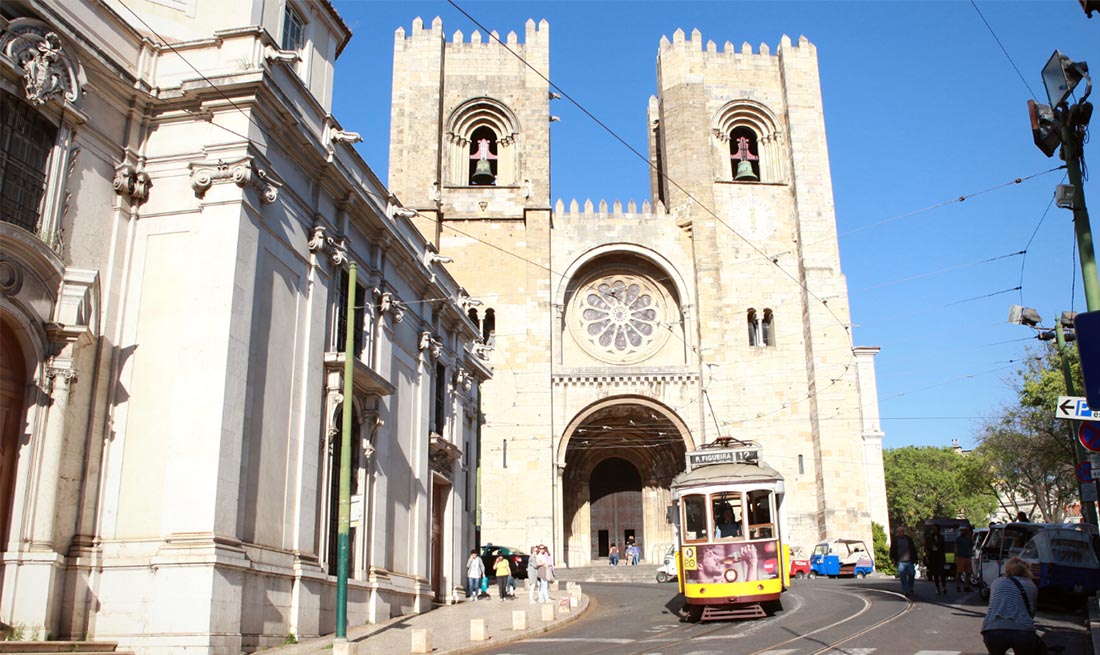
Sé de Lisboa
01 / Building stories
Lisbon Cathedral began with a Romanesque core, then received Gothic additions, Baroque transformations and twentieth-century restoration. What we see is not a frozen age, but the result of a city repeatedly deciding what to keep.
1147 — Construction began after Lisbon was conquered. Its Romanesque structure also became an important marker of the city's new order.
13th–14th centuries — The Gothic cloister, ambulatory and royal burial spaces allowed a new age to grow from the original core.
17th–18th centuries — The sacristy, Baroque high altar and new decoration transformed the interior again. This was never a relic that stopped growing.
1910 — The cathedral was listed as a Portuguese National Monument, moving protection from city memory into national policy.
20th century–1940 — Major works removed later additions and shaped today's Neo-Romanesque appearance. Even “returning to the past” was a modern choice.
Look up at the stone arches, columns and light. Ask what comes from the twelfth century, what was added later and what belongs to a modern idea of the Middle Ages. A building is most honest not when it looks old, but when it reveals every choice.
Documentary source ↓02 / I Ching reflections
Fu does not mean copying the past or erasing everything that followed. It means recognizing direction again after interruption, overlay and change—and allowing life to begin again from within.
Above · Kun · Earth
Below · Zhen · Thunder
Read the six lines from bottom to top ↑
Zhou Yi · Commentary on the Image · Chinese excerpt
雷在地中,复。Thunder is within the earth: Fu. — Editorial translation of the excerpt
Original text and context ↗A beginning often returns quietly. Fu does not erase change or demand an identical past: it asks what can continue and what conditions would help it grow.
This excerpt gives the natural image that opens the Commentary on the Image. The full passage relates it to personal conduct or governance in its historical context. Follow the source to read it in full. Applying it to buildings today is Xiaoxiong’s editorial proposal, not a summary of every meaning of the ancient text.
Fu begins with one yang line emerging below. The Romanesque core did not stop time, but remained a starting point with which later ages kept speaking.
Gothic, Baroque and modern restoration entered layer by layer. Returning does not erase change; it asks why each change happened and what it left behind.
When the building opens again to streets, residents and travellers, preservation becomes more than keeping stone. Memory returns to everyday life.
Take a question to the bench
If going back does not mean restoring everything as it was, what do you truly want to bring into today?
Go to the bench and note what I saw →A contemporary cultural interpretation by Xiaoxiong. The diagram and excerpt have a source; the building connection is editorial, not architectural intent, historical I Ching influence or the venue’s position.
03 / Nearby life
Find a table nearby · filters and directions →
Dining map records within three kilometres in a straight line of the reference point. Walls, railways and slopes may lengthen the journey. Check the entrance and whether the business is open.
The map may omit businesses. Records do not confirm trading status, menus or bookings. Records with an address are shown by default; you can include the others.
04 / The travellers’ Bench
If going back does not mean restoring everything as it was, what do you truly want to bring into today?
Reviewing desk: Xiaoxiong Market · City Editorial Desk · Reviewed: 2026-09-19 · Next review: 2027-09-19
Sources consulted: 2026-09-19