The building faces the channel
The bastion shares the waterline and its tides.
LIS-026 / West
Torre de Belém
01 / Building stories
João II conceived a three-point defence of the Tagus; Manuel I had the tower built between 1514 and 1520. Tower, bastion and Manueline symbols joined military engineering to state representation.
Under João II — A three-point estuary defence is conceived.
1514–1520 — The tower and artillery bastion are built.
Later — Military use recedes and the building becomes public heritage.
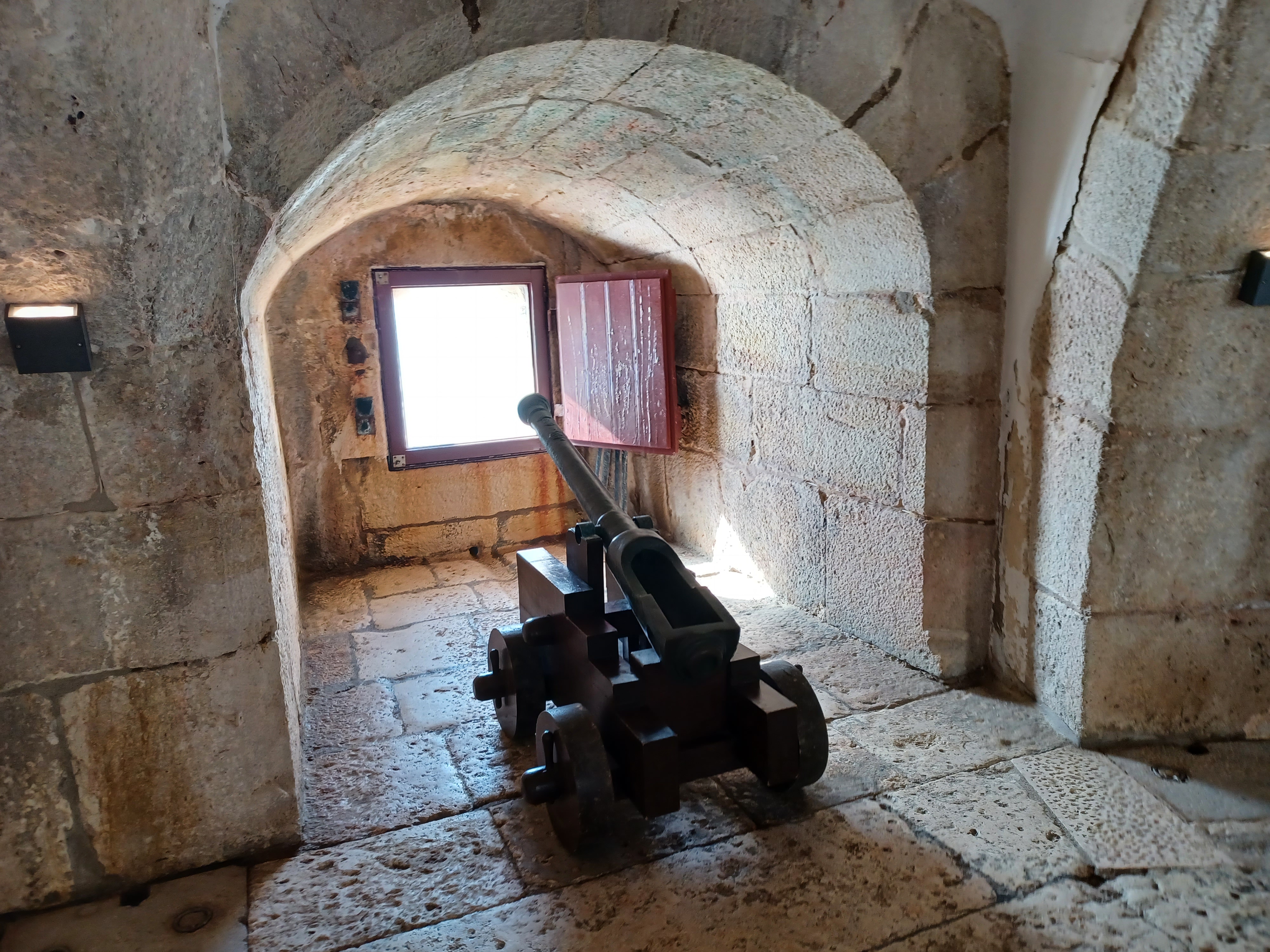
From the riverbank, observe the relationship between the tower, bastion and river, including the direction of the gun openings. If the interior is open, compare its defensive spaces with the exterior decoration. Map proximity does not guarantee access.
Documentary source ↓02 / I Ching reflections
Estuary, gun positions and narrow circulation are organised around risk; Kan treats safety as continuing practice.
Above · Kan · Water
Below · Kan · Water
Read the six lines from bottom to top ↑
Zhou Yi · Commentary on the Image · Chinese excerpt
水洊至,习坎。Water arrives again and again: Kan. — Editorial translation of the excerpt
Original text and context ↗Recurring water suggests risk and learning. Kan invites attention to real conditions, existing protections and what remains unknown before choosing a feasible next step.
This excerpt gives the natural image that opens the Commentary on the Image. The full passage relates it to personal conduct or governance in its historical context. Follow the source to read it in full. Applying it to buildings today is Xiaoxiong’s editorial proposal, not a summary of every meaning of the ancient text.
The bastion shares the waterline and its tides.
Gun ports, stairs and posts require co-ordination.
The defence guards an entrance and depends on understanding movement.
Take a question to the bench
When risk keeps changing, do we build walls or repeatable response?
Go to the bench and note what I saw →A contemporary cultural interpretation by Xiaoxiong. The diagram and excerpt have a source; the building connection is editorial, not architectural intent, historical I Ching influence or the venue’s position.
03 / Nearby life
Find a table nearby · filters and directions →
Dining map records within three kilometres in a straight line of the reference point. Walls, railways and slopes may lengthen the journey. Check the entrance and whether the business is open.
The map may omit businesses. Records do not confirm trading status, menus or bookings. Records with an address are shown by default; you can include the others.
04 / The travellers’ Bench
When risk keeps changing, do we build walls or repeatable response?
Reviewing team: Xiaoxiong Market · City Editorial Desk · Audit date: 2026-09-20 · Next review: 2027-09-20
Simon Burchell · CC BY-SA 4.0 · Original photograph page ↗
Cropped preview; see the original photograph. The photograph does not confirm the venue’s present condition.
Sources consulted: 2026-09-20