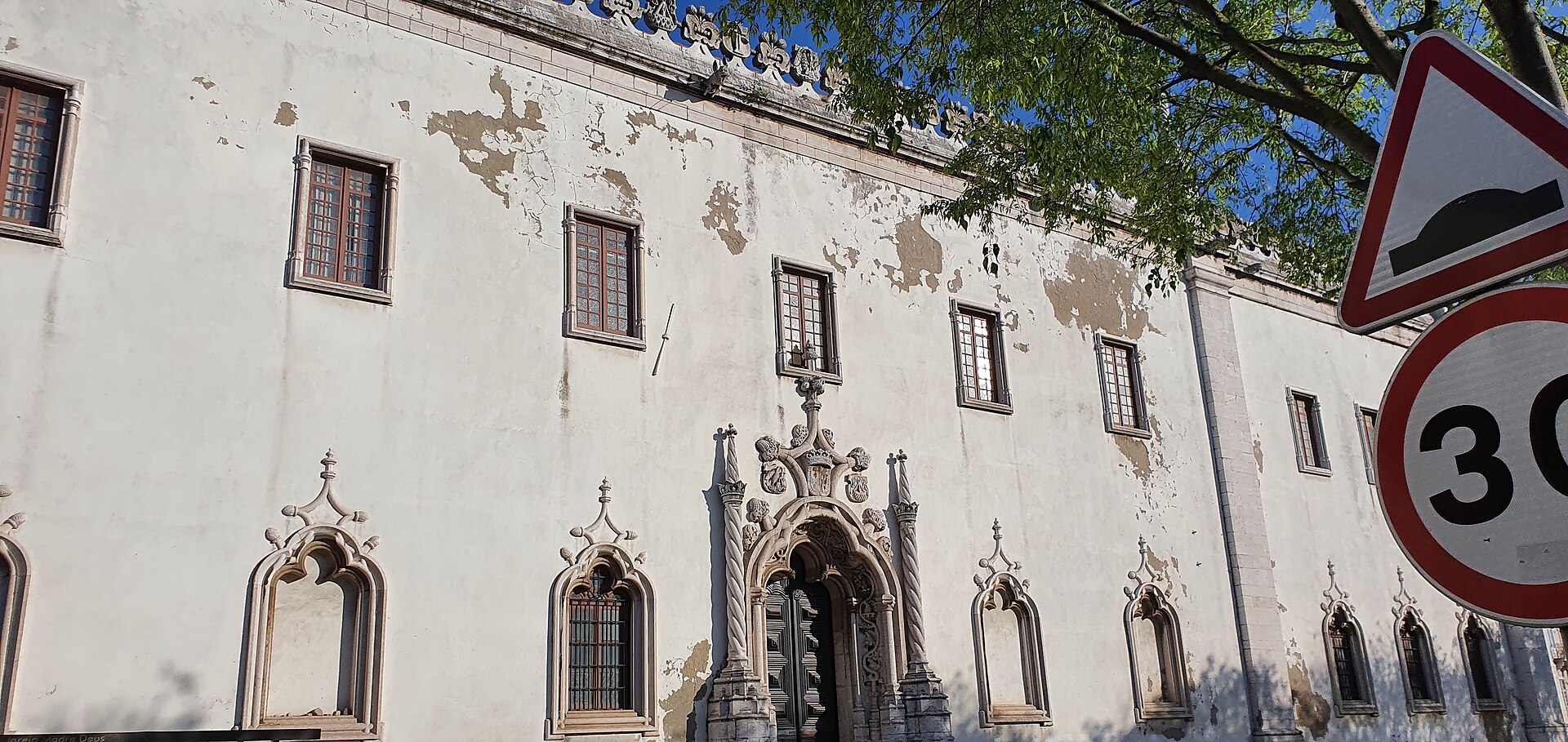
Queen Leonor founds Madre de Deus Convent; the first church is complete before 1522.
 XIAOXIONGMARKETLIS-006 / LISBOA
English
Xabregas and Penha de França
Madre de Deus Convent and National Tile Museum
Step back to see the whole tiled wall. Move closer to find the repeating patterns.
Before entering, confirm opening hours and visiting conditions with the venue.
01 / BUILDING HISTORYFACTS BEFORE INTERPRETATION
This is not a specimen of one style,
but five centuries of layers covering and revealing.
Founded by Queen Leonor in 1509, the convent passed through Manueline, Renaissance and Baroque campaigns, rebuilding after 1755 and new nineteenth-century uses. It became home to the Tile Museum in 1965.
View the full timeline
King João III commissions Diogo de Torralva to reform the complex, leaving the Renaissance cloister.
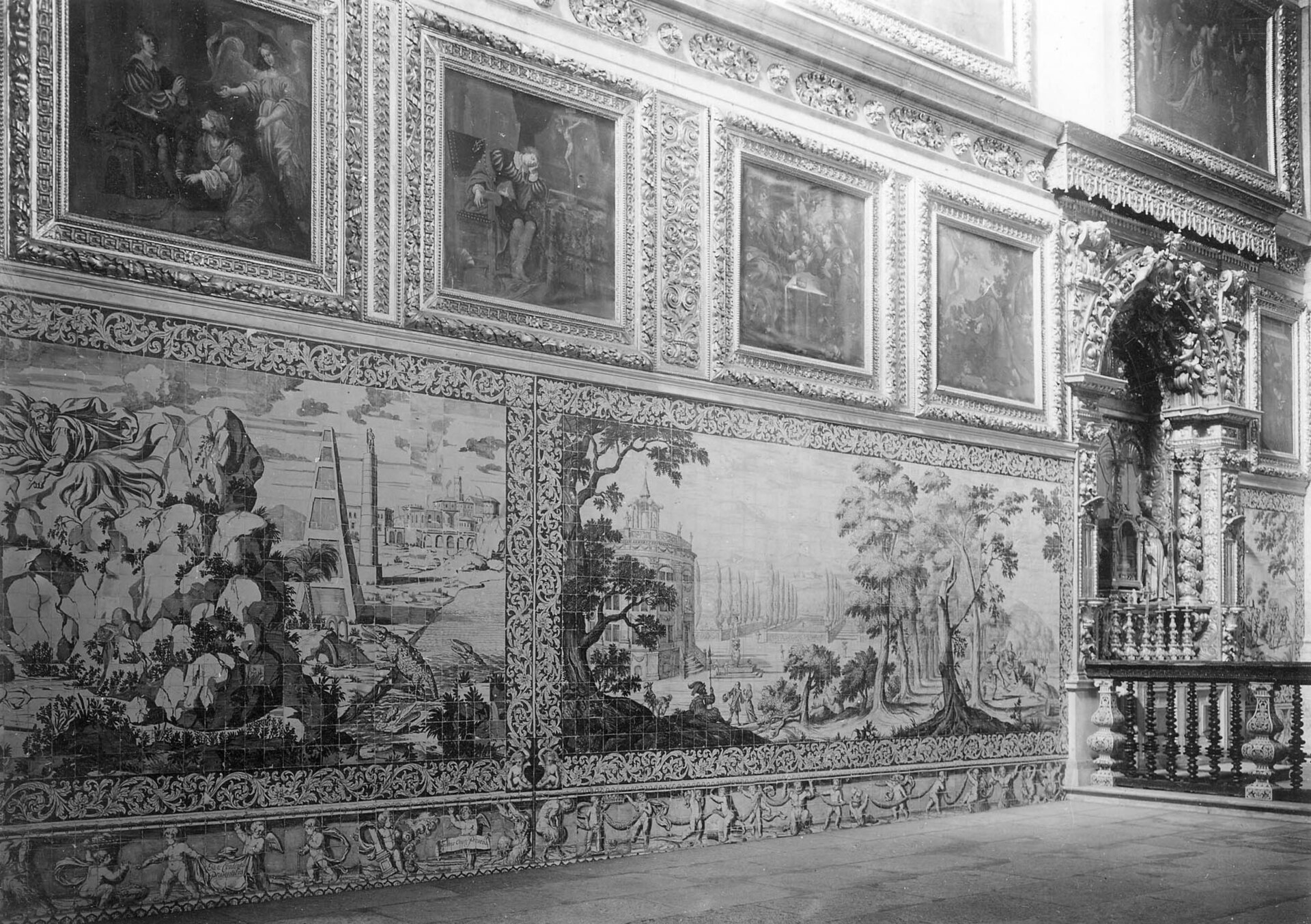
Painted ceilings, Dutch and Portuguese azulejos, gilded carving and Baroque decoration reshape the church.
The earthquake damages the structure; rapid rebuilding adds new layers to the old.
The complex houses the National Tile Museum and a collection spanning the late fifteenth century to the present.
Historical sources and verification
Historical sourcesPatrimónio Cultural · official register ↗Official institution · building history ↗Wikimedia Commons · image licences ↗
CITY ANCHOR AUDIT · v1.0
FORMAL ANCHORLIS-006 · FORMAL AUDIT PASSED
Official source
Public heritage, government, archive or responsible-institution records have been checked.
Independent support
At least one separate institutional, professional or academic source corroborates the dossier.
Time and place
Key dates, coordinates and administrative location can be checked against public records.
Facts kept separate
Verified building history is clearly separated from Xiaoxiong's contemporary Eastern reading.
Accountable review
The reviewing team, audit date and next review date are publicly recorded.
02 / WHAT TO LOOK FOR
Step back to see the whole tiled wall.
Move closer to find the repeating patterns.
Step back to see a whole tiled wall, then move closer to notice how individual patterns repeat and connect. Look at the relationship with doors, windows and paintings: the surrounding space changes how an image is seen.
Without somewhere to attach, neither light nor image can remain.
Another perspective on this building
Madre de Deus. When images attach to walls, a city begins to remember.
Azulejos are not merely a surface; they are one way time has found to remain.
03 / EASTERN EDITORIAL READING · AN EASTERN WAY OF READING THE CITY
HEXAGRAM 30Hexagram 30LiLi over Li · Fire
Commentary on the Image
“Brightness rises twice: Li;
the luminous person continues its light.”
Why do we read Madre de Deus
through Li?
Li is brightness and attachment. Tile attaches to wall, image to matter and culture to repeated acts of looking and care.
Explore the interpretationXiaoxiong editorial interpretation
Small pieces make a whole
Each tile is limited; together they cover architecture and tell stories across rooms.
Material · Light needs supportImages return history to sight
Sacred scenes, city views and ornament turn abstract dates into visible testimony.
Vision · Continue the lightRestoration acknowledges layers
Earthquake, rebuilding and museum use do not flatten breaks; they let several periods appear together.
Time · Light continues through successionKEEP WALKING WITH THIS HEXAGRAMToday we attach memory to screens;
Today we attach memory to screens;
will it live for five hundred years as these azulejos have?
Step into Xabregas and notice industrial walls, homes and new venues: the city is still choosing what it allows to attach.
FACT AND INTERPRETATION KEPT SEPARATE
The foundation, campaigns, earthquake rebuilding and museum history are verifiable facts. Li is a contemporary editorial reading about attachment, light and visual continuity.
Loading the restaurant directory within 3 km…
Madre de Deus Convent and National Tile Museum · 3 KMAround the landmark,
Around the landmark,
— places to try.
Recognize the entrance. Check the route on the map and the menu on the website.