A papal brief authorizes the parish of Santa Engrácia and work on the first church follows.
 XIAOXIONGMARKETLIS-005 / LISBOA
English
Santa Clara and São Vicente
National Pantheon
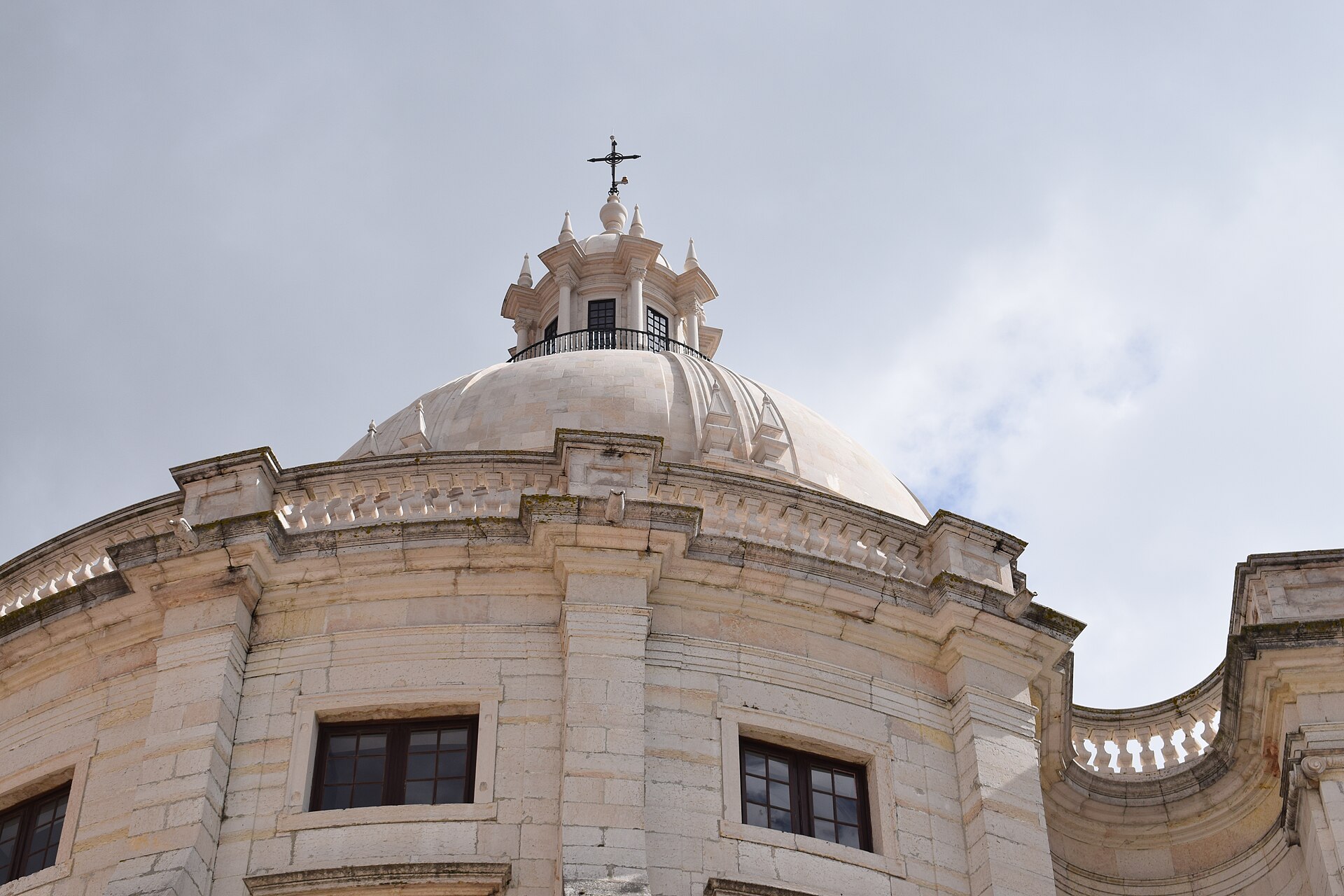
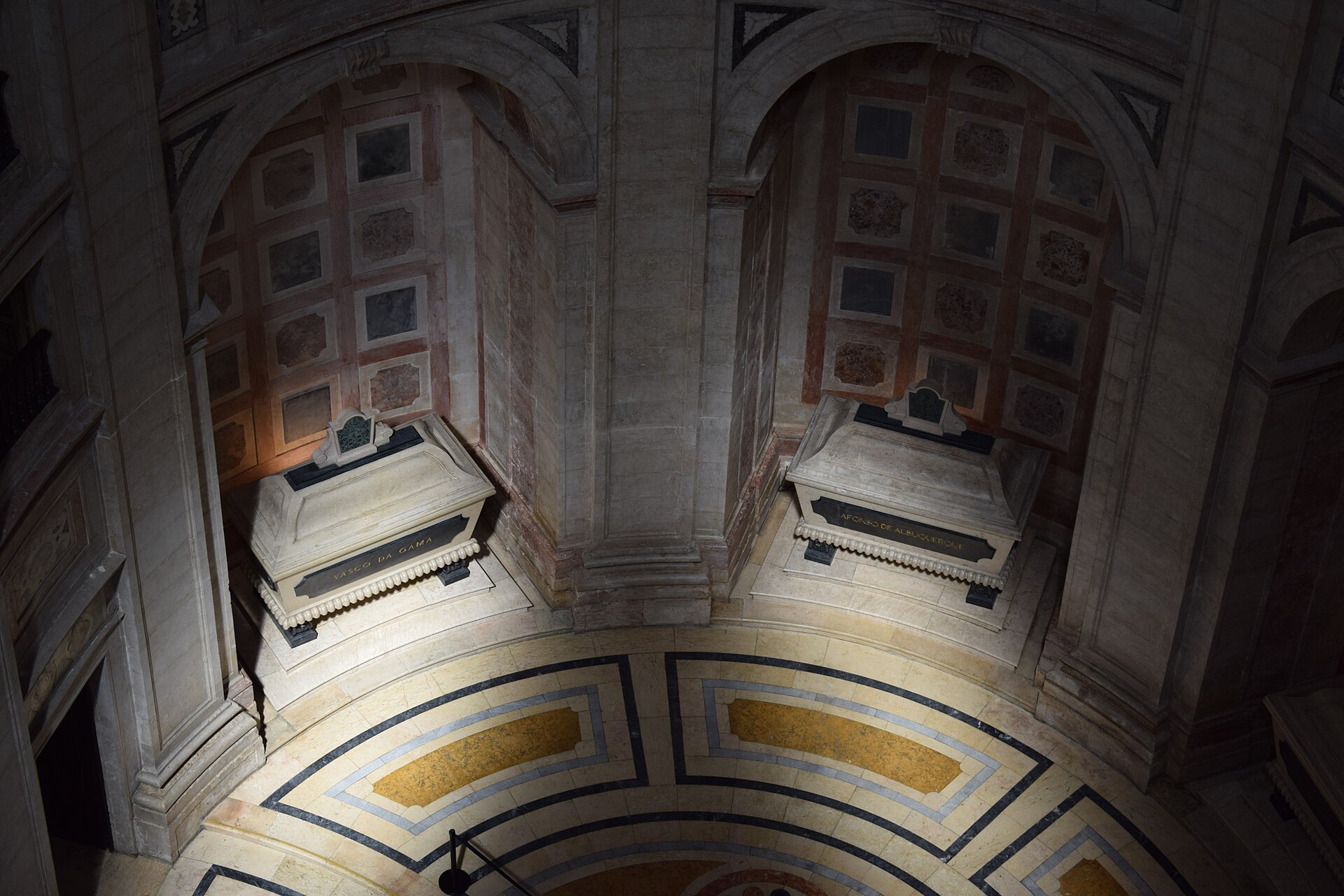
Look from the dome to the memorial spaces. Discover a building made over generations.
Before entering, confirm opening hours and visiting conditions with the venue.
01 / BUILDING HISTORYFACTS BEFORE INTERPRETATION
It took so long that it became an expression,
and learned that completion is never a single moment.
Santa Engrácia passed through early churches, the collapse of 1681, João Antunes's new design, long suspensions and twentieth-century completion, opening as the National Pantheon in 1966.
View the full timeline
The church collapses; João Antunes proposes a centralized plan and the new foundation stone is laid.
The architect's death slows progress and ‘the works of Santa Engrácia’ becomes shorthand for something endless.
Legislation assigns the unfinished church a new role as the National Pantheon.
The dome and building are completed; the Pantheon opens on 7 December.
Historical sources and verification
Historical sourcesPatrimónio Cultural · official register ↗Official institution · building history ↗Wikimedia Commons · image licences ↗
CITY ANCHOR AUDIT · v1.0
FORMAL ANCHORLIS-005 · FORMAL AUDIT PASSED
Official source
Public heritage, government, archive or responsible-institution records have been checked.
Independent support
At least one separate institutional, professional or academic source corroborates the dossier.
Time and place
Key dates, coordinates and administrative location can be checked against public records.
Facts kept separate
Verified building history is clearly separated from Xiaoxiong's contemporary Eastern reading.
Accountable review
The reviewing team, audit date and next review date are publicly recorded.
02 / WHAT TO LOOK FOR
Look from the dome to the memorial spaces.
Discover a building made over generations.
Start with the dome and exterior silhouette, then notice how the memorial spaces are arranged inside. Compare the completed building with its timeline to understand how many generations the project spanned. Check opening arrangements before entering.
Constancy matters not because time is long, but because the direction remains worth keeping.
Another perspective on this building
National Pantheon. A task lasting nearly three centuries became time itself.
Heng is not never changing; it is knowing why we continue within change.
03 / EASTERN EDITORIAL READING · AN EASTERN WAY OF READING THE CITY
HEXAGRAM 32Hexagram 32HengThunder over Wind · Heng
Commentary on the Image
“Thunder and wind: Heng.”
The attentive person holds a steady direction.
Why do we read the Pantheon
through Heng?
Heng is not rigid repetition. It is keeping direction through prolonged change. Santa Engrácia made incompletion part of Lisbon's shared memory of patience.
Explore the interpretationXiaoxiong editorial interpretation
Nearly three centuries of building
Pauses, revisions and restarts give long time a visible architectural form.
Time · Continue without exhaustionPurpose changes; direction is remade
From church to national memorial, constancy is not immobility but asking again why the work should continue.
Institution · Constancy within changeMemory needs a public place
The Pantheon places individual lives within a common story and keeps debate about remembrance alive.
Public life · Hold the directionKEEP WALKING WITH THIS HEXAGRAMWhen something lasts a long time,
When something lasts a long time,
is it inertia, or does each generation decide it is still worth continuing?
Walk to the Feira da Ladra and compare the monument's long duration with the daily rhythm of objects changing hands.
FACT AND INTERPRETATION KEPT SEPARATE
The building phases, interruptions, adaptation and 1966 completion are verifiable facts. Heng is a contemporary editorial reading about duration and public memory.
Loading the restaurant directory within 3 km…
National Pantheon · 3 KMAround the landmark,
Around the landmark,
— places to try.
Recognize the entrance. Check the route on the map and the menu on the website.