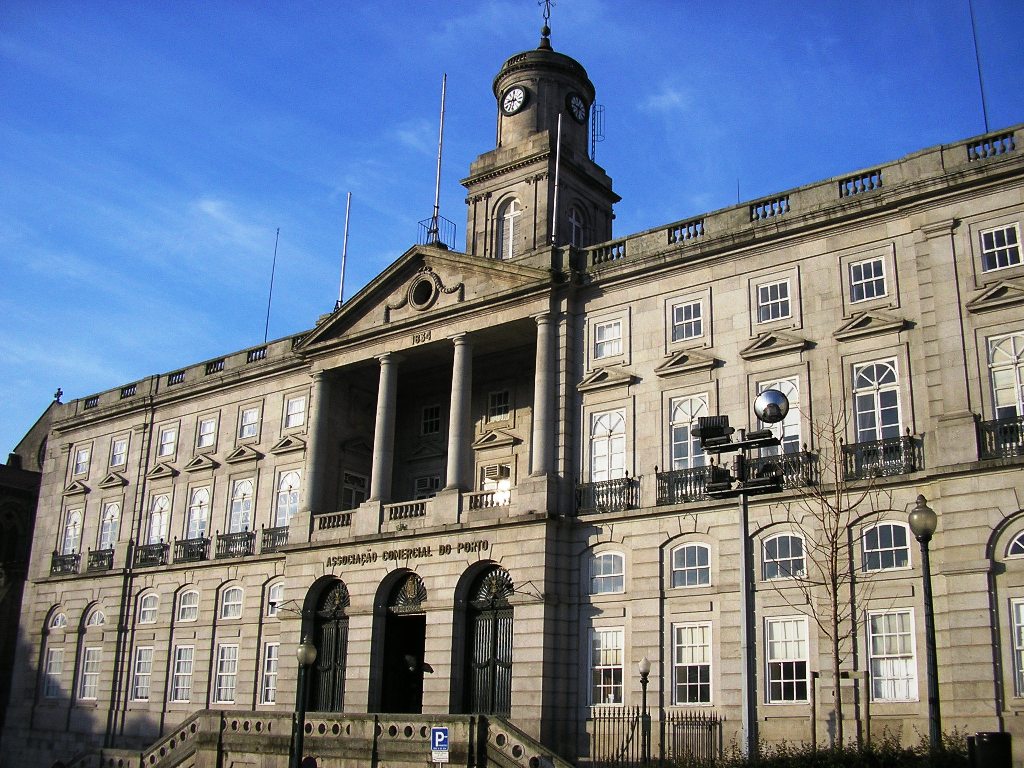
Construction of the Palácio da Bolsa began in 1842. The building belongs to Porto’s Commercial Association.
After the convent fire of 1832, the site acquired a new commercial purpose. Consider how the façade and reception rooms introduce the city to visitors.
Another perspective · I Ching
Hexagram 13Tong Ren · FellowshipHeaven over fire
I CHING · XIAOXIONG EDITORIAL READING
Tong Ren: who enters the city's reception room?
A contemporary cultural interpretation by Xiaoxiong, inspired by the I Ching—not architectural intent, historical fact, divination or an interpretation endorsed by the venue or a religious institution.
We use Tong Ren to think about association between people. The Commercial Association's building is a starting point, not proof of institutional virtues derived from a hexagram.
Form: how a guest is received
Façade and rooms invite observation of how meetings are presented. A shared atmosphere does not automatically imply equal status or opportunity.
Boundaries: questioning community
This reading also asks who can enter. Visiting arrangements are present-day boundaries; claims about past participants still require historical evidence.
Observe on site
From public space, notice how the entrance faces the square. If you have booked an interior visit, compare the rooms' scale and reception settings. Do not equate tourist access with historical equality.
How can a city's reception room make fellowship extend beyond a privileged few?
02 / 12 · PORTO
Twelve tables near this building.
Restaurants and cafés with official websites within three kilometres in a straight line. Distances start at this building.
Recognise the entrance, choose a table.
01 / 12 · Restaurant
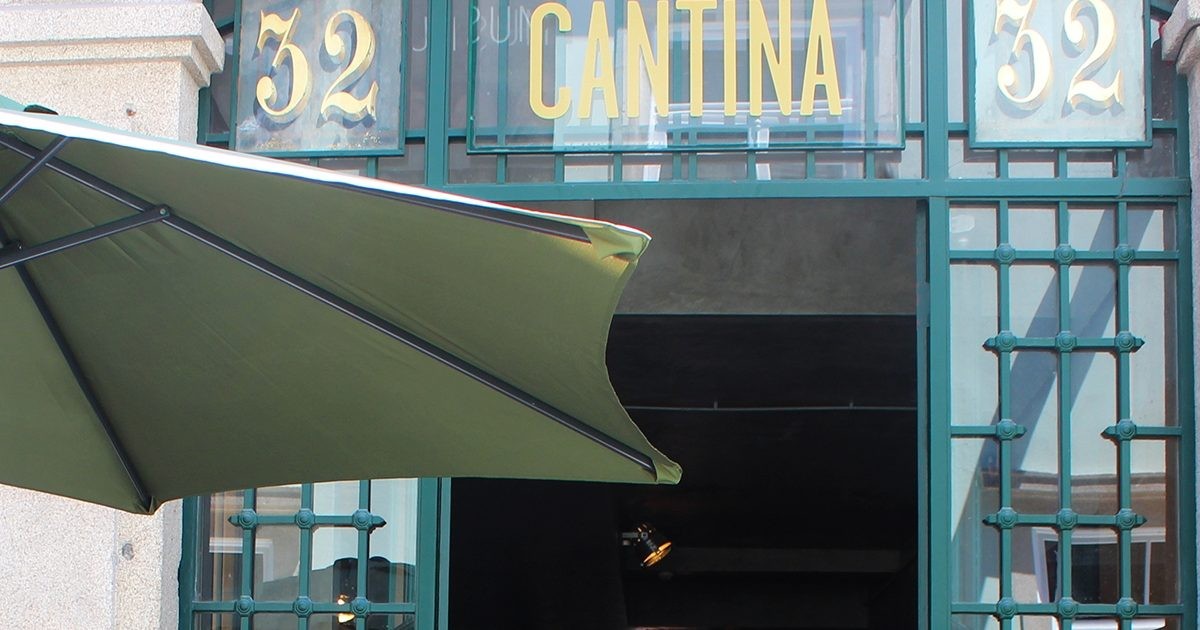
Cantina 32
Straight-line 0.27 km
A meal on Rua das Flores, with dishes designed for sharing.