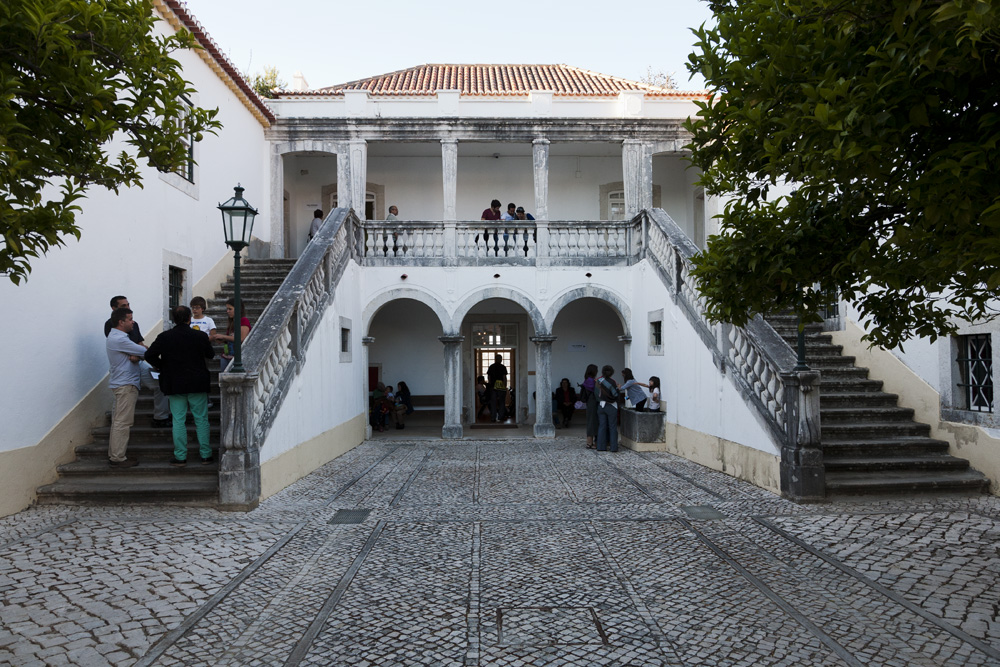
Casa da Cerca dates mainly from the late seventeenth and early eighteenth centuries, with additions from different periods. Restored in 1992–1993, it became a contemporary art centre with a particular focus on drawing, opening a former residence and its gardens to the public.
What to look for
Start with the older north-facing wing overlooking the Tagus, then explore the rooms and gardens. Notice how doorways frame views, and distinguish the former chapel’s tiles from contemporary exhibits.
An I Ching reading
Transformation
Ding, transformation, asks what a building can now sustain. Preserving its structure and hosting exhibitions matter, but a genuinely shared place also needs to welcome people. An open door changes little if visitors still feel that the house belongs to someone else.
Independent cultural interpretation: an editorial reflection inspired by the hexagram, not a historical fact, the builders’ intention or a prediction.
A table nearby
Explore venue details before choosing. Within three kilometres in a straight line from the building; confirm walking access and opening before you go.
Nearby, start with these
Recognise the storefront, then check venue details and directions.
Loading records…
How we select
Up to four venues with matched sources, an address and a non-historical storefront photo, ordered by straight-line distance. Claims and payments do not affect order. Confirm access and opening.
This includes unchecked map records, potentially incomplete addresses or closed venues. It is not a recommendation list.
Sources and selection criteria
The default list contains details cross-checked with the venue or municipality. All map records includes additional places. Distances start at the building reference point; confirm entrances, opening and walking access with the venue.
Unique records across anchors: —
Operating status, storefront photos and routes need review. Crossings, bays and slopes can lengthen a trip; straight-line distance is not walking time.