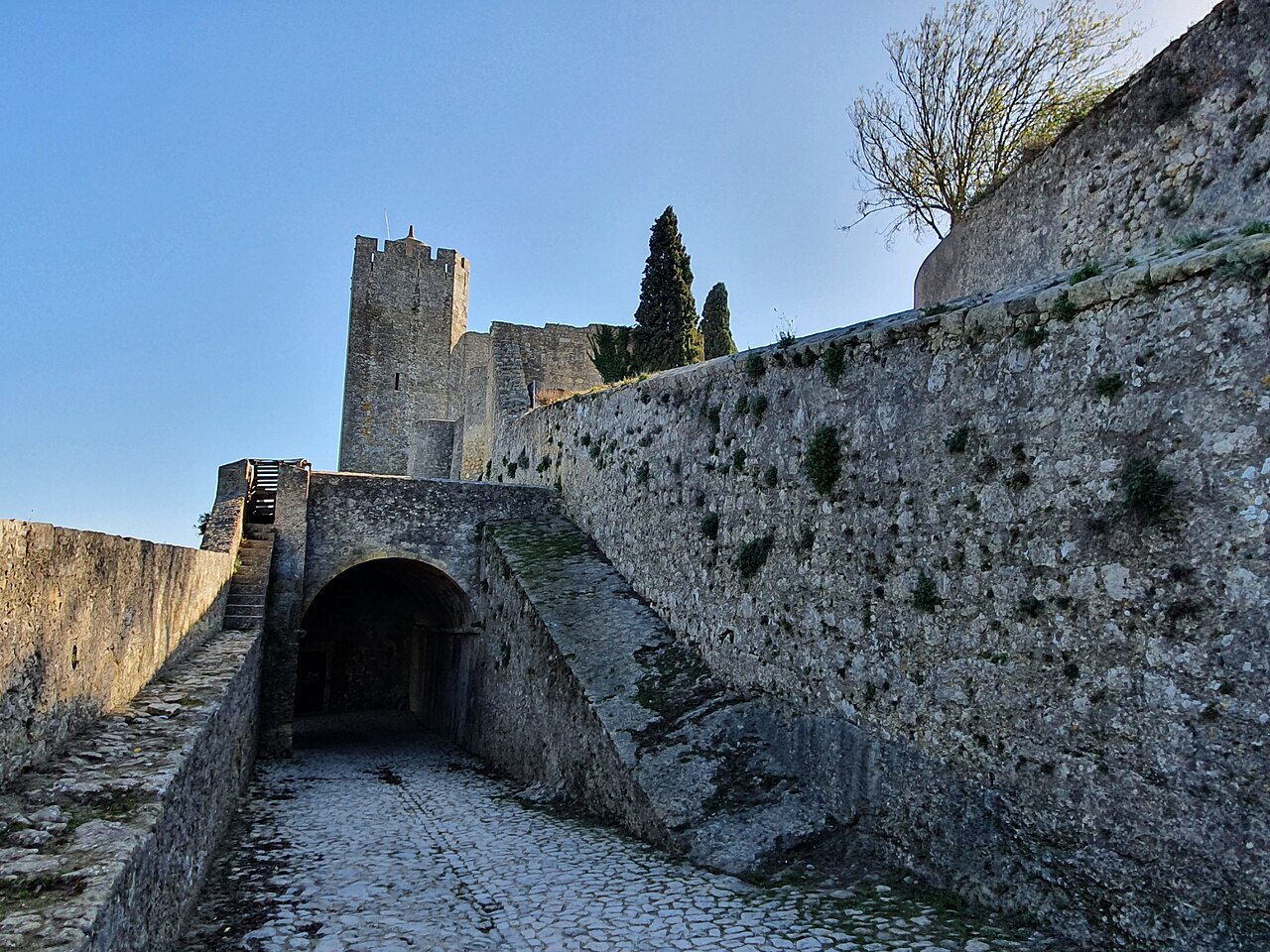
The castle complex has a long association with the Order of Santiago. Military, religious and residential spaces coexist within it. Their combination makes this more than a defensive structure alone. The order established its headquarters here in the late fifteenth century; work on the church and convent dates to 1482. Religious occupation ended with the dissolution of the orders in 1834. Read the ensemble through defence, faith and communal life.
What to look for
Distinguish buildings and uses within the walls. Entering the complex does not grant access to every room; check individual entrances.
An I Ching reading
Organisation
Shi reveals organisation behind collective strength. Order depends on daily arrangements as well as walls. This reading asks who receives protection and who bears its costs; a structure's solidity does not establish the legitimacy of the order it supports.
Independent cultural interpretation: an editorial reflection inspired by the hexagram, not a historical fact, the builders’ intention or a prediction.
A table nearby
Explore venue details before choosing. Within three kilometres in a straight line from the building; confirm walking access and opening before you go.
Nearby, start with these
Recognise the storefront, then check venue details and directions.
Loading records…
How we select
Up to four venues with matched sources, an address and a non-historical storefront photo, ordered by straight-line distance. Claims and payments do not affect order. Confirm access and opening.
This includes unchecked map records, potentially incomplete addresses or closed venues. It is not a recommendation list.
Sources and selection criteria
The default list contains details cross-checked with the venue or municipality. All map records includes additional places. Distances start at the building reference point; confirm entrances, opening and walking access with the venue.
Unique records across anchors: —
Operating status, storefront photos and routes need review. Crossings, bays and slopes can lengthen a trip; straight-line distance is not walking time.