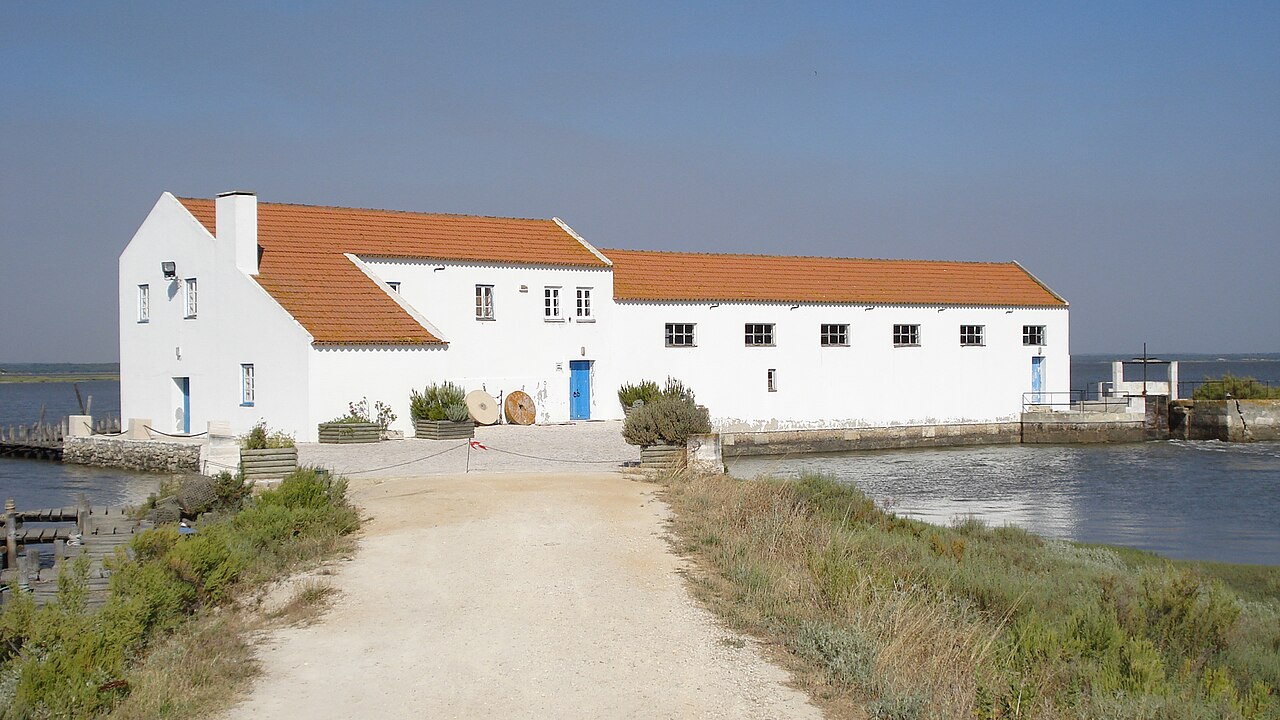
The mill used the difference in water level between tide and reservoir to grind grain. Its interpretation places human activity within the Sado estuary. An inscription dated 1601 is chronological evidence, not proof that every surviving structure dates from that year. The 1601 inscription alone does not establish an exact construction date. The mill once had eight pairs of stones; the surviving installation does not fully reproduce that historical capacity. Distinguish what is described from what remains.
What to look for
Observe water and building as a whole. The wetland is not a backdrop; stay on permitted routes.
An I Ching reading
A shared resource
Jing shifts attention from resource users to the conditions sustaining a resource. Caring for the mill also requires caring for water and habitat. Protecting walls while neglecting the estuary would lose the relationship that made the building possible.
Independent cultural interpretation: an editorial reflection inspired by the hexagram, not a historical fact, the builders’ intention or a prediction.
A table nearby
Explore venue details before choosing. Within three kilometres in a straight line from the building; confirm walking access and opening before you go.
Nearby, start with these
Recognise the storefront, then check venue details and directions.
Loading records…
How we select
Up to four venues with matched sources, an address and a non-historical storefront photo, ordered by straight-line distance. Claims and payments do not affect order. Confirm access and opening.
This includes unchecked map records, potentially incomplete addresses or closed venues. It is not a recommendation list.
Sources and selection criteria
The default list contains details cross-checked with the venue or municipality. All map records includes additional places. Distances start at the building reference point; confirm entrances, opening and walking access with the venue.
Unique records across anchors: —
Operating status, storefront photos and routes need review. Crossings, bays and slopes can lengthen a trip; straight-line distance is not walking time.