Cropped preview; see the original photograph. The photograph does not confirm the venue’s present condition.
01 / Building stories
Read a building, discover a way of living.
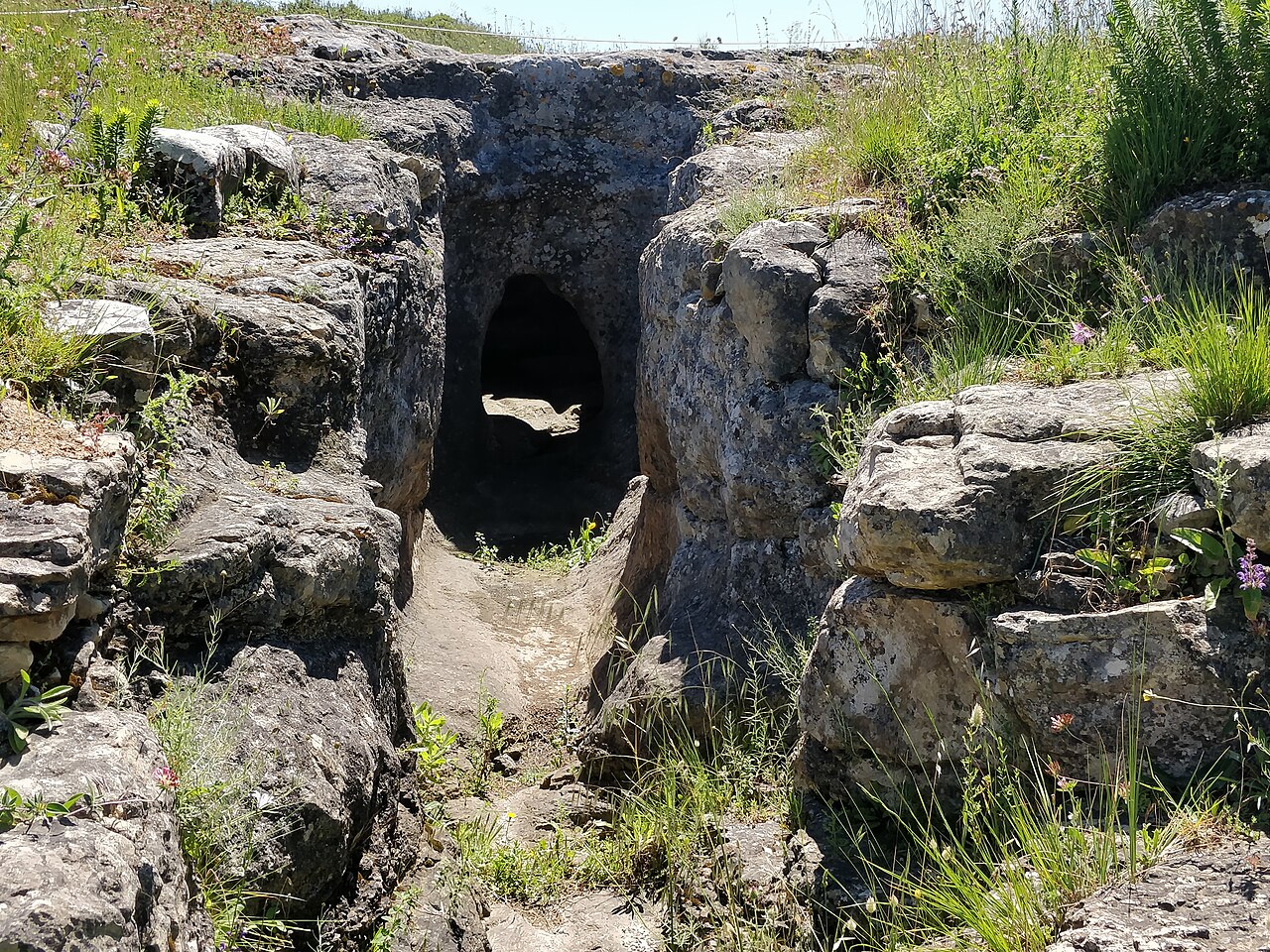
The three collective burial chambers cut into limestone are artificial caves. Municipal information dates construction to the late fourth or early third millennium BCE and records later reuse. Excavation in 1932 brought them into modern archaeological study.
Passages and shared chambers were not domestic spaces. They invite reflection on death, memory and community, but survive only in fragments requiring archaeological explanation. Visible entrances cannot reconstruct all ancient beliefs.
What to notice
Read the entrance information and site plan first. Identify passages and chambers from open areas. Do not climb, touch or enter closed sections.
Very old spaces invite imagination. Giving imagination and evidence distinct places respects both the remains and their former users.
Start with the architecture
Distinguish ancient remains from modern protection equipment, and archaeological explanation from imagination. Visitor boundaries permit learning while limiting damage to fragile structures.
Bring the question into everyday life
When a story surprises you, ask where its evidence comes from before deciding how much to believe. Keeping a question open makes room for discovery. Turn one categorical statement into a question that can be investigated.
Try an observation here
Record something you saw, one fact from a label and one question still unanswered.
What everyday detail about these ancient people would you most like to understand?
A contemporary cultural reading by Xiaoxiong inspired by the I Ching. The connection with the building is an editorial perspective, not the architect’s intention or a documented historical influence. It is not fortune-telling.
03 / Nearby life
A nearby table
Dining map records within three kilometres in a straight line of the reference point. Walls, railways and slopes may lengthen the journey. Check the entrance and whether the business is open.
The map may omit businesses. Records do not confirm trading status, menus or bookings. Records with an address are shown by default; you can include the others.
04 / The travellers’ Bench
Sit for a while. Leave an observation.
What everyday detail about these ancient people would you most like to understand?