From ownership to responsibility
Acquisition changes ownership; preserving traces of life requires maintenance. Jia Ren asks who undertakes that quiet, continuous work.
CAS-002 / Bay & old town
Rua do Farol de Santa Marta, 2750-341 Cascais
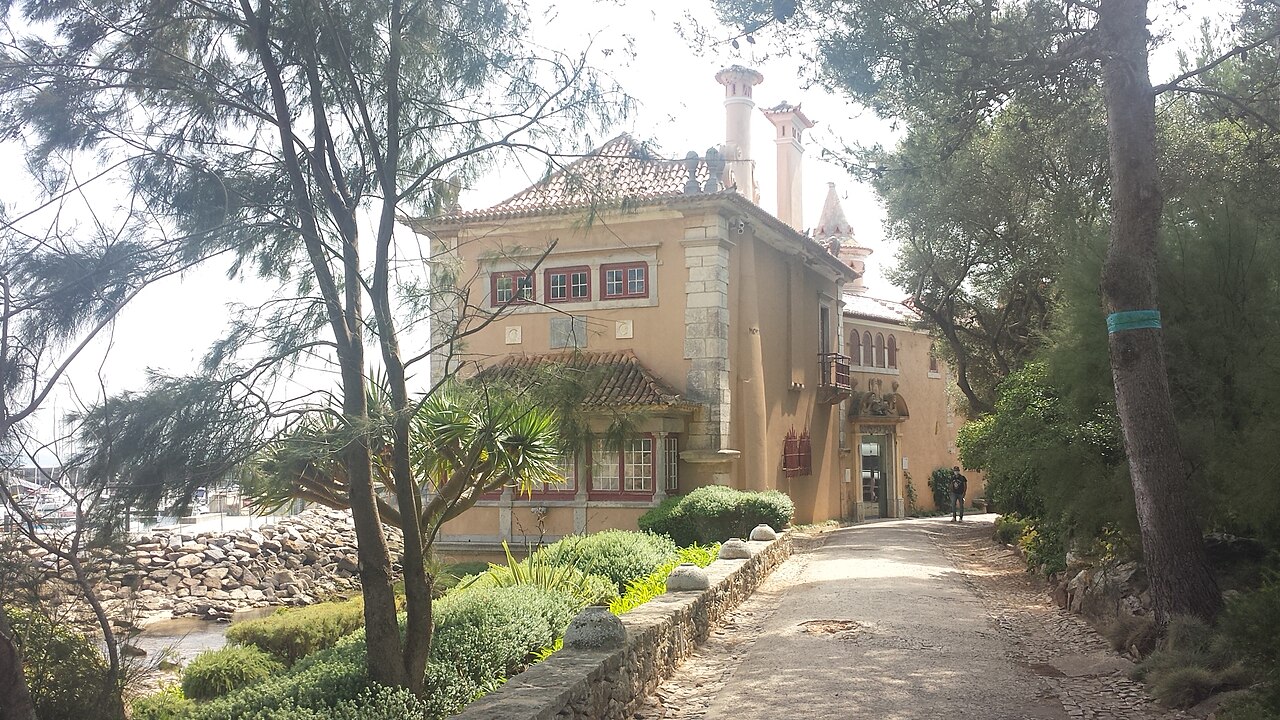
01 / Building stories
Raul Lino designed this seaside house for Jorge O’Neill in 1902. After extensions and roughly a century of private use, the municipality acquired it in 2004. Its story follows the change from a family residence to heritage held in public care.
From an accessible public path, compare the windows and eaves with the nearby lighthouse. A house accommodates staying; a lighthouse supports departure. One shoreline holds two rhythms.
Documentary source ↓02 / I Ching reflections
Jia Ren: ownership changes; care needs continuity.
Above · Xun · Wind / wood
Below · Li · Fire
Read the six lines from bottom to top ↑
Zhou Yi · Commentary on the Image · Chinese excerpt
风自火出,家人。Wind arises from fire: Jia Ren. — Editorial translation of the excerpt
Original text and context ↗Shared life depends on repeated small acts. Jia Ren becomes a question about care and responsibilities: who prepares, who cleans and who can rest? Order should make its sustaining labour visible.
This excerpt gives the natural image that opens the Commentary on the Image. The full passage relates it to personal conduct or governance in its historical context. Follow the source to read it in full. Applying it to buildings today is Xiaoxiong’s editorial proposal, not a summary of every meaning of the ancient text.
Acquisition changes ownership; preserving traces of life requires maintenance. Jia Ren asks who undertakes that quiet, continuous work.
Closure for works can disappoint a visitor, but heritage cannot only serve our gaze. Accepting a pause is part of shared care.
Responsibility does not belong only to management. Visitors can also care for the small details of shared heritage.
Take a question to the bench
Who continues the everyday care of a home once it belongs to the public?
Go to the bench and note what I saw →A contemporary cultural interpretation by Xiaoxiong. The diagram and excerpt have a source; the building connection is editorial, not architectural intent, historical I Ching influence or the venue’s position.
03 / Nearby life
Find a table nearby · filters and directions →
Dining map records within three kilometres in a straight line of the reference point. Walls, railways and slopes may lengthen the journey. Check the entrance and whether the business is open.
Checking Bench membership and claim status…
The map may omit businesses. Records do not confirm trading status, menus or bookings. Records with an address are shown by default; you can include the others.
04 / The travellers’ Bench
Who continues the everyday care of a home once it belongs to the public?
Building reference point: 38.691134, -9.421396. Used to find what is nearby; the public entrance is not yet confirmed.
HilaThong · CC BY-SA 4.0 · Original photograph page ↗
Cropped preview; see the original photograph. The photograph does not confirm the venue’s present condition.
Sources consulted: