Ashore and at sea
A visitor sees a coastal scene; a navigator seeks orientation. The same tower takes on different meanings from these positions. Its reading should reach beyond the spot from which it is photographed.
CAS-003 / Bay & old town
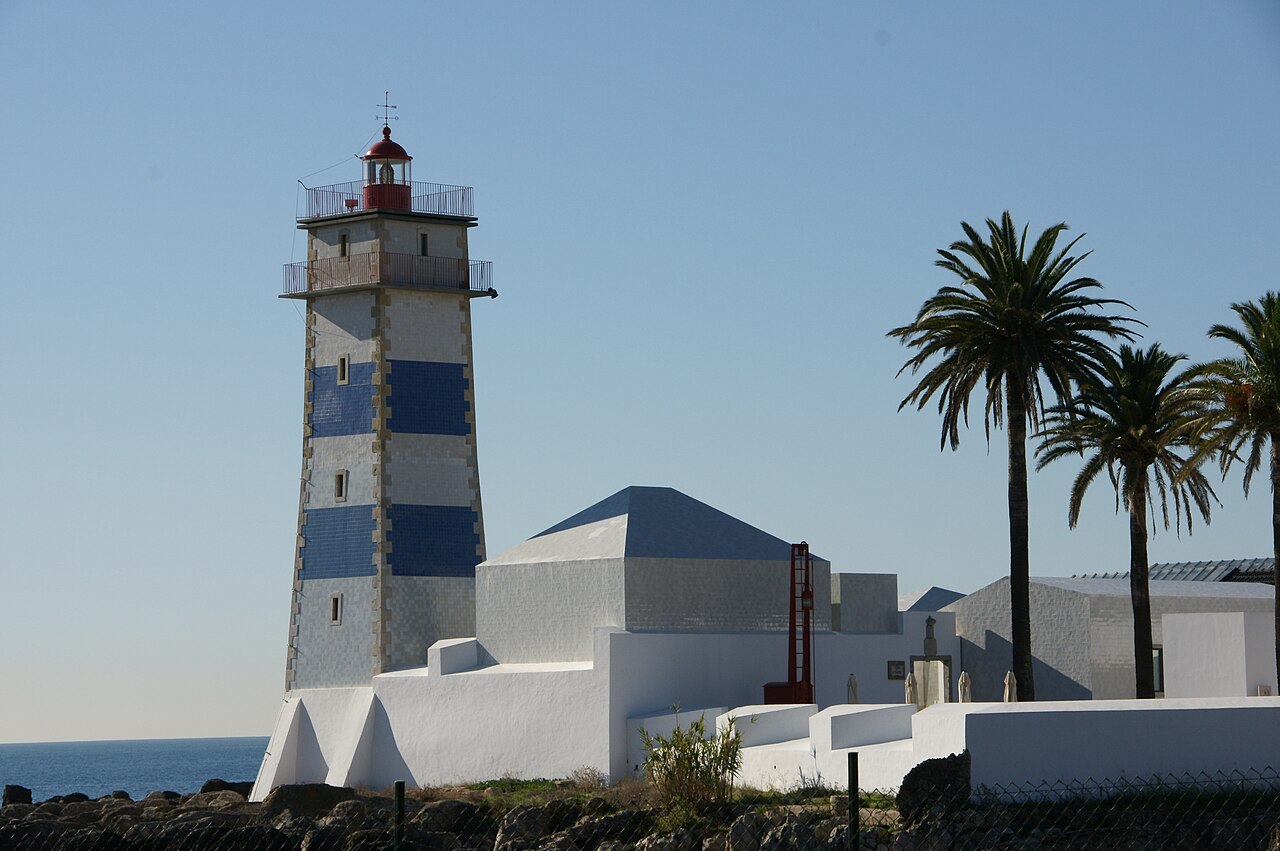
Farol Museu de Santa Marta
Rua do Farol de Santa Marta, 2750-341 Cascais
01 / Building stories
The lighthouse first shone on 1 March 1868 and was automated in 1981. The museum opened in 2007 through cooperation between the municipality and the Navy. Its equipment and keepers’ work reveal the continuing care behind a coastal light.
From the public path, compare the blue-and-white tower with the museum’s low buildings. Imagine what the same light means to someone ashore and someone at sea.
Documentary source ↓02 / I Ching reflections
Li: the support and care behind a light.
Above · Li · Fire
Below · Li · Fire
Read the six lines from bottom to top ↑
Zhou Yi · Commentary on the Image · Chinese excerpt
明两作,离。Light rises again: Li. — Editorial translation of the excerpt
Original text and context ↗Two lights rise one after the other. Li suggests attachment: light needs something to rest on before it can illuminate its surroundings. When you see the light, notice also what keeps sustaining it.
This excerpt gives the natural image that opens the Commentary on the Image. The full passage relates it to personal conduct or governance in its historical context. Follow the source to read it in full. Applying it to buildings today is Xiaoxiong’s editorial proposal, not a summary of every meaning of the ancient text.
A visitor sees a coastal scene; a navigator seeks orientation. The same tower takes on different meanings from these positions. Its reading should reach beyond the spot from which it is photographed.
The dependence evoked by Li moves attention from light to its supports. Equipment, automation and keepers’ work make reliability a matter of continuing care beyond a first illumination.
The museum brings navigation equipment and keepers’ work into public view. Beyond the objects, we should ask how that work is recorded. Scenic beauty should not remove its maintainers from the story.
Take a question to the bench
When a light becomes scenery, do we still remember who needs it?
Go to the bench and note what I saw →A contemporary cultural interpretation by Xiaoxiong. The diagram and excerpt have a source; the building connection is editorial, not architectural intent, historical I Ching influence or the venue’s position.
03 / Nearby life
Find a table nearby · filters and directions →
Dining map records within three kilometres in a straight line of the reference point. Walls, railways and slopes may lengthen the journey. Check the entrance and whether the business is open.
Checking Bench membership and claim status…
The map may omit businesses. Records do not confirm trading status, menus or bookings. Records with an address are shown by default; you can include the others.
04 / The travellers’ Bench
When a light becomes scenery, do we still remember who needs it?
Building reference point: 38.690595, -9.421266. Used to find what is nearby; the public entrance is not yet confirmed.
Jaime Silva · CC BY-SA 3.0 · Original photograph page ↗
Cropped preview; see the original photograph. The photograph does not confirm the venue’s present condition.
Sources consulted: