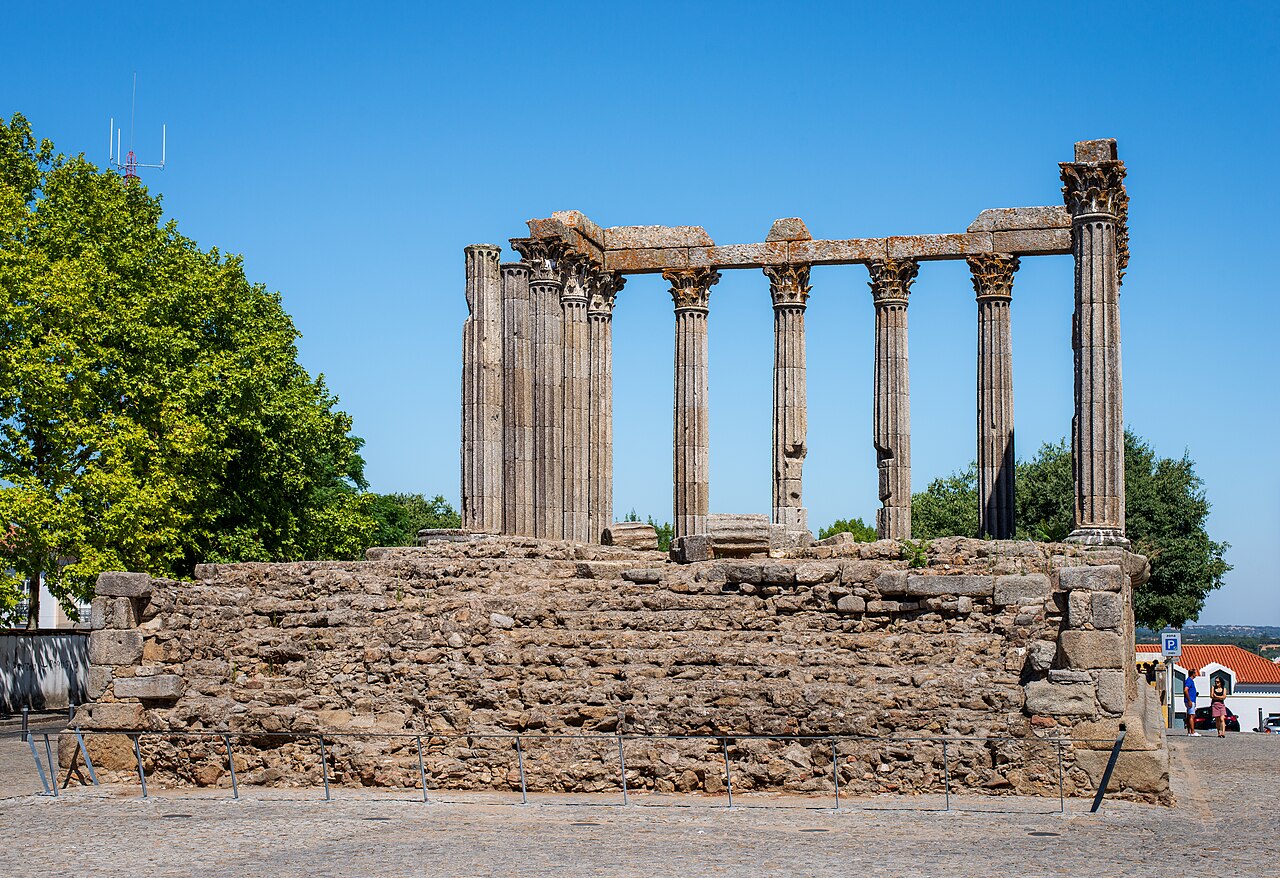
Cropped preview; see the original photograph. The photograph does not confirm the venue’s present condition.
01 / Building stories
Read a building, discover a way of living.
The first-century temple is often called the Temple of Diana, although that dedication is unproven. Heritage information instead connects it with Roman imperial worship. A familiar name does not settle interpretation.
From permitted ground, observe the podium, columns and present square together. Ruins are fragments: imagining a lost roof or walls can open questions, provided imagination does not replace archaeological evidence.
What to notice
Observe columns and podium outside the barriers without climbing; compare the outline from another public viewpoint.
Meng makes not knowing a beginning. In a laboratory or a debated site, ask a question you can check against evidence. Curiosity needs sources and a willingness to recognise provisional limits.
Start with the architecture
Meng invites us to suspend the familiar name. Seeing columns does not automatically reveal their original dedication. Separate visible material, documented interpretation and imagination: uncertainty can open learning.
Bring the question into everyday life
Write one observation and one uncertain explanation. Look for information that could change your judgement. Reformulating the question can also deepen understanding.
Try an observation here
Pause, record one observed detail and respond to the question below. Notes can hold doubts and different opinions; leave out other people’s private information.
Which familiar name deserves another question about its evidence?
A contemporary cultural reading by Xiaoxiong inspired by the I Ching. The connection with the building is an editorial perspective, not the architect’s intention or a documented historical influence. It is not fortune-telling.
03 / Nearby life
A nearby table
Dining map records within three kilometres in a straight line of the reference point. Walls, railways and slopes may lengthen the journey. Check the entrance and whether the business is open.
This selection covers the current municipality. Near hills, rivers and municipal boundaries, plan transport using actual roads.
The map may omit businesses. Records do not confirm trading status, menus or bookings. Records with an address are shown by default; you can include the others.
04 / The travellers’ Bench
Sit for a while. Leave an observation.
Which familiar name deserves another question about its evidence?