Purpose follows its period
Religious, medical, industrial and event uses arrive in sequence, each answering new social conditions.
LIS-007 / East
01 / Building stories
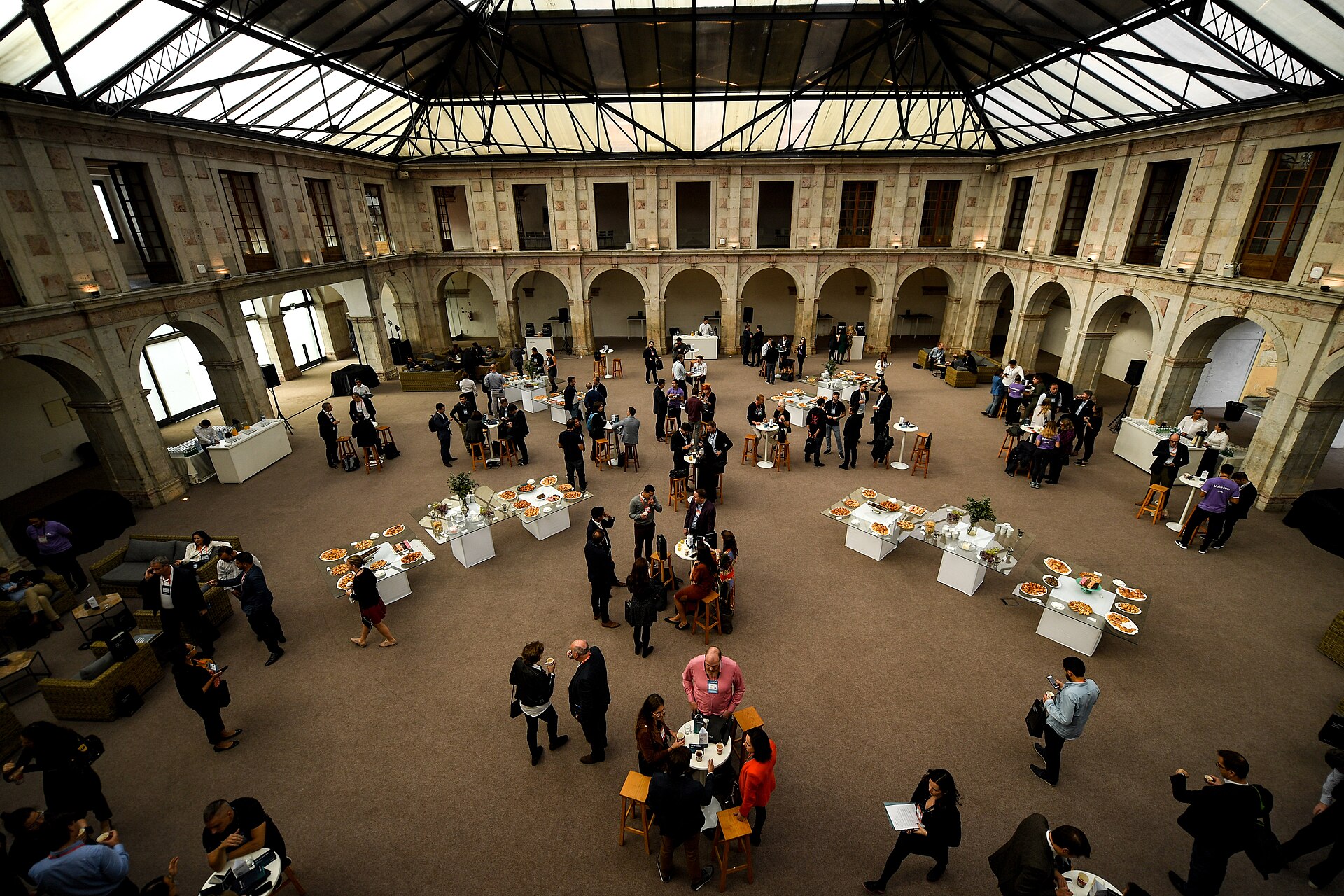
Convento do Beato grew from a fifteenth-century religious foundation, expanded in the sixteenth century and showed resilience in 1755. After the orders were dissolved, it became a military hospital, industrial site and event venue.
15th century — The Crown supports a religious house in Xabregas; an early hermitage becomes the basis of the later convent.
16th–17th centuries — Beato António advances the new building; cloister, church and family pantheon take shape.
1755 — The complex suffers relatively little earthquake damage and shelters religious communities from ruined neighbours.
After 1834 — Following dissolution, part serves as a military hospital and later a factory associated with early steam-powered production.
1984–today — Listed as a Property of Public Interest, it is restored for cultural, conference and community gatherings.
Notice the rhythm of the arches and the relationship between stone columns and adapted spaces. The venue also hosts events, so check access before entering. From outside, you can still observe how the old building connects with today's neighbourhood.
Documentary source ↓02 / I Ching reflections
Ge asks about timing and legitimacy: when to change, what to transform and what to retain. Beato lives between major shifts of use and material continuity.
Above · Dui · Lake
Below · Li · Fire
Read the six lines from bottom to top ↑
Zhou Yi · Commentary on the Image · Chinese excerpt
泽中有火,革。Fire is within the lake: Ge. — Editorial translation of the excerpt
Original text and context ↗Change should respond to changed conditions. Ge subjects new uses to concrete questions: what should remain, what needs renewal and who participates in sustaining the new life?
This excerpt gives the natural image that opens the Commentary on the Image. The full passage relates it to personal conduct or governance in its historical context. Follow the source to read it in full. Applying it to buildings today is Xiaoxiong’s editorial proposal, not a summary of every meaning of the ancient text.
Religious, medical, industrial and event uses arrive in sequence, each answering new social conditions.
Cloister, stairs and materials allow each use to remain a chapter in the same architectural life.
Preservation is more than avoiding demolition; change gains legitimacy when space is used, explained and shared.
Take a question to the bench
How far can a building change and still be recognised as itself?
Go to the bench and note what I saw →A contemporary cultural interpretation by Xiaoxiong. The diagram and excerpt have a source; the building connection is editorial, not architectural intent, historical I Ching influence or the venue’s position.
03 / Nearby life
Find a table nearby · filters and directions →
Dining map records within three kilometres in a straight line of the reference point. Walls, railways and slopes may lengthen the journey. Check the entrance and whether the business is open.
The map may omit businesses. Records do not confirm trading status, menus or bookings. Records with an address are shown by default; you can include the others.
04 / The travellers’ Bench
How far can a building change and still be recognised as itself?
Reviewing team: Xiaoxiong Market · City Editorial Desk · Audit date: 2026-09-20 · Next review: 2027-09-20
Web Summit · CC BY 2.0 · Original photograph page ↗
Cropped preview; see the original photograph. The photograph does not confirm the venue’s present condition.
Sources consulted: 2026-09-20