The missing roof is evidence
The open nave displays the 1755 rupture rather than erasing it with a replica.
LIS-011 / Historic centre
Ruínas do Convento do Carmo
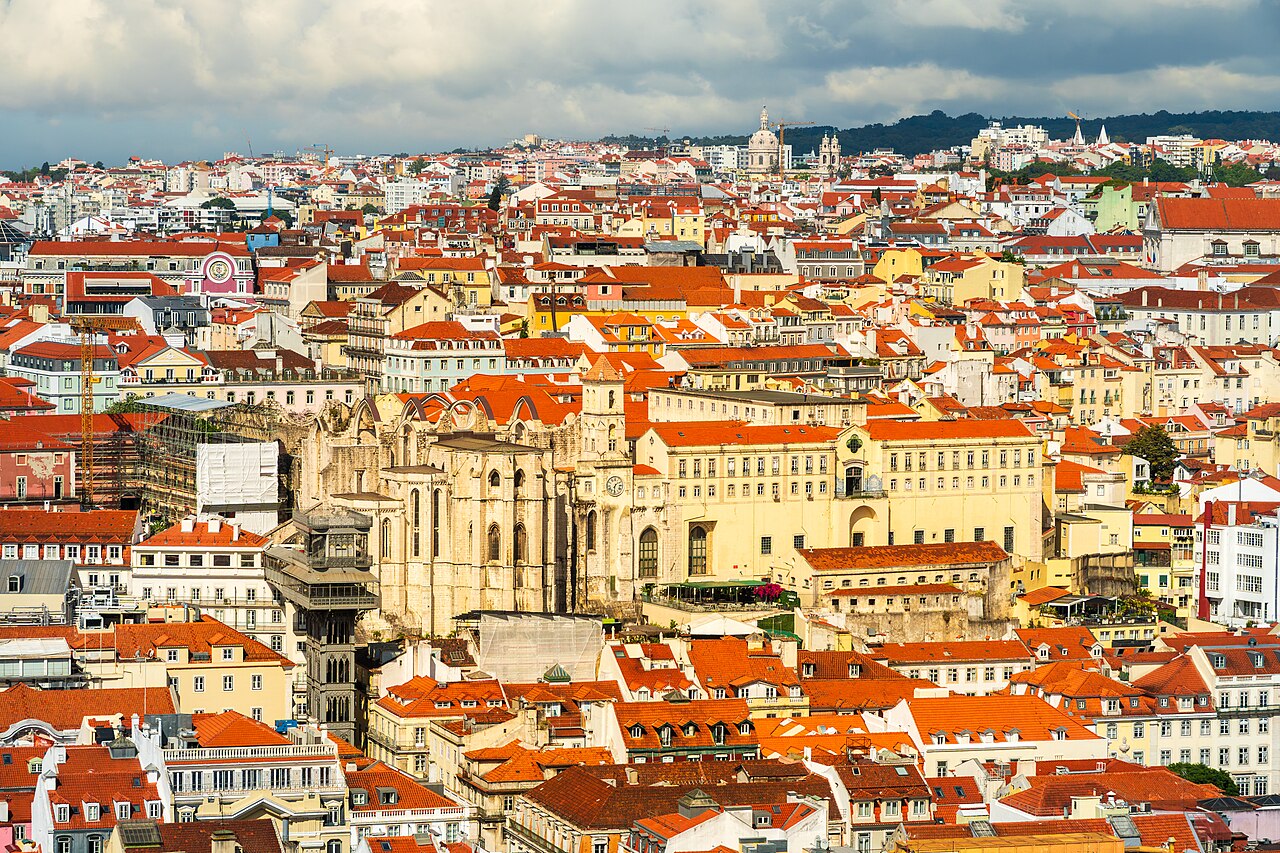
01 / Building stories
Nuno Álvares Pereira laid the first stone in 1389. The 1755 earthquake destroyed the church; Neo-Gothic rebuilding begun in 1756 stopped when the orders were dissolved in 1834. An archaeological museum opened here in 1864.
1389 — The first stone begins a major Gothic complex on the Carmo hill.
1755–1834 — The earthquake destroys the church; rebuilding starts but remains unfinished after dissolution.
1864 — Joaquim Possidónio Narciso da Silva establishes the archaeological museum among the ruins.
From the nave, look at the arches against the sky, then examine the surviving wall sections. Use the timeline to distinguish the earthquake, rebuilding and museum use, without rushing to imagine a fully restored church.
Documentary source ↓02 / I Ching reflections
Bo describes layers falling away and a base under strain. Carmo keeps loss as visible evidence instead of concealing trauma.
Above · Gen · Mountain
Below · Kun · Earth
Read the six lines from bottom to top ↑
Zhou Yi · Commentary on the Image · Chinese excerpt
山附于地,剥。The mountain rests upon the earth: Bo. — Editorial translation of the excerpt
Original text and context ↗Loss reveals the supports that remain. Bo invites us to distinguish what still carries weight from what has disappeared. Appreciating ruins also calls for attention to historical loss and conservation work.
This excerpt gives the natural image that opens the Commentary on the Image. The full passage relates it to personal conduct or governance in its historical context. Follow the source to read it in full. Applying it to buildings today is Xiaoxiong’s editorial proposal, not a summary of every meaning of the ancient text.
The open nave displays the 1755 rupture rather than erasing it with a replica.
The halt of 1834 records institutional change as clearly as surviving stone.
Since 1864, the damaged space has protected a wider field of material memory.
Take a question to the bench
Does repairing a wound require making it look as if it never happened?
Go to the bench and note what I saw →A contemporary cultural interpretation by Xiaoxiong. The diagram and excerpt have a source; the building connection is editorial, not architectural intent, historical I Ching influence or the venue’s position.
03 / Nearby life
Find a table nearby · filters and directions →
Dining map records within three kilometres in a straight line of the reference point. Walls, railways and slopes may lengthen the journey. Check the entrance and whether the business is open.
The map may omit businesses. Records do not confirm trading status, menus or bookings. Records with an address are shown by default; you can include the others.
04 / The travellers’ Bench
Does repairing a wound require making it look as if it never happened?
Reviewing team: Xiaoxiong Market · City Editorial Desk · Audit date: 2026-09-20 · Next review: 2027-09-20
NorbertNagel · CC BY-SA 4.0 · Original photograph page ↗
Cropped preview; see the original photograph. The photograph does not confirm the venue’s present condition.
Sources consulted: 2026-09-20