The palace frames vision
Proportion and decoration prepare an act of looking.
LIS-022 / Historic centre
Museu Nacional de Arte Antiga
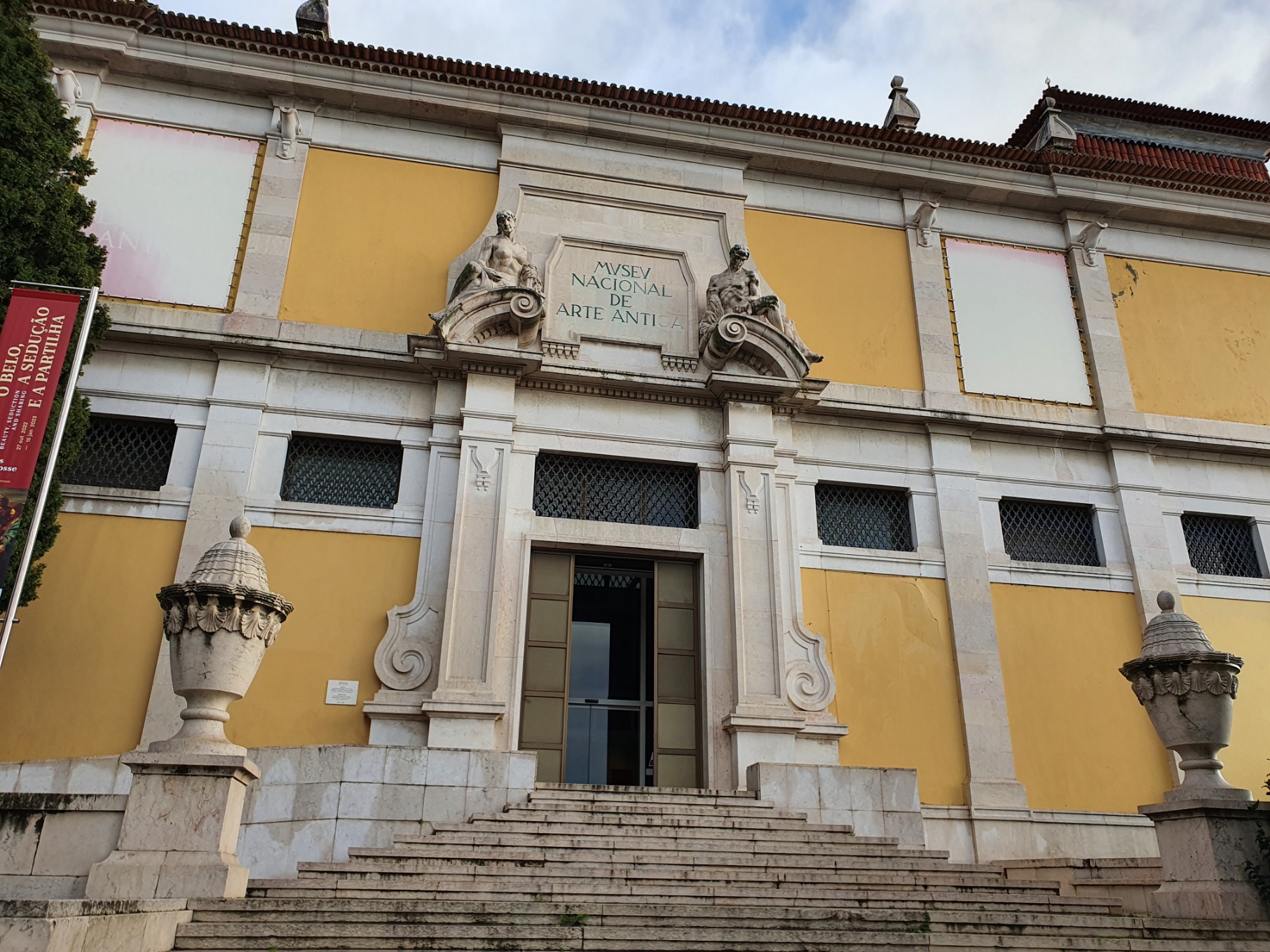
01 / Building stories
Alvor Palace was built in the late seventeenth century. The museum opened in 1884, incorporated the neighbouring convent space in 1891, became the National Museum of Ancient Art in 1911 and expanded in the twentieth century.
Late 17th century — The Alvor family builds the palace on Janelas Verdes.
1884–1891 — The national museum opens and gains the adjoining convent space.
1911–1940 — Collections are reorganised and the museum extension is completed.
Choose one work and read its full label, then look at the neighbouring pieces and the room around it. This helps you understand both the work and how the museum presents it. Check current opening arrangements before visiting.
Documentary source ↓02 / I Ching reflections
Bi concerns ornament and essence. Palace, display and artwork show that form should serve understanding.
Above · Gen · Mountain
Below · Li · Fire
Read the six lines from bottom to top ↑
Zhou Yi · Commentary on the Image · Chinese excerpt
山下有火,贲。Fire is beneath the mountain: Bi. — Editorial translation of the excerpt
Original text and context ↗Fire makes the mountain’s form visible. Bi brings form and content together: ask about materials, labour and use when looking at decoration. Beauty begins observation rather than completing it.
This excerpt gives the natural image that opens the Commentary on the Image. The full passage relates it to personal conduct or governance in its historical context. Follow the source to read it in full. Applying it to buildings today is Xiaoxiong’s editorial proposal, not a summary of every meaning of the ancient text.
Proportion and decoration prepare an act of looking.
Classification, conservation and labels return time, maker and material.
An elegant story cannot replace evidence about provenance.
Take a question to the bench
When we admire an object, do we know who made it, how it travelled and why it is here?
Go to the bench and note what I saw →A contemporary cultural interpretation by Xiaoxiong. The diagram and excerpt have a source; the building connection is editorial, not architectural intent, historical I Ching influence or the venue’s position.
03 / Nearby life
Find a table nearby · filters and directions →
Dining map records within three kilometres in a straight line of the reference point. Walls, railways and slopes may lengthen the journey. Check the entrance and whether the business is open.
The map may omit businesses. Records do not confirm trading status, menus or bookings. Records with an address are shown by default; you can include the others.
04 / The travellers’ Bench
When we admire an object, do we know who made it, how it travelled and why it is here?
Reviewing team: Xiaoxiong Market · City Editorial Desk · Audit date: 2026-09-20 · Next review: 2027-09-20
GualdimG · CC BY-SA 4.0 · Original photograph page ↗
Cropped preview; see the original photograph. The photograph does not confirm the venue’s present condition.
Sources consulted: 2026-09-20