The plan did not close
Politics and economics left visible absences.
LIS-023 / West
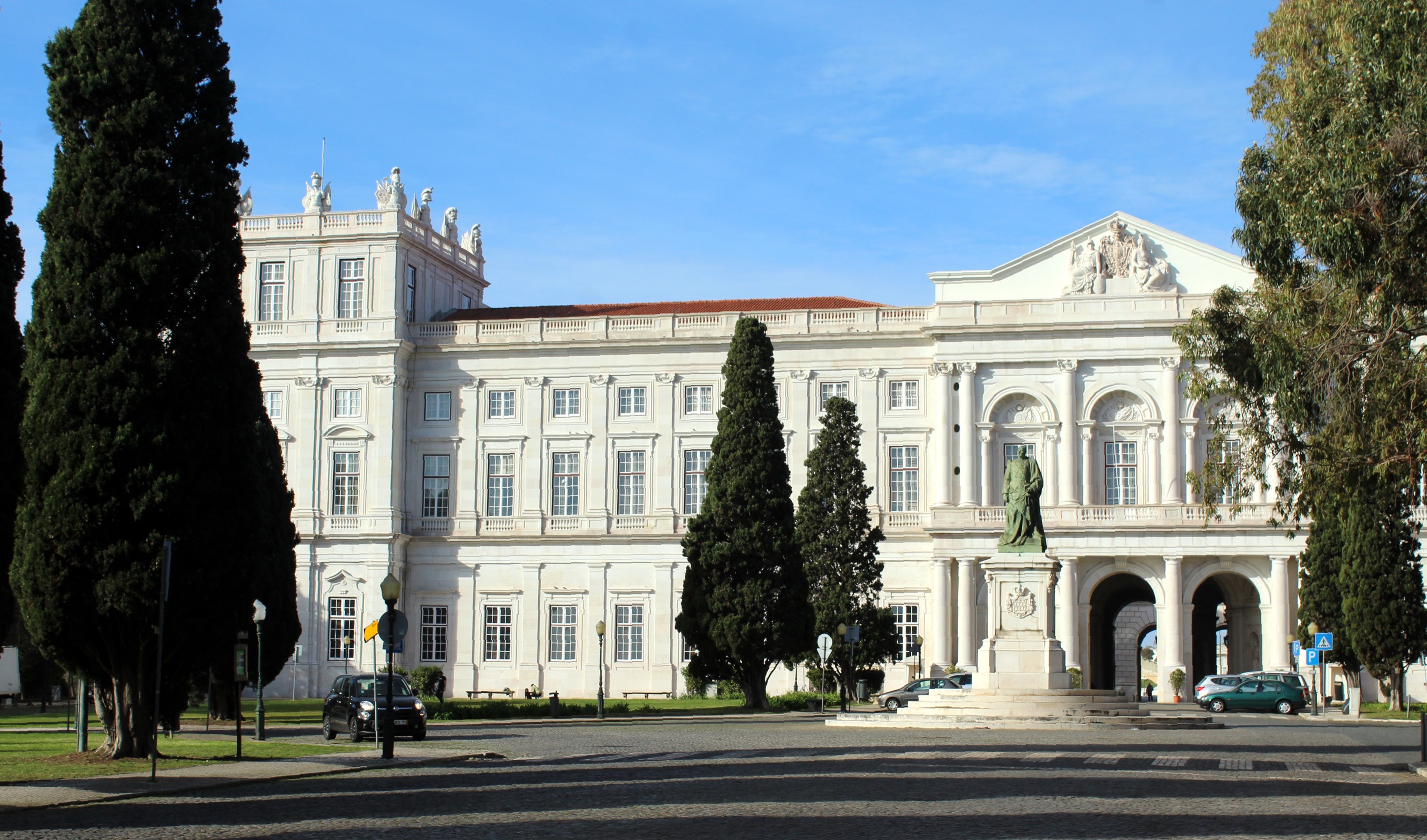
Palácio Nacional da Ajuda
01 / Building stories
The stone palace began in 1796 and suffered repeated interruptions during invasion and liberal political change. Occupied from 1826, it became Luís I's principal residence in 1861; today it is a museum and state ceremonial space.
1796 — Work begins on the new palace, increasingly shaped by Italian Neoclassicism.
1807–1844 — Invasion, limited funds and politics interrupt and revise the project.
1861–today — It becomes a royal home, museum and setting for state ceremony.
First notice the building's symmetry and gaps, then how its different parts join. Compare the unfinished exterior with the palace's history to recognise traces of interrupted construction. Check interior visiting arrangements separately.
Documentary source ↓02 / I Ching reflections
Wei Ji treats completion as a process. Interruption, habitation and reuse show a city moving through unfinished conditions.
Above · Li · Fire
Below · Kan · Water
Read the six lines from bottom to top ↑
Zhou Yi · Commentary on the Image · Chinese excerpt
火在水上,未济。Fire is above water: Wei Ji. — Editorial translation of the excerpt
Original text and context ↗The unfinished points to relationships still needing arrangement. Wei Ji helps distinguish what is in place from what still needs coordination. Before continuing, name what you know and what remains to be discovered.
This excerpt gives the natural image that opens the Commentary on the Image. The full passage relates it to personal conduct or governance in its historical context. Follow the source to read it in full. Applying it to buildings today is Xiaoxiong’s editorial proposal, not a summary of every meaning of the ancient text.
Politics and economics left visible absences.
The court entered before completion and new functions kept arriving.
Museum and state ceremony add chapters to the old work.
Take a question to the bench
When is a project complete: when the drawing closes, or when it remains useful?
Go to the bench and note what I saw →A contemporary cultural interpretation by Xiaoxiong. The diagram and excerpt have a source; the building connection is editorial, not architectural intent, historical I Ching influence or the venue’s position.
03 / Nearby life
Find a table nearby · filters and directions →
Dining map records within three kilometres in a straight line of the reference point. Walls, railways and slopes may lengthen the journey. Check the entrance and whether the business is open.
The map may omit businesses. Records do not confirm trading status, menus or bookings. Records with an address are shown by default; you can include the others.
04 / The travellers’ Bench
When is a project complete: when the drawing closes, or when it remains useful?
Reviewing team: Xiaoxiong Market · City Editorial Desk · Audit date: 2026-09-20 · Next review: 2027-09-20
Dguendel · CC BY 4.0 · Original photograph page ↗
Cropped preview; see the original photograph. The photograph does not confirm the venue’s present condition.
Sources consulted: 2026-09-20