Small pieces make a whole
Each tile is limited; together they cover architecture and tell stories across rooms.
LIS-006 / East
Mosteiro da Madre de Deus e Museu Nacional do Azulejo
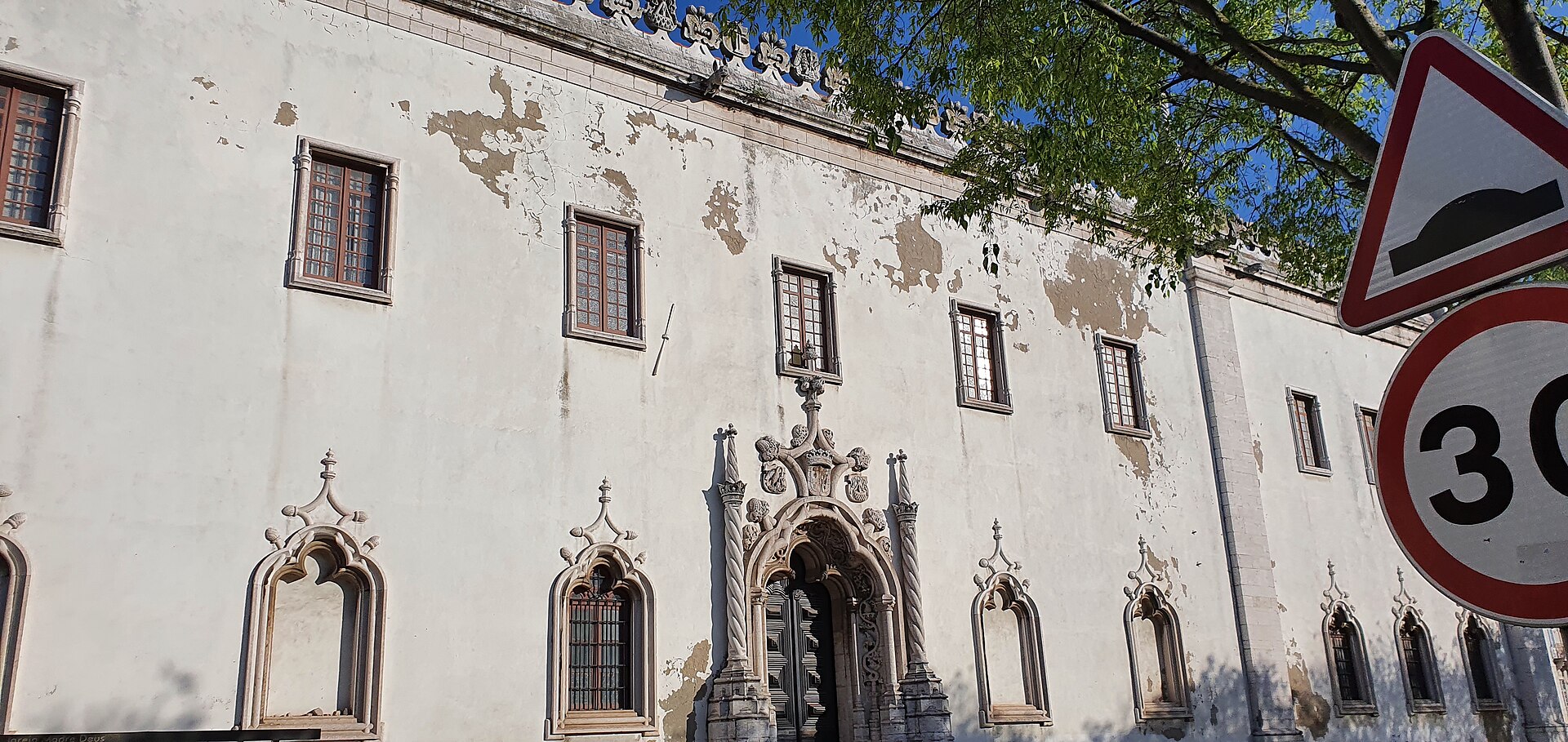
01 / Building stories
Founded by Queen Leonor in 1509, the convent passed through Manueline, Renaissance and Baroque campaigns, rebuilding after 1755 and new nineteenth-century uses. It became home to the Tile Museum in 1965.
1509 — Queen Leonor founds Madre de Deus Convent; the first church is complete before 1522.
c. 1550 — King João III commissions Diogo de Torralva to reform the complex, leaving the Renaissance cloister.
1670–18th century — Painted ceilings, Dutch and Portuguese azulejos, gilded carving and Baroque decoration reshape the church.
1755 — The earthquake damages the structure; rapid rebuilding adds new layers to the old.
1965–today — The complex houses the National Tile Museum and a collection spanning the late fifteenth century to the present.
Step back to see a whole tiled wall, then move closer to notice how individual patterns repeat and connect. Look at the relationship with doors, windows and paintings: the surrounding space changes how an image is seen.
Documentary source ↓02 / I Ching reflections
Li is brightness and attachment. Tile attaches to wall, image to matter and culture to repeated acts of looking and care.
Above · Li · Fire
Below · Li · Fire
Read the six lines from bottom to top ↑
Zhou Yi · Commentary on the Image · Chinese excerpt
明两作,离。Light rises again: Li. — Editorial translation of the excerpt
Original text and context ↗Two lights rise one after the other. Li suggests attachment: light needs something to rest on before it can illuminate its surroundings. When you see the light, notice also what keeps sustaining it.
This excerpt gives the natural image that opens the Commentary on the Image. The full passage relates it to personal conduct or governance in its historical context. Follow the source to read it in full. Applying it to buildings today is Xiaoxiong’s editorial proposal, not a summary of every meaning of the ancient text.
Each tile is limited; together they cover architecture and tell stories across rooms.
Sacred scenes, city views and ornament preserve expressions of a period; they need to be read against provenance and purpose, rather than treated as direct reproductions of the past.
Earthquake, rebuilding and museum use do not flatten breaks; they let several periods appear together.
Take a question to the bench
Today we attach memory to screens; will it live for five hundred years as these azulejos have?
Go to the bench and note what I saw →A contemporary cultural interpretation by Xiaoxiong. The diagram and excerpt have a source; the building connection is editorial, not architectural intent, historical I Ching influence or the venue’s position.
03 / Nearby life
Find a table nearby · filters and directions →
Dining map records within three kilometres in a straight line of the reference point. Walls, railways and slopes may lengthen the journey. Check the entrance and whether the business is open.
The map may omit businesses. Records do not confirm trading status, menus or bookings. Records with an address are shown by default; you can include the others.
04 / The travellers’ Bench
Today we attach memory to screens; will it live for five hundred years as these azulejos have?
Reviewing team: Xiaoxiong Market · City Editorial Desk · Audit date: 2026-09-20 · Next review: 2027-09-20
Yair Haklai · CC BY-SA 4.0 · Original photograph page ↗
Cropped preview; see the original photograph. The photograph does not confirm the venue’s present condition.
Sources consulted: 2026-09-20