The centre stays
Expansion changes the surroundings, while church and square keep marking the historic core.
LIS-010 / East
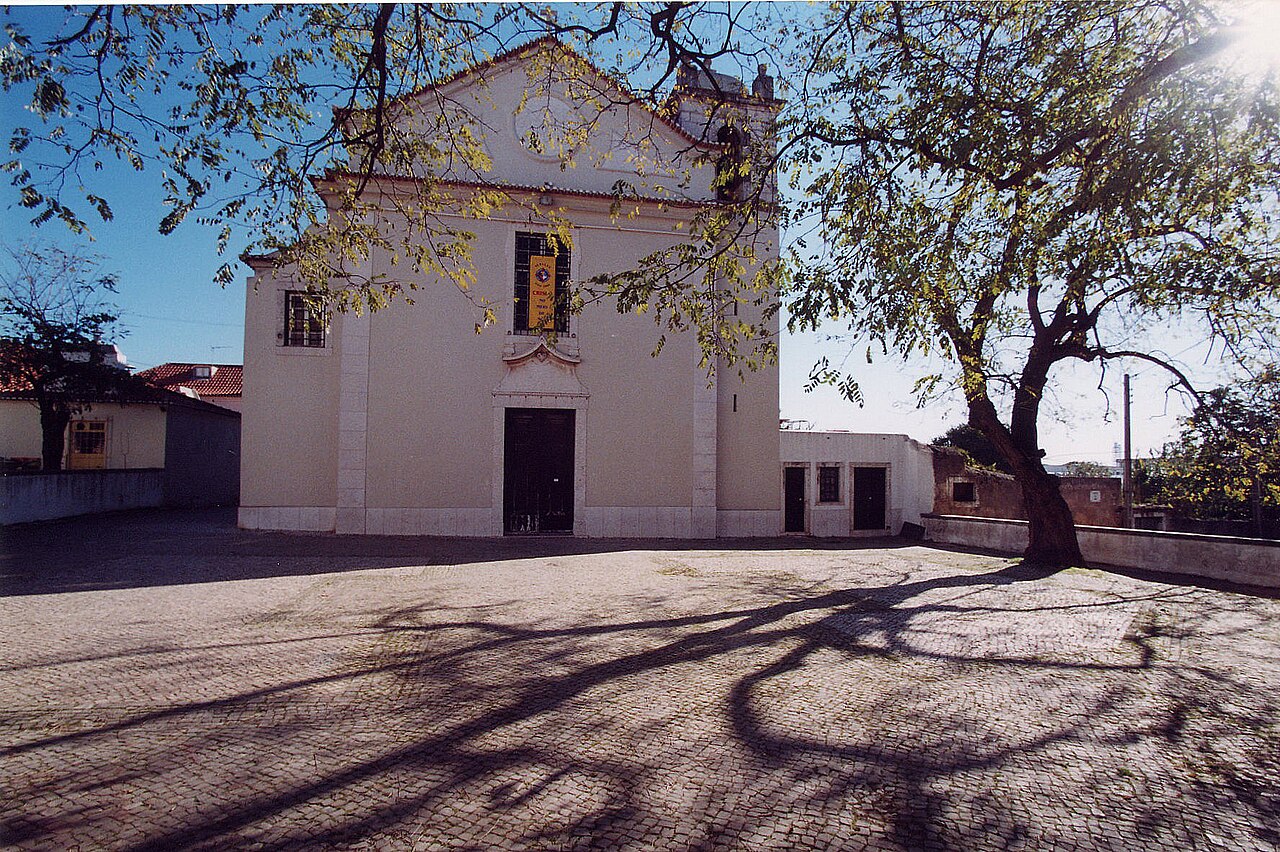
Igreja de Santa Maria dos Olivais
01 / Building stories
The parish was created in 1397 and the church built in the early fifteenth century. After the 1755 earthquake, church and square were reorganised; a fountain and bandstand reinforced the public centre in the nineteenth century.
1397–15th century — The parish is established and an early church is built.
After 1755 — The destroyed church is rebuilt and the common square takes a new form.
1891–1896 — A fountain and iron bandstand add new infrastructure to collective life.
Look at the church from the square, then find the fountain and bandstand. Notice where people pass, pause and talk: these are clues to the church's relationship with everyday life around it.
Documentary source ↓02 / I Ching reflections
Jing represents a stable public resource. Parish, church, fountain and square create a centre to which people repeatedly return.
Above · Kan · Water
Below · Xun · Wind / wood
Read the six lines from bottom to top ↑
Zhou Yi · Commentary on the Image · Chinese excerpt
木上有水,井。Water is above wood: Jing. — Editorial translation of the excerpt
Original text and context ↗A shared resource needs access and maintenance. Jing looks beyond a facility to relationships of provision: how do water, knowledge or services reach people, and who sustains that continuity?
This excerpt gives the natural image that opens the Commentary on the Image. The full passage relates it to personal conduct or governance in its historical context. Follow the source to read it in full. Applying it to buildings today is Xiaoxiong’s editorial proposal, not a summary of every meaning of the ancient text.
Expansion changes the surroundings, while church and square keep marking the historic core.
Fountain, bandstand and streets turn a symbol into practical public life.
Post-1755 work allowed the centre to keep serving without pretending nothing changed.
Take a question to the bench
As a city expands outwards, what still tells neighbours that they belong here?
Go to the bench and note what I saw →A contemporary cultural interpretation by Xiaoxiong. The diagram and excerpt have a source; the building connection is editorial, not architectural intent, historical I Ching influence or the venue’s position.
03 / Nearby life
Find a table nearby · filters and directions →
Dining map records within three kilometres in a straight line of the reference point. Walls, railways and slopes may lengthen the journey. Check the entrance and whether the business is open.
The map may omit businesses. Records do not confirm trading status, menus or bookings. Records with an address are shown by default; you can include the others.
04 / The travellers’ Bench
As a city expands outwards, what still tells neighbours that they belong here?
Reviewing team: Xiaoxiong Market · City Editorial Desk · Audit date: 2026-09-20 · Next review: 2027-09-20
Lavviddenorway · CC BY-SA 3.0 · Original photograph page ↗
Cropped preview; see the original photograph. The photograph does not confirm the venue’s present condition.
Sources consulted: 2026-09-20