Cropped preview; see the original photograph. The photograph does not confirm the venue’s present condition.
01 / Building stories
Read a building, discover a way of living.
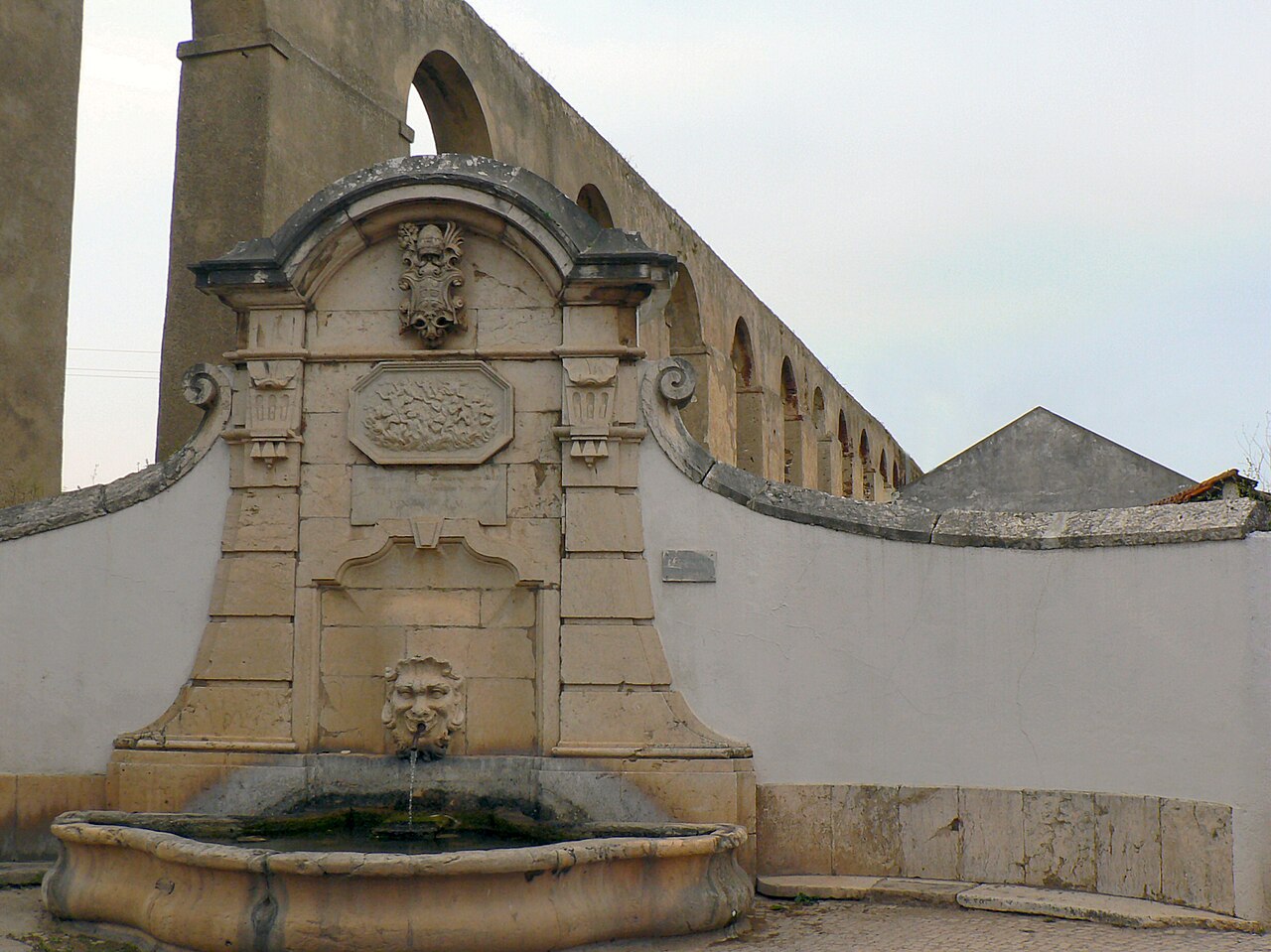
The square’s fountain has a longer route behind it. Tojal’s aqueduct carried water from the Pintéus area to the ensemble. Municipal information describes roughly two kilometres and more than ninety arches. A water-supply need became a visible structural rhythm.
A section seen from a public road raises questions about slopes, supports and distribution. The aqueduct’s survival does not make its whole length an open footpath. Our reference point is on Rua dos Arcos; it guarantees neither a continuous walk nor safe drinking water.
What to notice
Compare neighbouring arches from a safe pedestrian area. Do not climb, walk on top of the aqueduct or stand in the carriageway for photographs.
Before water reaches our hands, it depends on terrain, infrastructure and maintenance. Recognising these stages makes care for public resources concrete.
Start with the architecture
Arches alternate mass and space. Observe supports, crowns and terrain without assuming that water still flows today. Present conservation is a separate question. A safe viewing position comes before the photograph.
Bring the question into everyday life
When opening a tap or turning on a light, much supporting work remains unseen. Learn one stage in a resource’s journey and take a practical step: avoiding waste or reporting damage also cares for shared life.
Try an observation here
Imagine water moving through one visible section and write a question to verify in the sources.
Which everyday resource would you like to understand at its source?
A contemporary cultural reading by Xiaoxiong inspired by the I Ching. The connection with the building is an editorial perspective, not the architect’s intention or a documented historical influence. It is not fortune-telling.
03 / Nearby life
A nearby table
Dining map records within three kilometres in a straight line of the reference point. Walls, railways and slopes may lengthen the journey. Check the entrance and whether the business is open.
The map may omit businesses. Records do not confirm trading status, menus or bookings. Records with an address are shown by default; you can include the others.
04 / The travellers’ Bench
Sit for a while. Leave an observation.
Which everyday resource would you like to understand at its source?