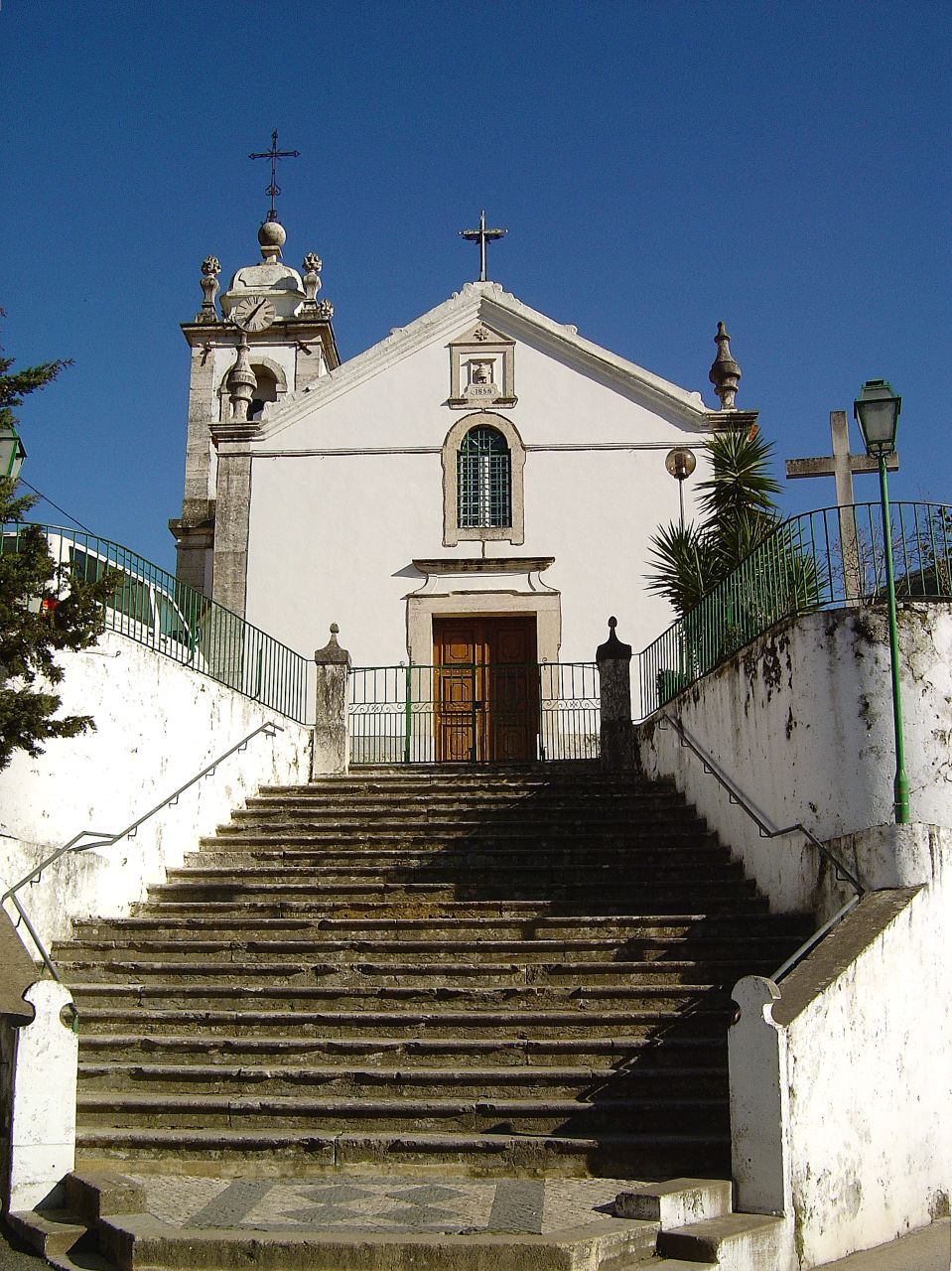
Cropped preview; see the original photograph. The photograph does not confirm the venue’s present condition.
01 / Building stories
Read a building, discover a way of living.
The side doorway preserves the date 1546. Municipal information places this Manueline portal alongside eighteenth-century tiles and nineteenth-century restoration, revealing layers within a simple-looking church. The inscription marks one moment, not the date of every wall.
Compare front and side from the square: the main entrance welcomes, while a side door may preserve other clues. If access is available, observe the chancel tiles while giving worship priority.
This is Lousa in Loures municipality, not Lousã. Keep Loures in searches for transport, images and information.
What to notice
Choose a doorway visible safely and distinguish observed details from documented dates.
A simple appearance can hold a complex past. Comparing another side makes an initial reading more precise.
Start with the architecture
Facade, side door and square offer different viewpoints. Watch paving and traffic without entering restricted areas.
Bring the question into everyday life
Guan suggests pausing judgement. A different angle or a source can reveal what was missing. Revising an opinion can make it more reliable.
Try an observation here
Write your first impression, then one revision prompted by observation or a source.
Which detail recently changed your view?
A contemporary cultural reading by Xiaoxiong inspired by the I Ching. The connection with the building is an editorial perspective, not the architect’s intention or a documented historical influence. It is not fortune-telling.
03 / Nearby life
A nearby table
Dining map records within three kilometres in a straight line of the reference point. Walls, railways and slopes may lengthen the journey. Check the entrance and whether the business is open.
The map may omit businesses. Records do not confirm trading status, menus or bookings. Records with an address are shown by default; you can include the others.