Clues in the space
Where does the portal draw your eye? Step back and consider how the surrounding wall changes its presence.
MAD-013 / Conde Duque and Malasaña
Museo de Historia de Madrid
Calle de Fuencarral, 78, 28004 Madrid
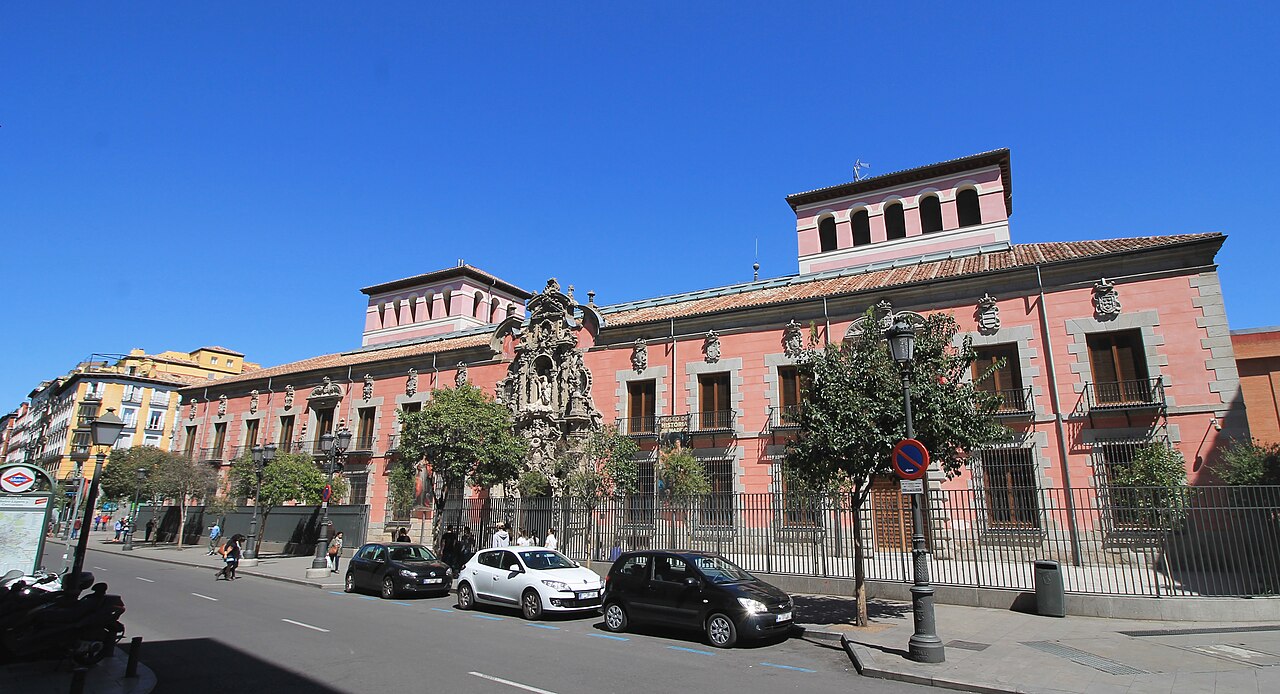
01 / Building stories
The museum occupies the former Hospicio de San Fernando. Pedro de Ribera created its Baroque portal in 1721–1726.
Our reading begins with a return: study the doorway, then step back to take in the façade. Does each detail carry the same weight from here? Look again at your first choice and note something you initially missed. Keep this personal observation separate from the historical account.
Compare a carved detail with a nearby window: outline, shadow and repetition. Describe only what you can identify.
Documentary source ↓02 / I Ching reflections
Fu suggests returning with a fresh question. In Xiaoxiong's contemporary reading, a familiar place can become an exercise in renewed attention.
Above: Kun · Earth
Below: Zhen · Thunder
Read six lines from bottom to top ↑
Zhou Yi · Commentary on the Image · Chinese excerpt
雷在地中,复。Thunder is within the earth: Fu.
Original text and context ↗A beginning often returns quietly. Fu does not erase change or demand an identical past: it asks what can continue and what conditions would help it grow.
The excerpt gives a natural image from the classic. Its application to this building is Xiaoxiong's contemporary proposal, not architectural intent or evidence of historical influence.
Where does the portal draw your eye? Step back and consider how the surrounding wall changes its presence.
Compare a carved detail with a nearby window: outline, shadow and repetition. Describe only what you can identify.
Which part of a familiar journey would you like to look at again?
Cultural reading, not divination. The connection is editorial and does not establish historical I Ching influence.
03 / Nearby life
Find a table nearby · filters and directions →
Dining map records within three kilometres in a straight line of the reference point. Walls, railways and slopes may lengthen the journey. Check the entrance and whether the business is open.
The map may omit businesses. Records do not confirm trading status, menus or bookings. Records with an address are shown by default; you can include the others.
04 / The travellers’ Bench
What did a second look reveal in this doorway?
Madrid History Museum: 40.425795, -3.700799. Used to find what is nearby; the public entrance is not yet confirmed.
Luis García (Zaqarbal) · CC BY-SA 3.0 es · Original photograph page ↗
Cropped preview; see the original photograph. The photograph does not confirm the venue’s present condition.
Sources consulted: 2026-11-07