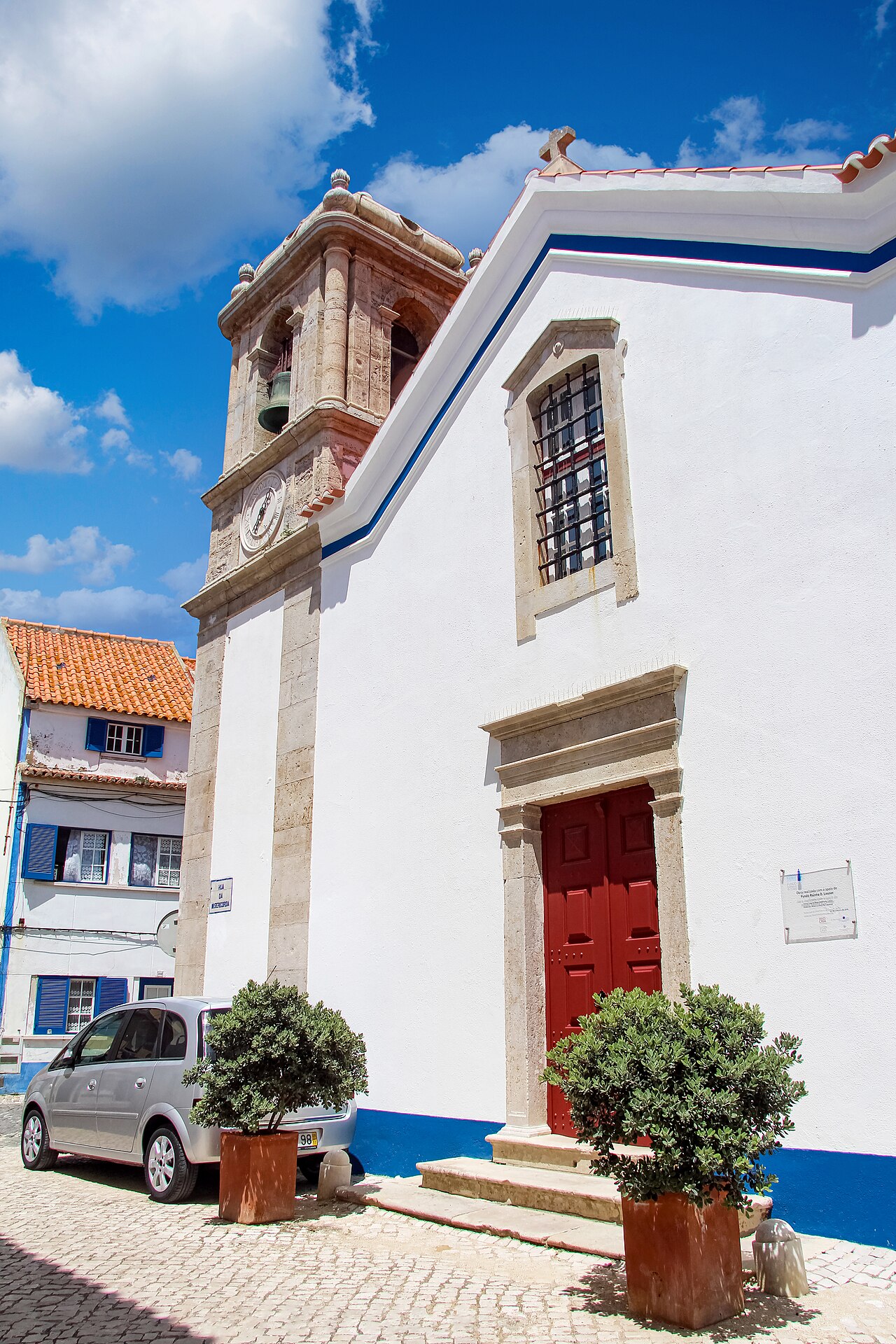
Cropped preview; see the original photograph. The photograph does not confirm the venue’s present condition.
01 / Building stories
Read a building, discover a way of living.
The church’s story connects fishermen’s participation with worship, shelter and care. The former lodging house and hospital became the Archive-Museum.
The municipal page currently marks the Archive-Museum as temporarily closed. Begin with the façade from the public street and confirm reopening before planning an interior visit. Consider how an institution of care becomes recognisable within a town.
What to notice
Observe entrances from the public street; do not plan an Archive-Museum visit while it remains closed.
Yi turns attention towards the recipient. An intention to help needs a clear point of access, reliable arrangements and care that can continue.
Start with the architecture
The proximity of worship and care brings ritual beside everyday needs. From outside, compare the visibility of entrances without assuming what happens inside.
Bring the question into everyday life
Before helping, confirm the need. Moving from “what I want to offer” to “how to make help accessible” may change the order of action.
Try an observation here
Think of one small change that makes asking for help easier.
What kind of help avoids creating another burden?
A contemporary cultural reading by Xiaoxiong inspired by the I Ching. The connection with the building is an editorial perspective, not the architect’s intention or a documented historical influence. It is not fortune-telling.
03 / Nearby life
A nearby table
Dining map records within three kilometres in a straight line of the reference point. Walls, railways and slopes may lengthen the journey. Check the entrance and whether the business is open.
The map may omit businesses. Records do not confirm trading status, menus or bookings. Records with an address are shown by default; you can include the others.