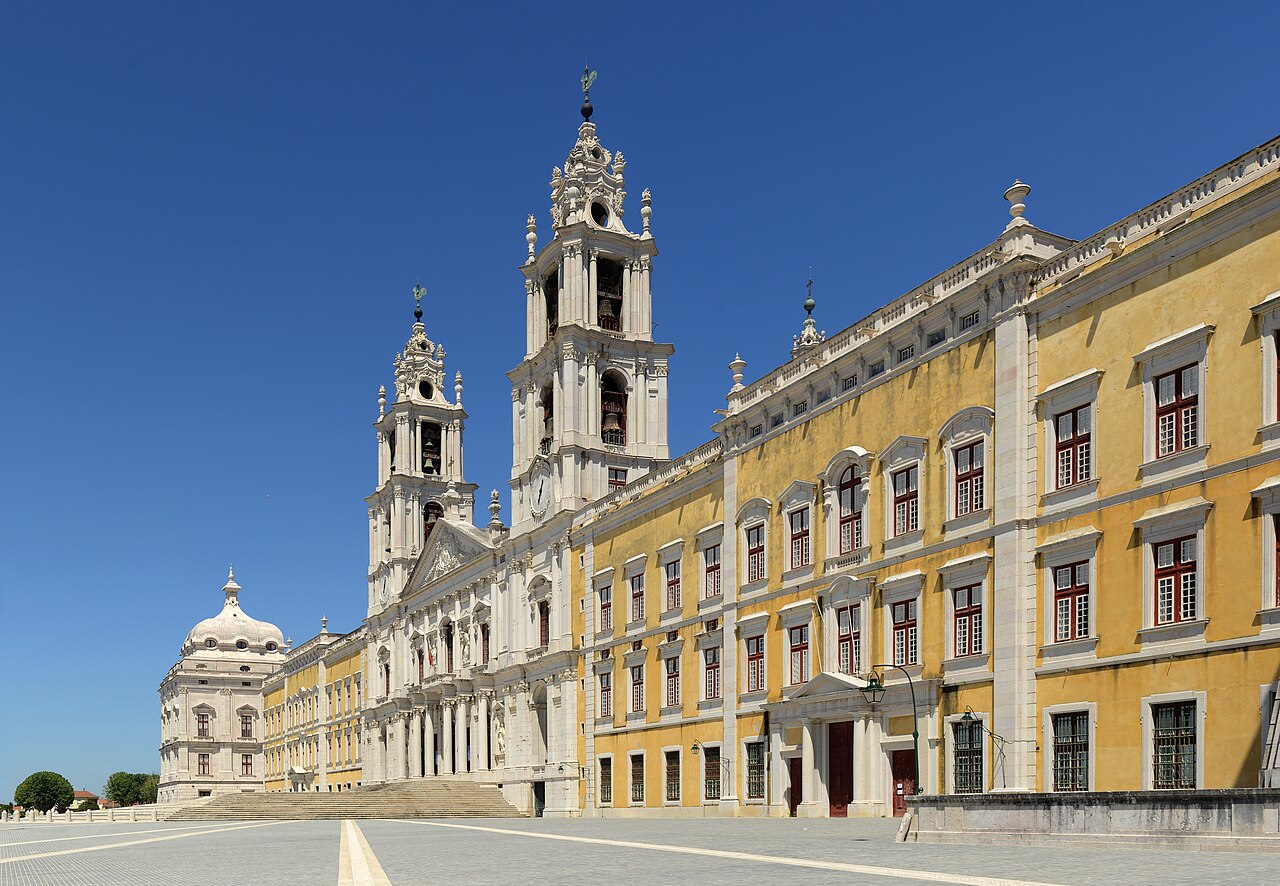
Cropped preview; see the original photograph. The photograph does not confirm the venue’s present condition.
01 / Building stories
Read a building, discover a way of living.
Work commissioned by João V began in 1717, and the basilica was consecrated in 1730. João Frederico Ludovice provided the initial design. The project’s scale also reshaped the town. In 2019, the royal complex — palace, basilica, convent, Cerco Garden and Tapada — became a World Heritage property.
Palace, basilica, convent and library belong to one complex. Begin with the scale of the façade, then use the visitor route to connect reading, worship and court life.
Take one question inside: how does a large building organise different people? Look at the entrances from the square first. On the permitted route, pause at a transition between rooms and consider the activities that movement makes possible.
What to notice
Compare the central entrance and window rows, then notice a change of scale on the permitted route.
Da You invites reflection on the responsibility of having. Spaces and collections need continuing care, interpretation and use before abundance can become a shared experience.
Start with the architecture
Read repetition in the windows and connection in the corridors. Capacity also means accommodating different activities; use a single threshold as your unit of observation.
Bring the question into everyday life
Think of something you own but seldom use. Does it need more space, or better care and sharing? Include maintenance in what ownership means.
Try an observation here
Choose a doorway and note two activities it connects.
How would you care for the abundance you already have?
A contemporary cultural reading by Xiaoxiong inspired by the I Ching. The connection with the building is an editorial perspective, not the architect’s intention or a documented historical influence. It is not fortune-telling.
03 / Nearby life
A nearby table
Dining map records within three kilometres in a straight line of the reference point. Walls, railways and slopes may lengthen the journey. Check the entrance and whether the business is open.
The map may omit businesses. Records do not confirm trading status, menus or bookings. Records with an address are shown by default; you can include the others.
04 / The travellers’ Bench
Sit for a while. Leave an observation.
How would you care for the abundance you already have?