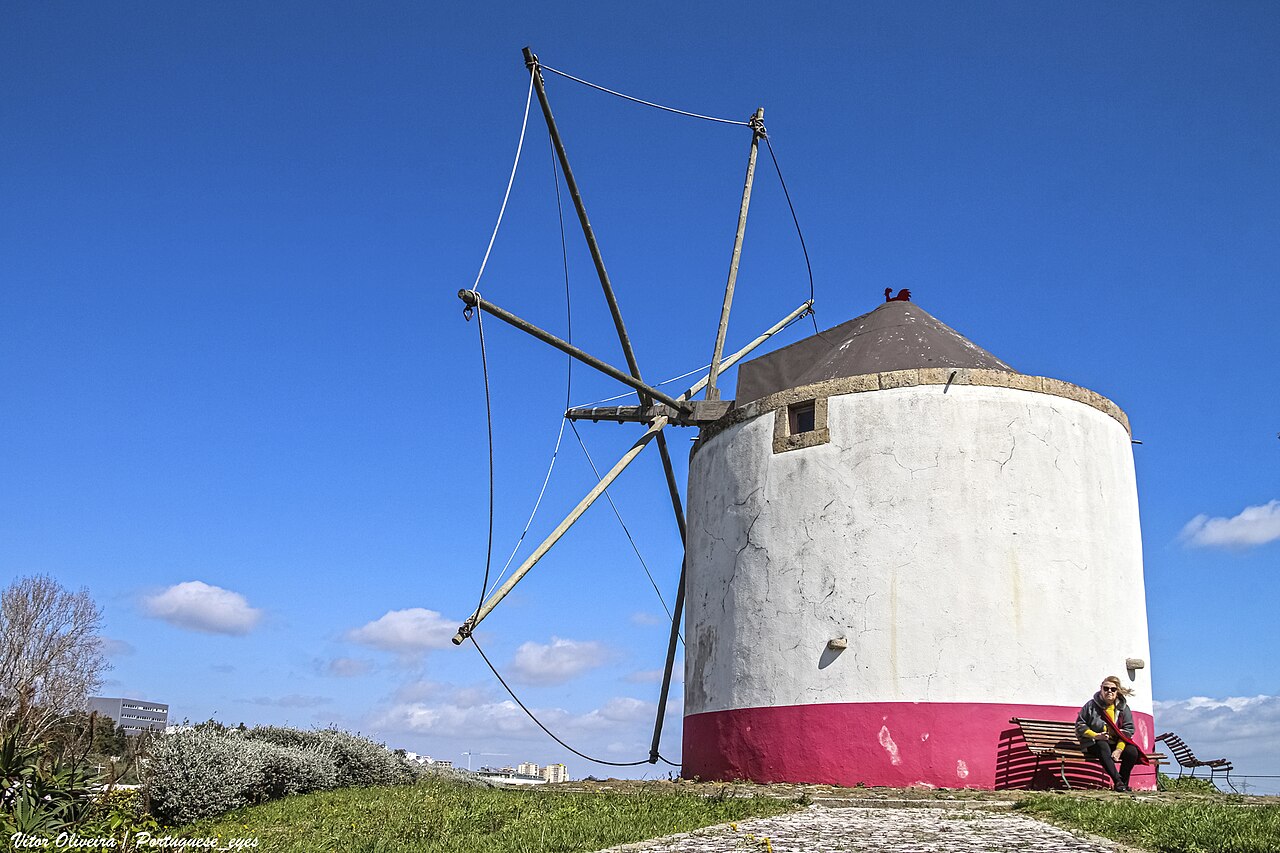
Cropped preview; see the original photograph. The photograph does not confirm the venue’s present condition.
01 / Building stories
Read a building, discover a way of living.
This circular masonry tower mill preserves the memory of grain milling in Famões. The municipal guide links it to eighteenth-century milling and records restoration in 2001. Its adjustable cap is one way this type of windmill responds to wind direction.
Tower, upper components and surroundings connect food with labour, weather and maintenance. Present-day visits also require organisation and care. An old guide’s timetable does not establish today’s arrangements; confirm interior access and machinery demonstrations in advance.
What to notice
Observe the tower and cap from open public areas. Join interior visits or demonstrations only when authorised; do not climb or touch moving machinery.
Xun’s image of wind suggests adaptation. A windmill depends on wind but uses an adjustable structure to harness it. Action requires effort and attention to conditions.
Start with the architecture
The tower and adjustable upper parts turn an invisible condition into a working relationship. The surviving mill has been restored. On a guided visit, ask which parts move and what maintenance matters; appearance alone cannot prove that machinery works.
Bring the question into everyday life
Before persisting, distinguish a problem of purpose, method or environment. Adaptation can preserve your direction while changing one step. Try a small adjustment to a repeatedly difficult task and observe its effect.
Try an observation here
Sense the wind direction for one minute and identify parts related to it. Separate physical sensation from claims about the mechanism.
Where might changing your method help more than pushing harder?
A contemporary cultural reading by Xiaoxiong inspired by the I Ching. The connection with the building is an editorial perspective, not the architect’s intention or a documented historical influence. It is not fortune-telling.
03 / Nearby life
A nearby table
Dining map records within three kilometres in a straight line of the reference point. Walls, railways and slopes may lengthen the journey. Check the entrance and whether the business is open.
The map may omit businesses. Records do not confirm trading status, menus or bookings. Records with an address are shown by default; you can include the others.
04 / The travellers’ Bench
Sit for a while. Leave an observation.
Where might changing your method help more than pushing harder?