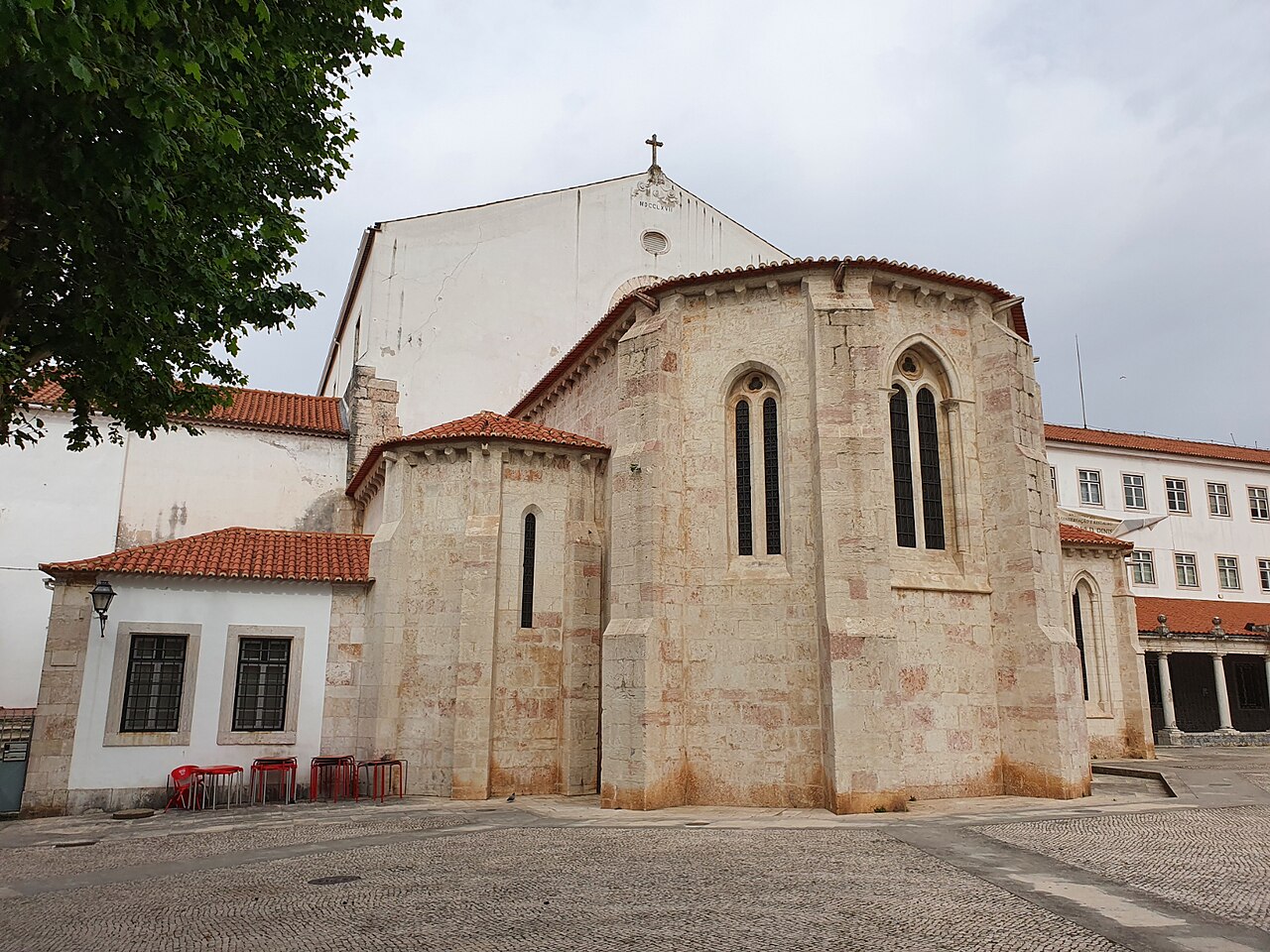
Cropped preview; see the original photograph. The photograph does not confirm the venue’s present condition.
01 / Building stories
Read a building, discover a way of living.
Construction of this Cistercian convent began in 1295 with the support of King Dinis. The heritage record links the choice of site to water and terrain, conditions that also shaped the cloisters. The surviving Gothic east end of the church is an important clue to its early architecture.
The complex contains several periods: sixteenth-century cloister works and rebuilding after the 1755 earthquake changed its spaces. King Dinis’s tomb is also preserved here. Look at the junctions between earlier and later work. The king-and-bear story is a foundation legend and should be distinguished from documented dates.
What to notice
On the authorised route, compare light in the cloister and church, pointed arches, buttresses and later rebuilding. Without a booking, begin with the exterior from the square.
Guan invites us to suspend judgement. The monastery’s scale and order can reveal how quickly we walk and how little a first glance captures. Understanding a place often begins with willingness to stop.
Start with the architecture
The cloister organises movement around a centre. Shade in the gallery contrasts with courtyard light; openings, corners and boundaries guide the feet. Differences between building periods can tell us more than one label for the whole complex.
Bring the question into everyday life
Write down what you saw separately from what you think it means. A first glance supplies only a fragment. Ask a specific question before drawing a conclusion in your next conversation, allowing new information to alter your view.
Try an observation here
Choose an opening and write three details you can actually see before consulting the sources. Separate observation from hypothesis.
What deserves a closer look before you decide?
A contemporary cultural reading by Xiaoxiong inspired by the I Ching. The connection with the building is an editorial perspective, not the architect’s intention or a documented historical influence. It is not fortune-telling.
03 / Nearby life
A nearby table
Dining map records within three kilometres in a straight line of the reference point. Walls, railways and slopes may lengthen the journey. Check the entrance and whether the business is open.
The map may omit businesses. Records do not confirm trading status, menus or bookings. Records with an address are shown by default; you can include the others.