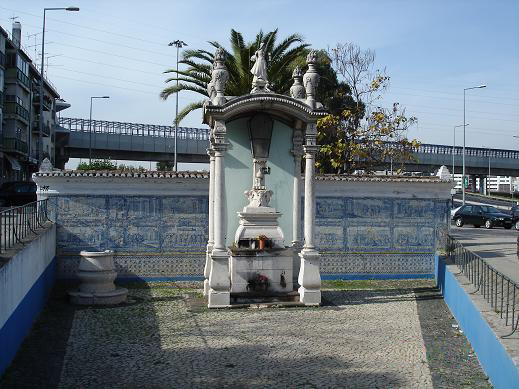
Cropped preview; see the original photograph. The photograph does not confirm the venue’s present condition.
01 / Building stories
Read a building, discover a way of living.
The memorial was constructed in stages between 1744 and 1747. Blue-and-white tile panels recount a theft of sacred objects in 1671 and the trial that followed. The heritage record distinguishes building and tiling campaigns; inscriptions must be read alongside later alterations.
The images reveal streets, clothing and actions, but also express the religious and political perspectives of their time. A story placed in public space shapes later memory. We can study its narrative methods while reflecting critically on the severe punishments represented.
What to notice
From a safe public stopping place, follow the panels’ sequence. Distinguish the visual account from verified events and do not touch the tiles.
Song invites reflection on conflict, judgement and evidence. Repetition does not mean every voice has survived. Give an emotionally powerful story time for verification.
Start with the architecture
Panels, gestures and inscriptions form a reading sequence. Look at one image alone, then at its neighbours: how does the same action acquire a different meaning? The monument is also evidence of how a story was presented.
Bring the question into everyday life
Separate evidence, the narrator’s position and your own emotion. Before responding to conflict, clarify what happened and whose experience has not been heard. A compelling narrative deserves examination as well as a reaction.
Try an observation here
Describe only what a figure in one panel is doing. Then read the explanation and compare the judgements added by words and images.
What do you check first when a news story makes you immediately angry?
A contemporary cultural reading by Xiaoxiong inspired by the I Ching. The connection with the building is an editorial perspective, not the architect’s intention or a documented historical influence. It is not fortune-telling.
03 / Nearby life
A nearby table
Dining map records within three kilometres in a straight line of the reference point. Walls, railways and slopes may lengthen the journey. Check the entrance and whether the business is open.
The map may omit businesses. Records do not confirm trading status, menus or bookings. Records with an address are shown by default; you can include the others.
04 / The travellers’ Bench
Sit for a while. Leave an observation.
What do you check first when a news story makes you immediately angry?