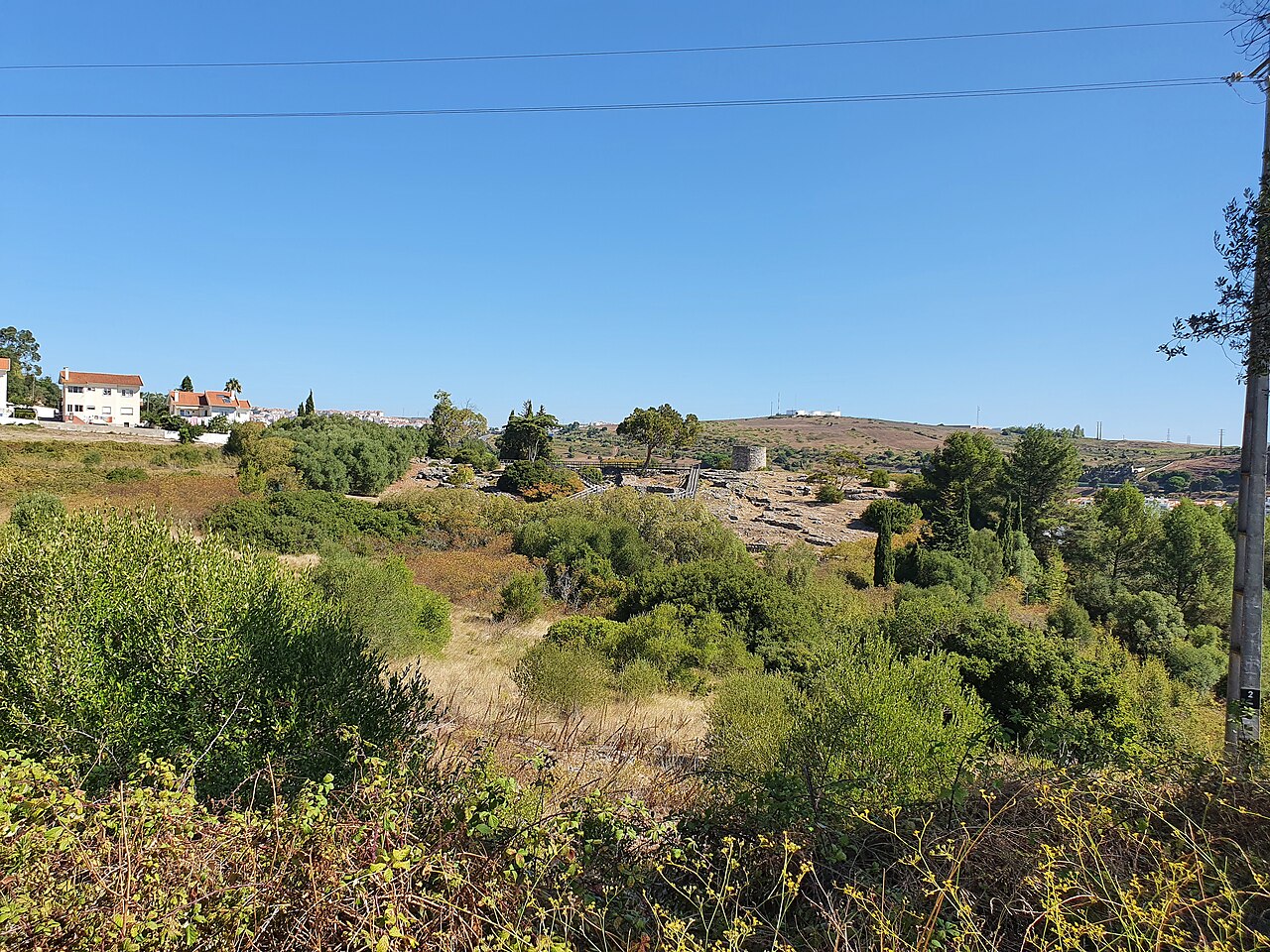
Cropped preview; see the original photograph. The photograph does not confirm the venue’s present condition.
01 / Building stories
Read a building, discover a way of living.
The Museu Nacional de Arqueologia describes Leceia as a fortified Chalcolithic settlement above the Barcarena stream valley. Walls and defensive structures leave clues that require us to distinguish archaeological evidence, interpretation and imagination.
What to notice
From permitted viewpoints, examine terrain and structures together and use interpretive plans.
Accepting gaps gives evidence room to matter. A ruin offers fragments rather than a complete, ready-made story.
Start with the architecture
Surviving walls, terrain and archaeological explanations need to be read together. Separate visible traces from researchers' interpretations and respect areas without access.
Bring the question into everyday life
It is tempting to complete fragments quickly. Leaving a gap makes room for later evidence. In other decisions, try separating what you observed from what you inferred before acting.
Try an observation here
Record one directly observable fact and one question still requiring confirmation.
Can you leave a question open when the clues are incomplete?
A contemporary cultural reading by Xiaoxiong inspired by the I Ching. The connection with the building is an editorial perspective, not the architect’s intention or a documented historical influence. It is not fortune-telling.
03 / Nearby life
A nearby table
Dining map records within three kilometres in a straight line of the reference point. Walls, railways and slopes may lengthen the journey. Check the entrance and whether the business is open.
The map may omit businesses. Records do not confirm trading status, menus or bookings. Records with an address are shown by default; you can include the others.
04 / The travellers’ Bench
Sit for a while. Leave an observation.
Can you leave a question open when the clues are incomplete?