Cropped preview; see the original photograph. The photograph does not confirm the venue’s present condition.
01 / Building stories
Read a building, discover a way of living.
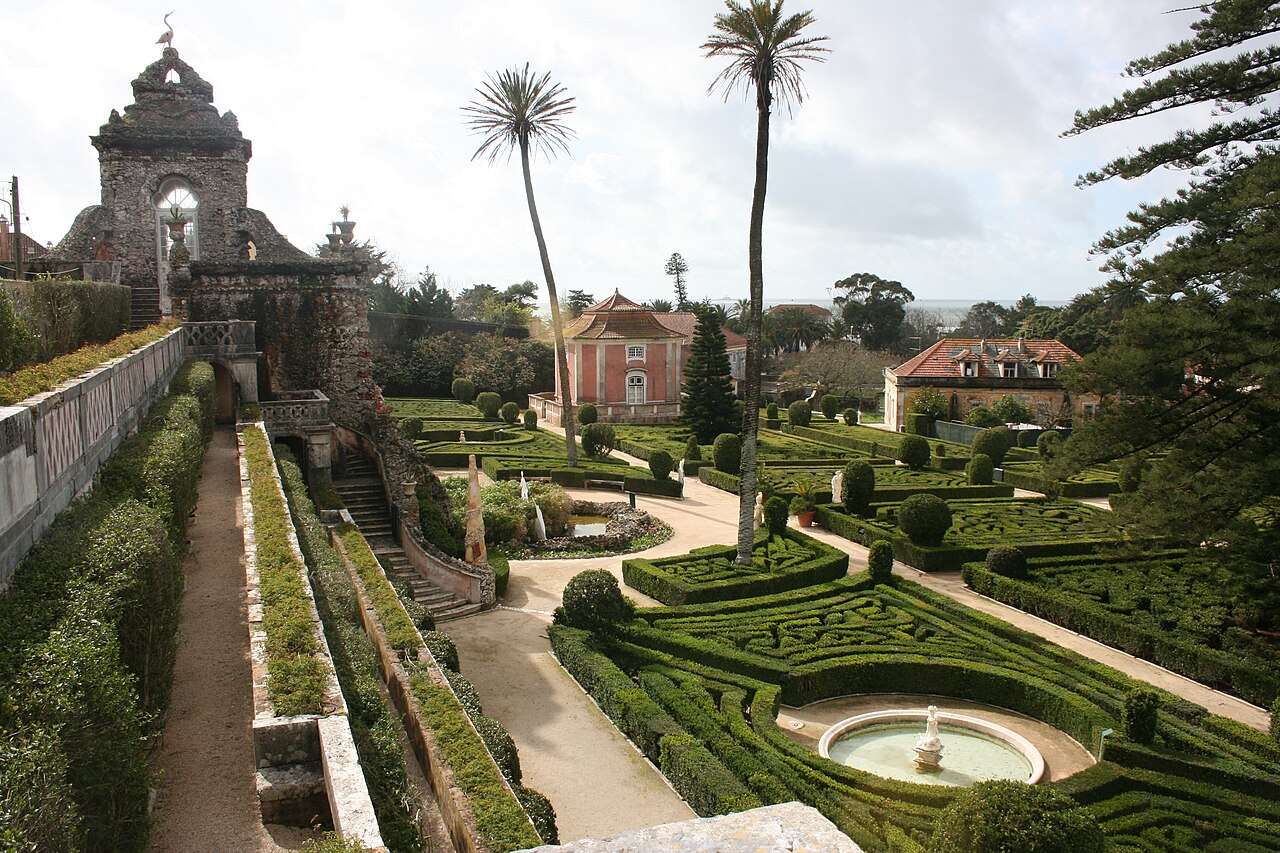
Turismo de Lisboa presents these royal gardens as a development of the eighteenth and nineteenth centuries. Cascade, pools, beds and sculptures organise a sequence of views; the sculptural group is associated with Machado de Castro. Land, water and sightlines shape an idealised order.
What to notice
Observe the cascade's levels and direction of view; distinguish the visible structure from the moving water you imagine.
Pool edges, path widths and viewing distances allow elements to coexist. A useful limit can also leave freedom to decide where to stop.
Start with the architecture
A composition may draw the eye upwards while the body needs a level resting place. Compare the best photographic position with the place where you would prefer to sit quietly.
Bring the question into everyday life
Too few limits can create conflict; too many leave little room for life. In an itinerary, time for rest, detours and changing your mind may reveal what you actually enjoy.
Try an observation here
Find a resting place and describe its relationship to water, shade and the path.
Which reasonable limit makes everyday life feel freer?
A contemporary cultural reading by Xiaoxiong inspired by the I Ching. The connection with the building is an editorial perspective, not the architect’s intention or a documented historical influence. It is not fortune-telling.
03 / Nearby life
A nearby table
Dining map records within three kilometres in a straight line of the reference point. Walls, railways and slopes may lengthen the journey. Check the entrance and whether the business is open.
The map may omit businesses. Records do not confirm trading status, menus or bookings. Records with an address are shown by default; you can include the others.
04 / The travellers’ Bench
Sit for a while. Leave an observation.
Which reasonable limit makes everyday life feel freer?