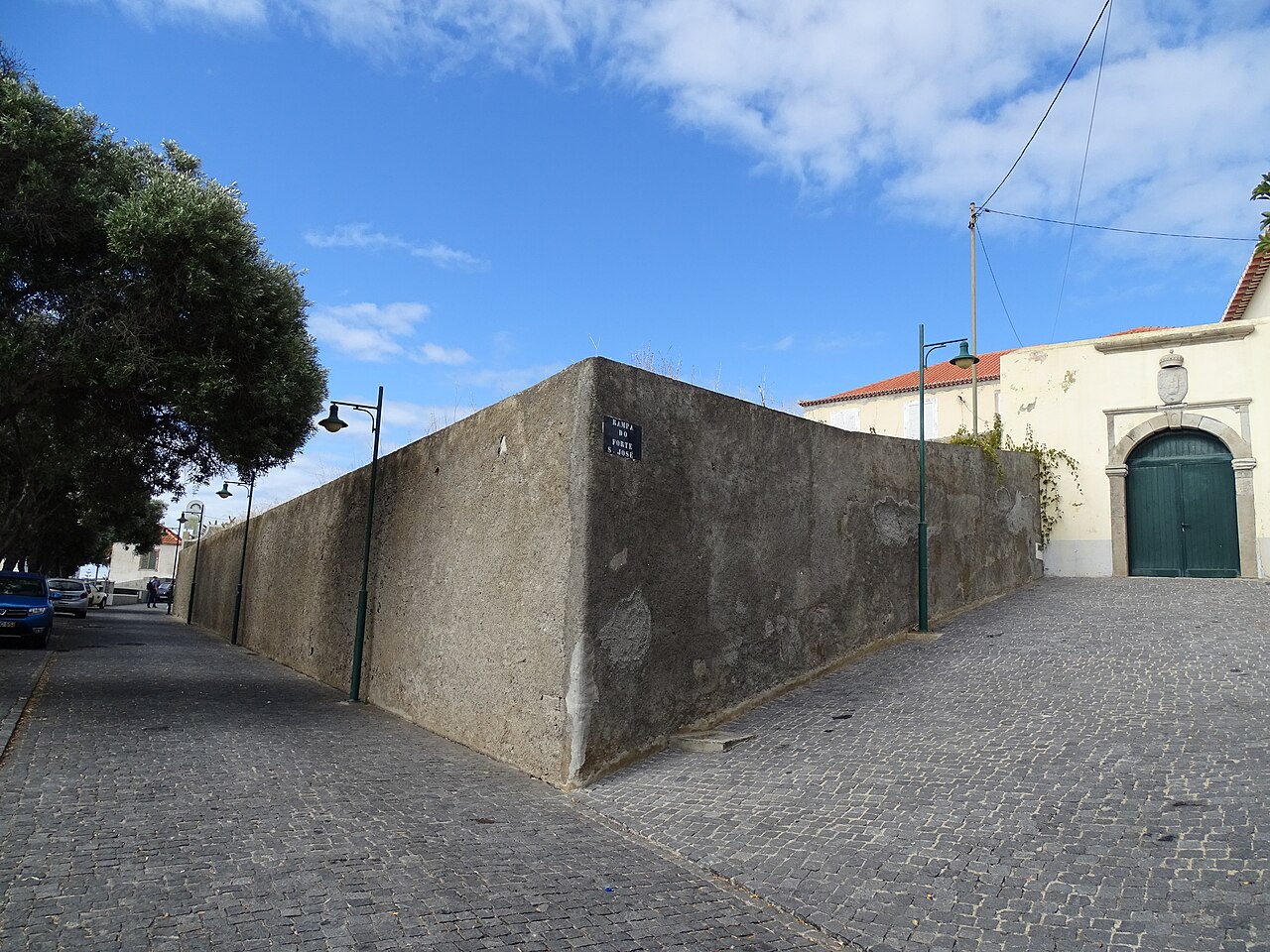
Cropped preview; see the original photograph. The photograph does not confirm the venue’s present condition.
01 / Building stories
Read a building, discover a way of living.
The elevated fort relates to island defence. The municipal guide records its transition to private ownership; heritage value does not imply public access.
Read its relationship with town and sea from public streets while respecting property boundaries.
What to notice
From the public street, compare wall and ramp levels and observe the threshold. This is private property; view only what is visible from public space.
Jie draws attention to boundaries. Gates, hours and rules distribute space and opportunities. A limit needs reason and clarity; when use changes, rules deserve review too.
Start with the architecture
Jie makes respect concrete through boundaries and attention to present users.
Bring the question into everyday life
Choose a familiar rule: what does it protect, and whom does it burden? Measure does not remove principles; it brings them into contact with real situations.
Try an observation here
Pause, record one observed detail and respond to the question below. Notes can hold doubts and different opinions; leave out other people’s private information.
How can you understand a place without entering?
A contemporary cultural reading by Xiaoxiong inspired by the I Ching. The connection with the building is an editorial perspective, not the architect’s intention or a documented historical influence. It is not fortune-telling.
03 / Nearby life
A nearby table
Dining map records within three kilometres in a straight line of the reference point. Walls, railways and slopes may lengthen the journey. Check the entrance and whether the business is open.
This selection covers the current municipality. Near hills, rivers and municipal boundaries, plan transport using actual roads.
The map may omit businesses. Records do not confirm trading status, menus or bookings. Records with an address are shown by default; you can include the others.