Holding without inertia
Maintaining a defence consumes resources. Past necessity does not automatically justify repeating the same response forever.
OPO-016 / Foz coastline
Castelo do Queijo · Forte de São Francisco Xavier
Praça de Gonçalves Zarco, Porto
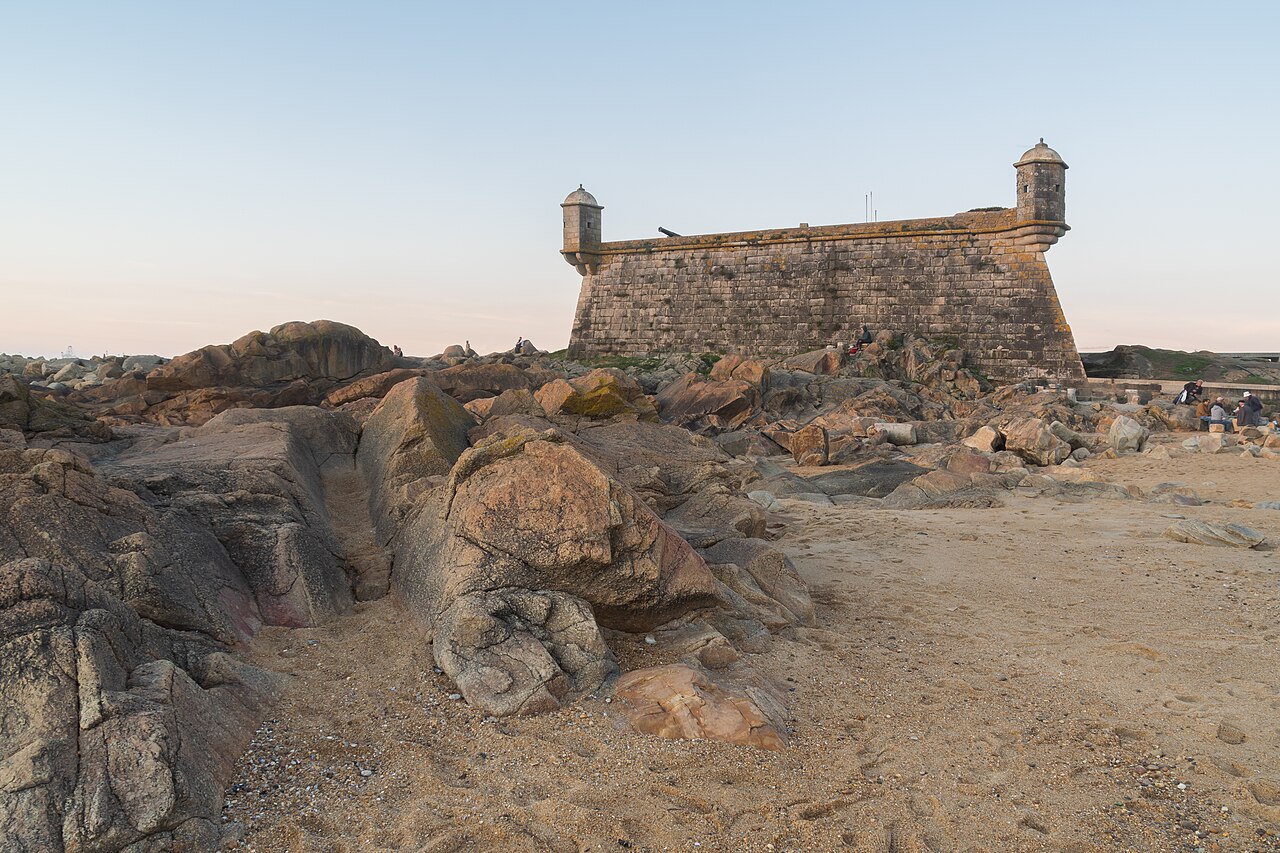
01 / Building stories
São Francisco Xavier Fort takes its familiar name from the Queijo rock. Construction began around 1661 as part of Portugal’s coastal defence programme after the Restoration.
In 1717, Porto’s councillors asked the king to end its defensive role, questioning its usefulness and upkeep. The request was refused. Its ditch, gateway and battery invite thought about both building and maintaining a defence.
View the fort’s rocky foundation from open paths. Stay clear of wave-exposed areas and check arrangements before entering.
Documentary source ↓02 / I Ching reflections
Gen’s stillness requires judgement. The fort’s disputed usefulness gives that question a concrete setting.
Above · Gen · Mountain
Below · Gen · Mountain
Read the six lines from bottom to top ↑
Zhou Yi · Commentary on the Image · Chinese excerpt
兼山,艮。Mountains one above another: Gen. — Editorial translation of the excerpt
Original text and context ↗Two mountains bring stopping and limits into view. Gen becomes a judgement: when to continue and when to pause to understand conditions? Acknowledging boundaries can make the next step more deliberate.
This excerpt gives the natural image that opens the Commentary on the Image. The full passage relates it to personal conduct or governance in its historical context. Follow the source to read it in full. Applying it to buildings today is Xiaoxiong’s editorial proposal, not a summary of every meaning of the ancient text.
Maintaining a defence consumes resources. Past necessity does not automatically justify repeating the same response forever.
Ending a military role need not erase memory. Conservation offers another decision about what to retain and open.
Take a question to the bench
How do we distinguish lasting responsibility from a habit that has lost its purpose?
Go to the bench and note what I saw →A contemporary cultural interpretation by Xiaoxiong. The diagram and excerpt have a source; the building connection is editorial, not architectural intent, historical I Ching influence or the venue’s position.
03 / Nearby life
Find a table nearby · filters and directions →
Dining map records within three kilometres in a straight line of the reference point. Walls, railways and slopes may lengthen the journey. Check the entrance and whether the business is open.
Checking Bench membership and claim status…
The map may omit businesses. Records do not confirm trading status, menus or bookings. Records with an address are shown by default; you can include the others.
04 / The travellers’ Bench
How do we distinguish lasting responsibility from a habit that has lost its purpose?
Building reference point: 41.168531, -8.690032. Used to find what is nearby; the public entrance is not yet confirmed.
Krzysztof Golik · CC BY-SA 4.0 · Original photograph page ↗
Cropped preview; see the original photograph. The photograph does not confirm the venue’s present condition.
Sources consulted: 2026-09-23