The reach of protection
Walls do not stop the river and sea from changing. Solidity should not be confused with unlimited power.
OPO-015 / Foz coastline
Forte de São João Baptista da Foz
Esplanada do Castelo, Foz do Douro, Porto
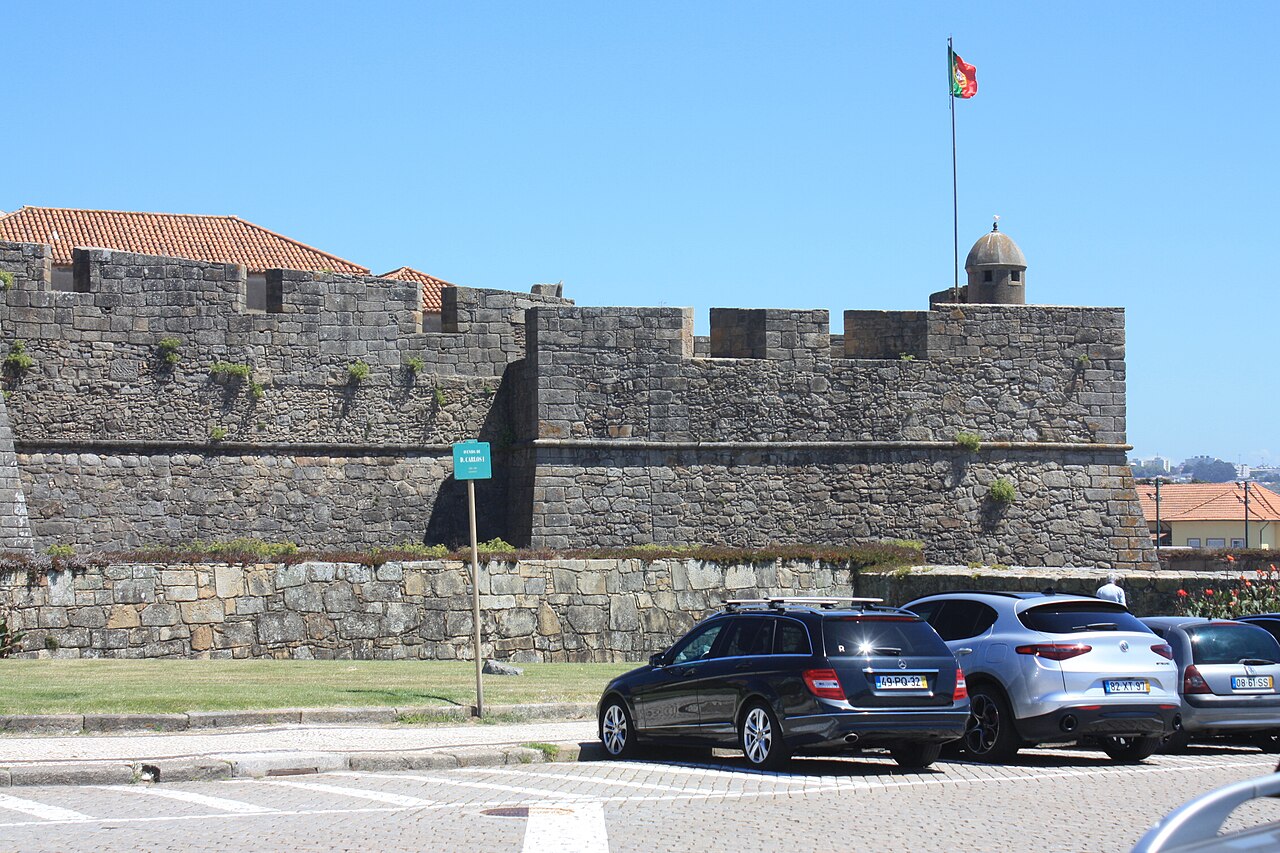
01 / Building stories
Construction of the bastioned walls began in 1570, enclosing an earlier Renaissance religious complex. The national heritage inventory links the works to defending the Douro’s mouth; later alterations enlarged the fort.
From public space, compare its low, thick walls with the river entrance. This position helps explain a form built for defence rather than scenic viewing.
Compare the sea-facing and city-facing walls and entrances from public paths. Respect restricted areas.
Documentary source ↓02 / I Ching reflections
Kun asks us to consider limitation: a wall can protect a defined space without controlling everything around it.
Above · Dui · Lake
Below · Kan · Water
Read the six lines from bottom to top ↑
Zhou Yi · Commentary on the Image · Chinese excerpt
泽无水,困。The lake has no water: Kun. — Editorial translation of the excerpt
Original text and context ↗The water has drained away and the lake runs dry. Kun shows moments of limited conditions: when resources, space or freedom are short, how do people keep their dignity and support one another? Acknowledging hardship is not accepting it as unchangeable.
This excerpt gives the natural image that opens the Commentary on the Image. The full passage relates it to personal conduct or governance in its historical context. Follow the source to read it in full. Applying it to buildings today is Xiaoxiong’s editorial proposal, not a summary of every meaning of the ancient text.
Walls do not stop the river and sea from changing. Solidity should not be confused with unlimited power.
Today’s institutional use differs from military defence. Adaptation acknowledges new conditions without erasing the past.
Take a question to the bench
Which boundary should change when an old protection no longer serves the present?
Go to the bench and note what I saw →A contemporary cultural interpretation by Xiaoxiong. The diagram and excerpt have a source; the building connection is editorial, not architectural intent, historical I Ching influence or the venue’s position.
03 / Nearby life
Find a table nearby · filters and directions →
Dining map records within three kilometres in a straight line of the reference point. Walls, railways and slopes may lengthen the journey. Check the entrance and whether the business is open.
Checking Bench membership and claim status…
The map may omit businesses. Records do not confirm trading status, menus or bookings. Records with an address are shown by default; you can include the others.
04 / The travellers’ Bench
Which boundary should change when an old protection no longer serves the present?
Building reference point: 41.148881, -8.673955. Used to find what is nearby; the public entrance is not yet confirmed.
Reis Quarteu · CC BY-SA 4.0 · Original photograph page ↗
Cropped preview; see the original photograph. The photograph does not confirm the venue’s present condition.
Sources consulted: 2026-09-23