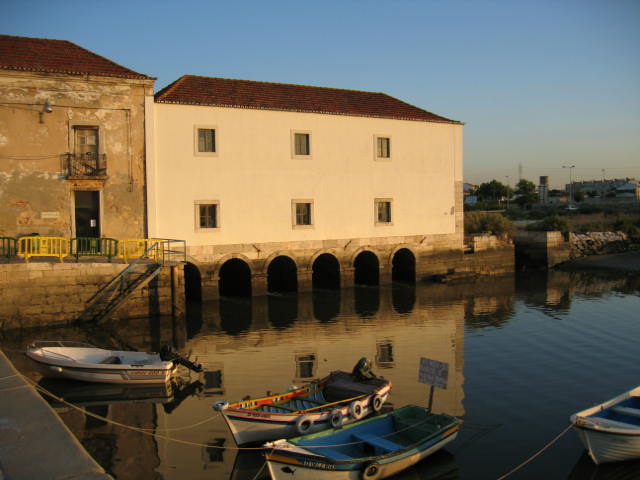
Municipal information traces the mill's origins to the fifteenth century and a land grant in 1435. Restoration revealed traces of an earlier channel. Present appearance alone cannot date the entire history of the site. The municipality acquired the mill in 1986; restoration took place in 2006–2007. Water storage and discharge explain its work: look also at the ground and channels connecting the building to the tide.
What to look for
Connect visible walls with the channel. Restoration discoveries show that part of the history lies below ground, beyond the façade.
An I Ching reading
Repair
Gu connects repair with responsibility for what is inherited. Restoration must distinguish damage to address from traces to preserve. An old channel reminds us that intervention can also erase evidence. Understanding before acting is part of care.
Independent cultural interpretation: an editorial reflection inspired by the hexagram, not a historical fact, the builders’ intention or a prediction.
A table nearby
Explore venue details before choosing. Within three kilometres in a straight line from the building; confirm walking access and opening before you go.
Nearby, start with these
Recognise the storefront, then check venue details and directions.
Loading records…
How we select
Up to four venues with matched sources, an address and a non-historical storefront photo, ordered by straight-line distance. Claims and payments do not affect order. Confirm access and opening.
This includes unchecked map records, potentially incomplete addresses or closed venues. It is not a recommendation list.
Sources and selection criteria
The default list contains details cross-checked with the venue or municipality. All map records includes additional places. Distances start at the building reference point; confirm entrances, opening and walking access with the venue.
Unique records across anchors: —
Operating status, storefront photos and routes need review. Crossings, bays and slopes can lengthen a trip; straight-line distance is not walking time.