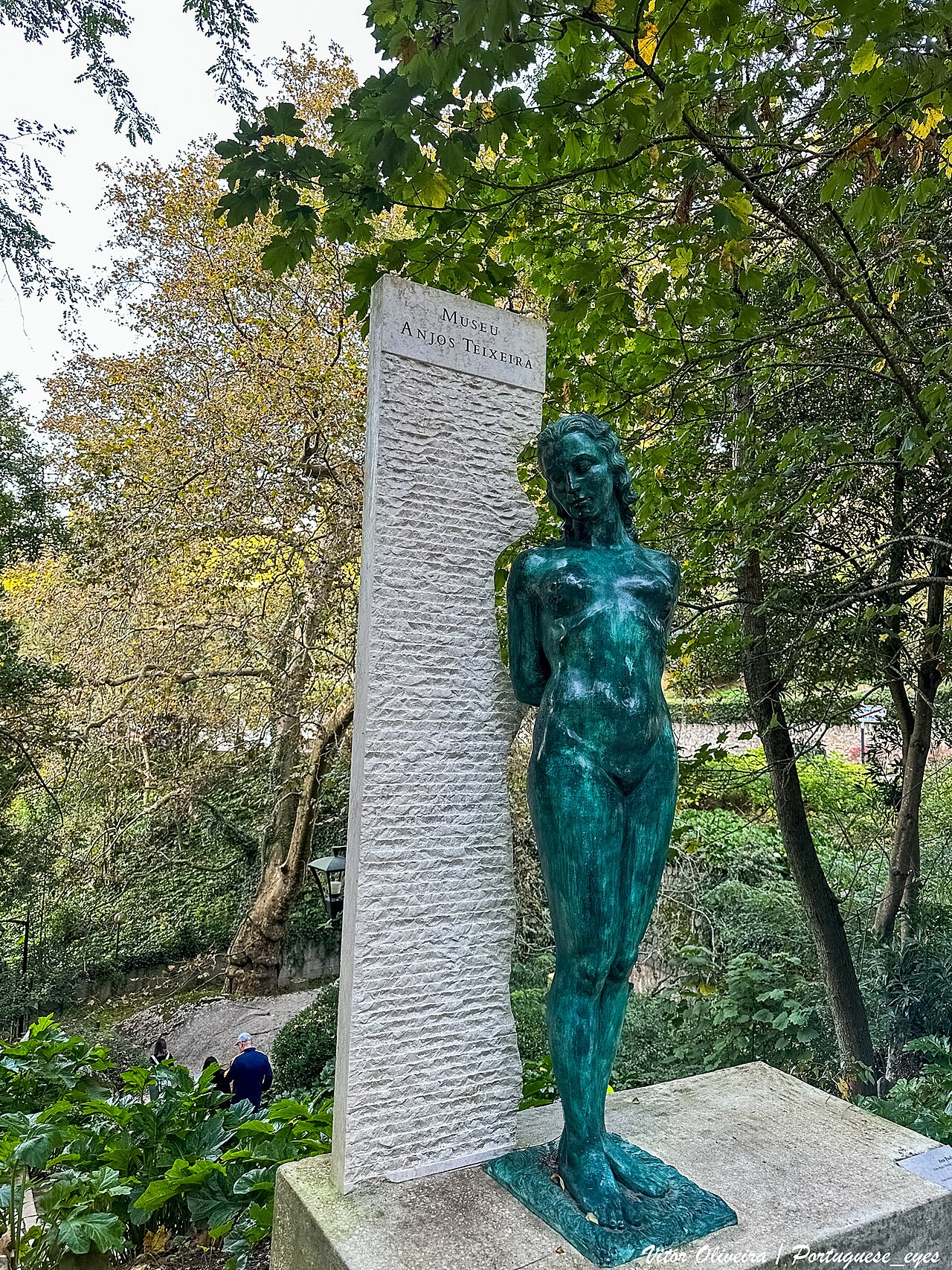
Cropped preview; see the original photograph. The photograph does not confirm the venue’s present condition.
01 / Building stories
Read a building, discover a way of living.
This early-twentieth-century building was a watermill powered by the Rio do Porto. In 1974, Pedro Augusto dos Anjos Teixeira donated his work and some of his father Artur Gaspar's work to Sintra. The museum opened in 1976 and also became his home and studio, where he taught until 1992. Water once moved machines; later, hands shaped bodies. Different kinds of labour remain in the history of one house.
What to notice
Notice how empty space changes the distance between your body and a sculpture.
Posture, proximity and pauses take part in encounters before words. A feeling can begin understanding without exhausting an artwork's meaning.
Start with the architecture
Light, empty space and room to move alter how a sculpture is read. Mill, home, studio and museum layer different uses and forms of work within one building.
Bring the question into everyday life
The work stays still while your position changes its outline and shadows. Distance is part of the encounter. Leaving room for an artwork, or another person, allows a less hurried response.
Try an observation here
From two permitted positions, describe a sculpture's posture and then the emotion you associate with it. Separate observation from interpretation.
What posture helped you recognise an emotion?
A contemporary cultural reading by Xiaoxiong inspired by the I Ching. The connection with the building is an editorial perspective, not the architect’s intention or a documented historical influence. It is not fortune-telling.
03 / Nearby life
A nearby table
Dining map records within three kilometres in a straight line of the reference point. Walls, railways and slopes may lengthen the journey. Check the entrance and whether the business is open.
The map may omit businesses. Records do not confirm trading status, menus or bookings. Records with an address are shown by default; you can include the others.