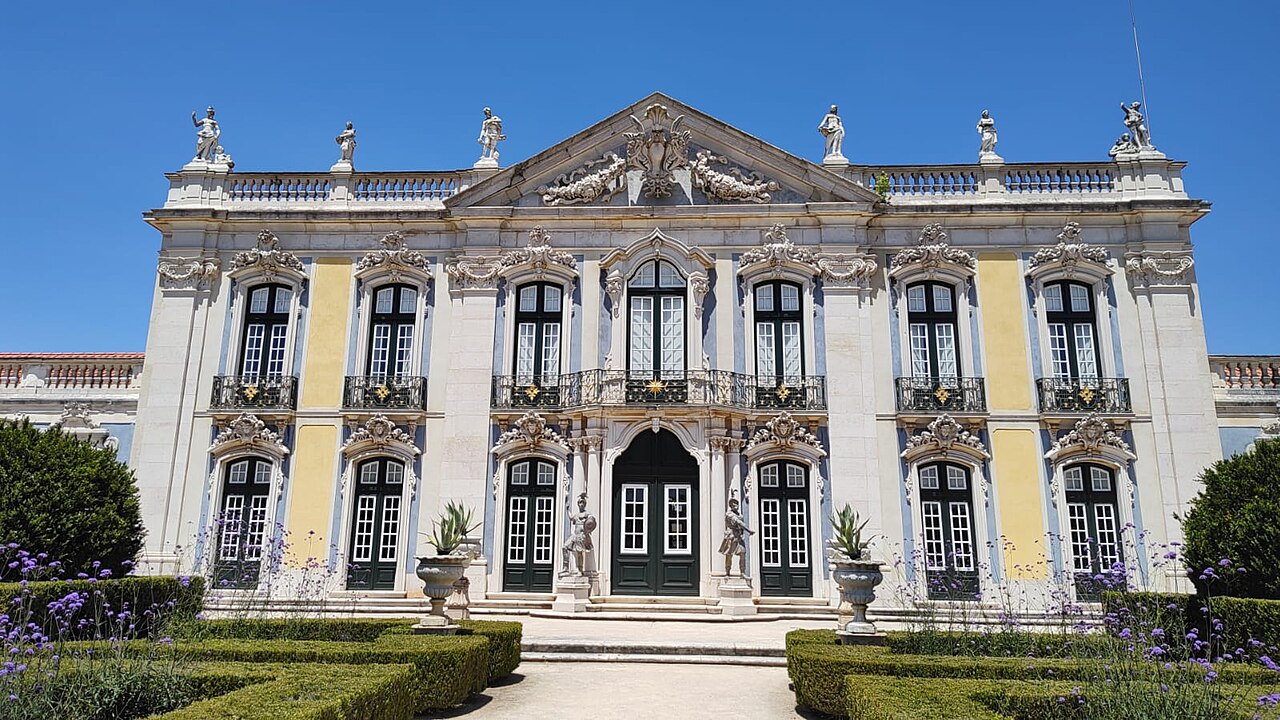
Cropped preview; see the original photograph. The photograph does not confirm the venue’s present condition.
01 / Building stories
Read a building, discover a way of living.
Construction began in 1747, initially for Pedro de Bragança's summer residence; the palace later became a royal home. Interiors and gardens organise the setting for court life. It stands in Queluz and should be planned as a separate stop from the hilltop palaces.
What to notice
See how garden axes extend doors, windows and sightlines.
Rules organise space and may also constrain it. Ask who benefits from an arrangement, who makes room and whether it can be adjusted.
Start with the architecture
The palace extends visually beyond its walls: paths and rooms align, emphasising some views and hiding others. Notice how a permitted stopping point arranges the landscape ahead.
Bring the question into everyday life
A clear axis guides the body and influences where we stop. This sensation helps read courtly space without representing every historical experience. What balance of plans and free time would you want in a day?
Try an observation here
Compare a layout that helps you navigate with a corner where you would rather linger freely.
When does a rule help you, and when does it constrain you?
A contemporary cultural reading by Xiaoxiong inspired by the I Ching. The connection with the building is an editorial perspective, not the architect’s intention or a documented historical influence. It is not fortune-telling.
03 / Nearby life
A nearby table
Dining map records within three kilometres in a straight line of the reference point. Walls, railways and slopes may lengthen the journey. Check the entrance and whether the business is open.
The map may omit businesses. Records do not confirm trading status, menus or bookings. Records with an address are shown by default; you can include the others.
04 / The travellers’ Bench
Sit for a while. Leave an observation.
When does a rule help you, and when does it constrain you?