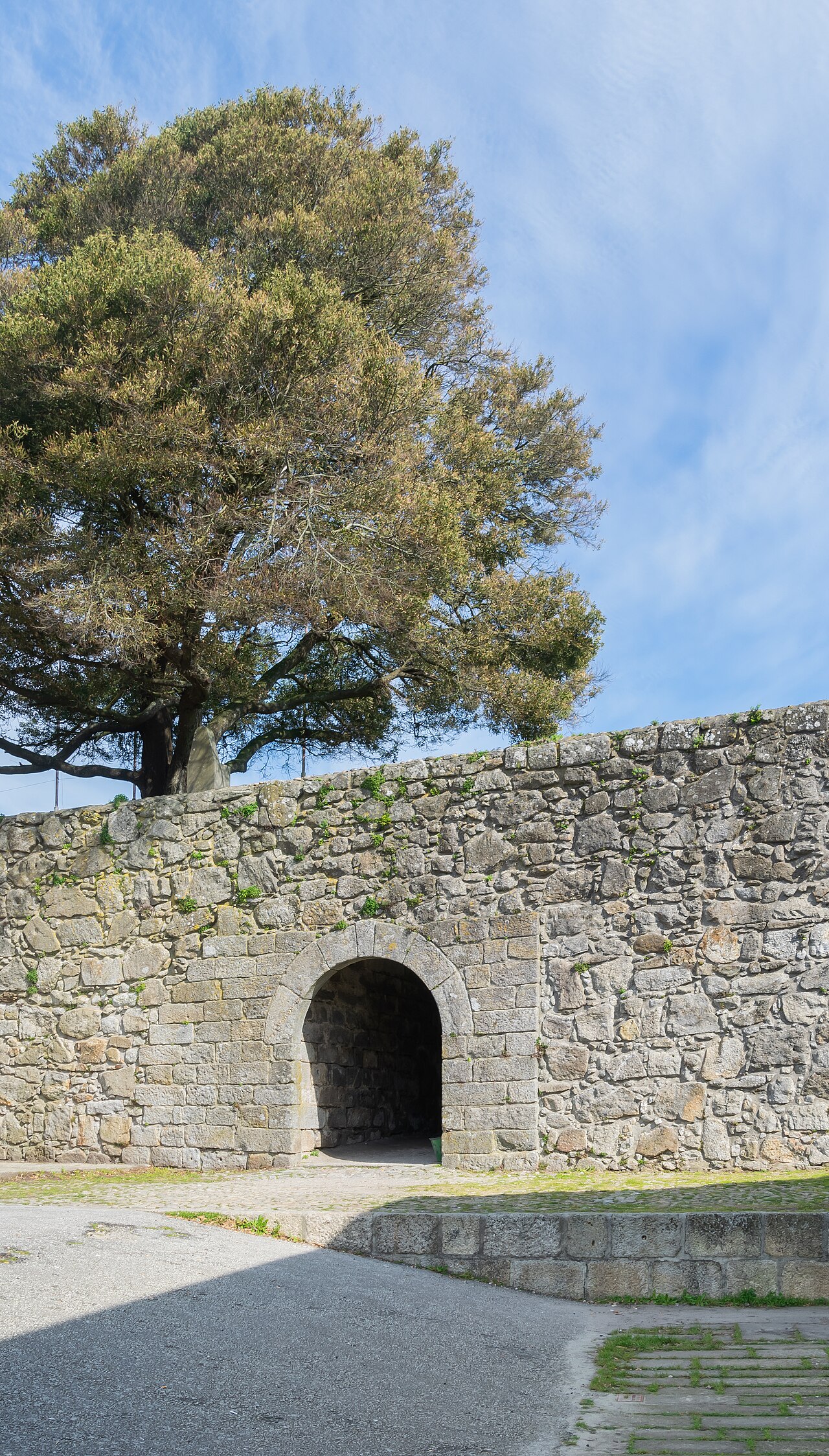
Cropped preview; see the original photograph. The photograph does not confirm the venue’s present condition.
01 / Building stories
Read a building, discover a way of living.
Near the Lima estuary, the fort preserves an earlier tower and later defensive enlargements. Its polygonal layout reflects successive military adaptations.
From authorised public areas, observe angles, thickness and the relationship with the river mouth.
Present access differs from historical use. Confirm courtyards, interiors and walls before entering; a map outline does not authorise climbing.
What to notice
Compare angles and estuary from safe public areas; do not climb the walls.
The Abysmal suggests understanding conditions before acting, especially near water and physical boundaries.
Start with the architecture
The wall organises sight and passage beside a moving estuary.
Bring the question into everyday life
Checking exits, weather and companions’ needs prepares a calmer exploration.
Try an observation here
Before starting, confirm the open area and the way back to the public street.
Which condition most needs checking before your next departure?
A contemporary cultural reading by Xiaoxiong inspired by the I Ching. The connection with the building is an editorial perspective, not the architect’s intention or a documented historical influence. It is not fortune-telling.
03 / Nearby life
A nearby table
Dining map records within three kilometres in a straight line of the reference point. Walls, railways and slopes may lengthen the journey. Check the entrance and whether the business is open.
This selection covers the current municipality. Near hills, rivers and municipal boundaries, plan transport using actual roads.
The map may omit businesses. Records do not confirm trading status, menus or bookings. Records with an address are shown by default; you can include the others.
04 / The travellers’ Bench
Sit for a while. Leave an observation.
Which condition most needs checking before your next departure?