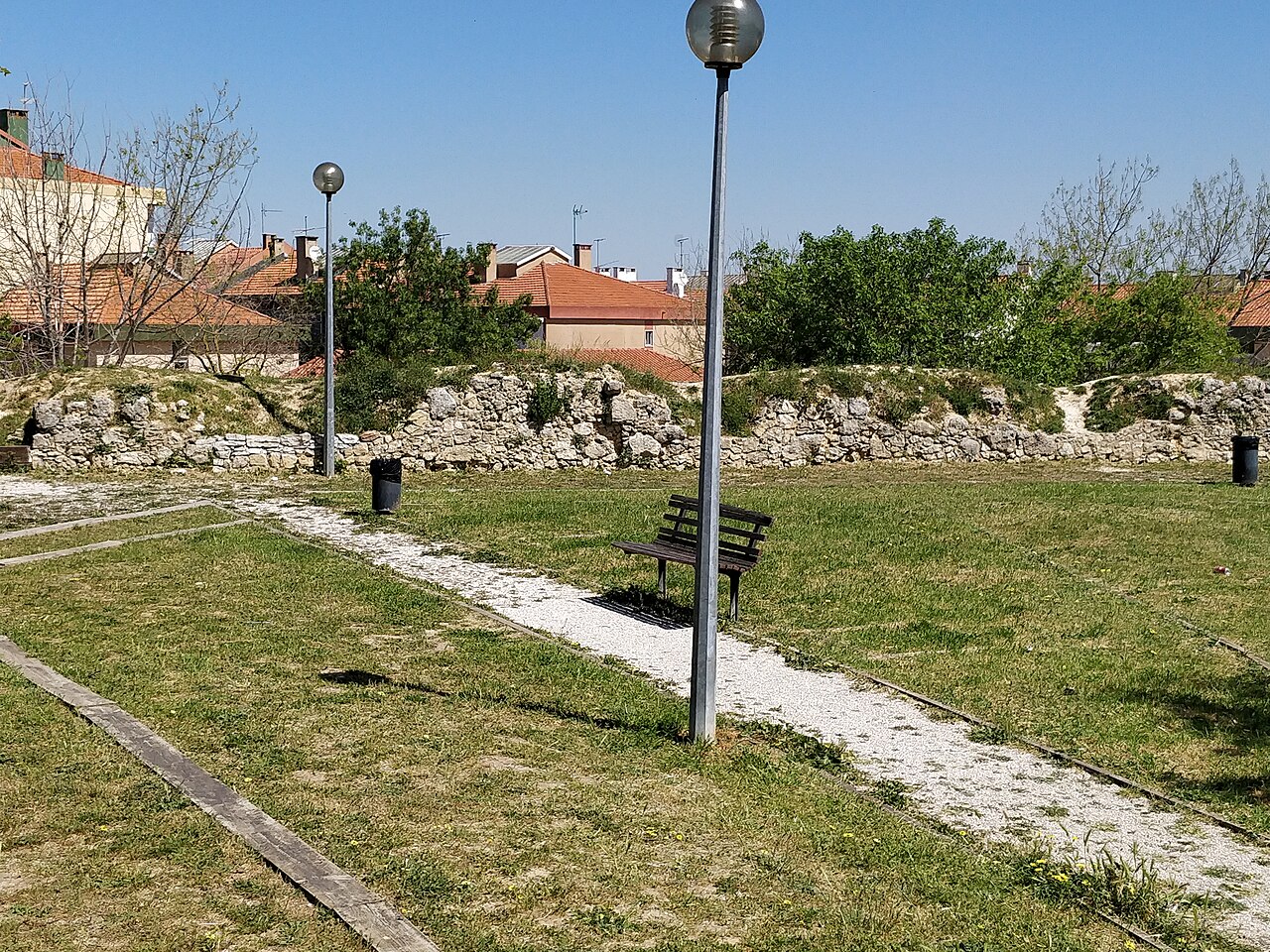
Cropped preview; see the original photograph. The photograph does not confirm the venue’s present condition.
01 / Building stories
Read a building, discover a way of living.
Military work 38 belongs to the second line of the Lines of Torres Vedras, built in the defensive programme of 1809–1811. Excavations in 2008–2009 revealed features including the magazine and firing positions; an interpretation centre helps explain them.
The fort uses terrain and sightlines to organise defence. Relate slopes, edges and openings along the permitted route, reading the remains with the on-site interpretation.
Centre and outdoor remains may have different access arrangements. Watch your footing and do not climb structures.
What to notice
Along the open route, compare changes in level, openings and sightlines.
Gen suggests a deliberate pause. Stopping helps us see and recognise boundaries; at an archaeological site, respecting them is part of understanding.
Leave room in your itinerary. See where you are placing your feet before choosing the next step.
Start with the architecture
Observe without climbing or crossing barriers; remains are not play equipment.
Bring the question into everyday life
Where would you deliberately leave a pause in today’s itinerary?
Try an observation here
Pause safely and note three layers in the view.
When does stopping help you move forward more clearly?
A contemporary cultural reading by Xiaoxiong inspired by the I Ching. The connection with the building is an editorial perspective, not the architect’s intention or a documented historical influence. It is not fortune-telling.
03 / Nearby life
A nearby table
Dining map records within three kilometres in a straight line of the reference point. Walls, railways and slopes may lengthen the journey. Check the entrance and whether the business is open.
The map may omit businesses. Records do not confirm trading status, menus or bookings. Records with an address are shown by default; you can include the others.
04 / The travellers’ Bench
Sit for a while. Leave an observation.
When does stopping help you move forward more clearly?