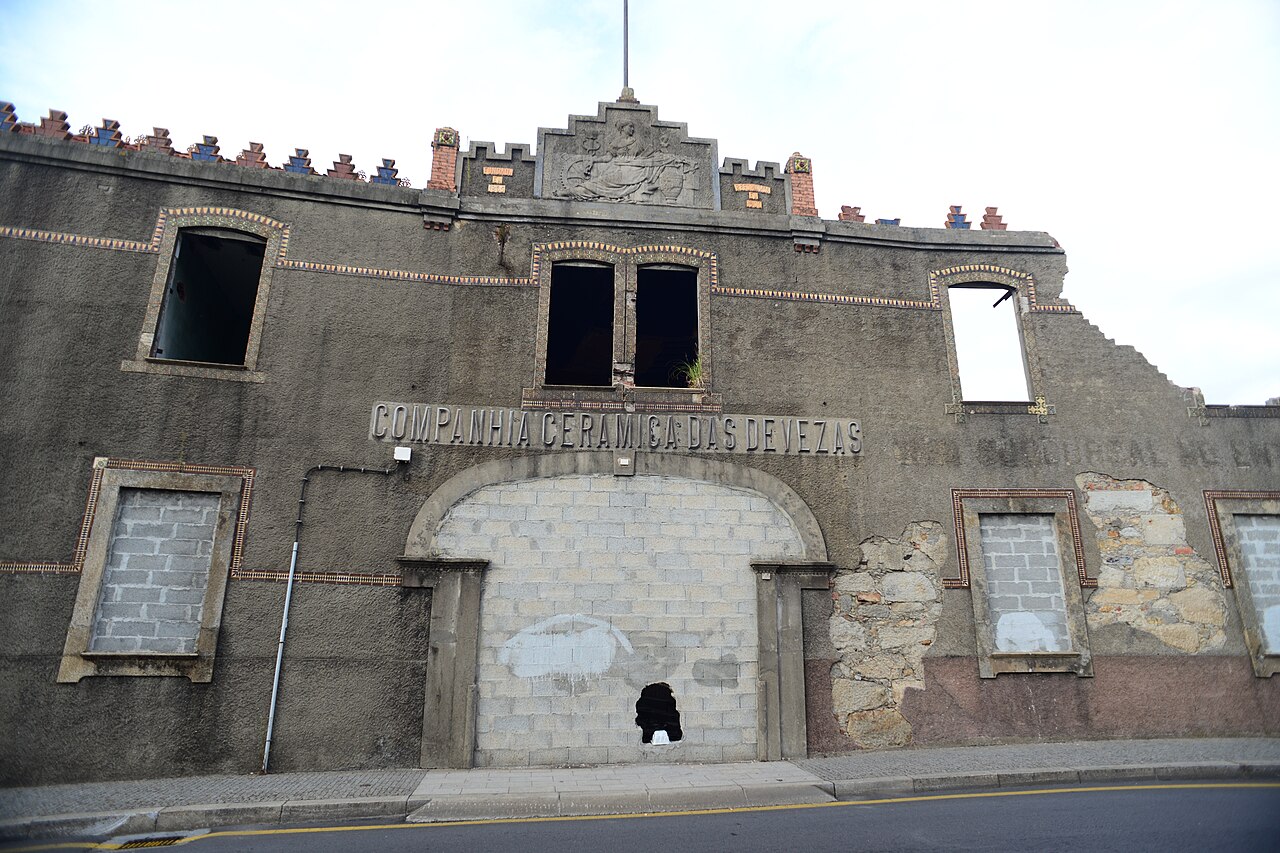
Cropped preview; see the original photograph. The photograph does not confirm the venue’s present condition.
01 / Building stories
Read a building, discover a way of living.
Devesas reveals the production behind urban decoration. The heritage inventory dates the Gaia company’s inauguration to 1865. Its railway setting connects craft, transport and urban growth. The Porto materials showroom belongs to that history but is a different building.
From the public street, examine the entrance and visible fronts. Consider the people who designed, moulded, fired and transported the materials. Connect this reading with the Teixeira Lopes House Museum: how does an idea enter everyday streets?
Municipal plans proposed a museum on the former industrial site; a proposal does not establish opening. This stop is for exterior observation, without assured factory or museum access. Historical photographs do not establish present conditions.
What to notice
Observe entrance, ornament and scale from the pavement; do not cross barriers or enter industrial buildings.
Transformation invites attention to the conditions turning material into objects and experience into craft. Notice the work supporting the result.
Start with the architecture
A factory brings production stages together. From outside, consider entry, transport and display without inventing processes you cannot observe.
Bring the question into everyday life
Reuse is more than a change of function. A preserved front can still omit working lives. Distinguish completed work, proposals and hopes; imagine a public future that also retains specific experiences.
Try an observation here
Record one decorative detail and two production stages you would like to investigate.
What should an old factory retain when its use changes?
A contemporary cultural reading by Xiaoxiong inspired by the I Ching. The connection with the building is an editorial perspective, not the architect’s intention or a documented historical influence. It is not fortune-telling.
03 / Nearby life
A nearby table
Dining map records within three kilometres in a straight line of the reference point. Walls, railways and slopes may lengthen the journey. Check the entrance and whether the business is open.
This selection covers neighbours within Gaia municipality. The opposite Douro bank belongs to Porto; river crossings, slopes and railways change actual routes. Plan transport first.
The map may omit businesses. Records do not confirm trading status, menus or bookings. Records with an address are shown by default; you can include the others.
04 / The travellers’ Bench
Sit for a while. Leave an observation.
What should an old factory retain when its use changes?