Ashore and at sea
A visitor sees a coastal scene; a navigator seeks orientation. The same tower takes on different meanings from these positions. Its reading should reach beyond the spot from which it is photographed.
Parte del contenido está en inglés.Leer el original en portugués →
CAS-003 / Bay & old town
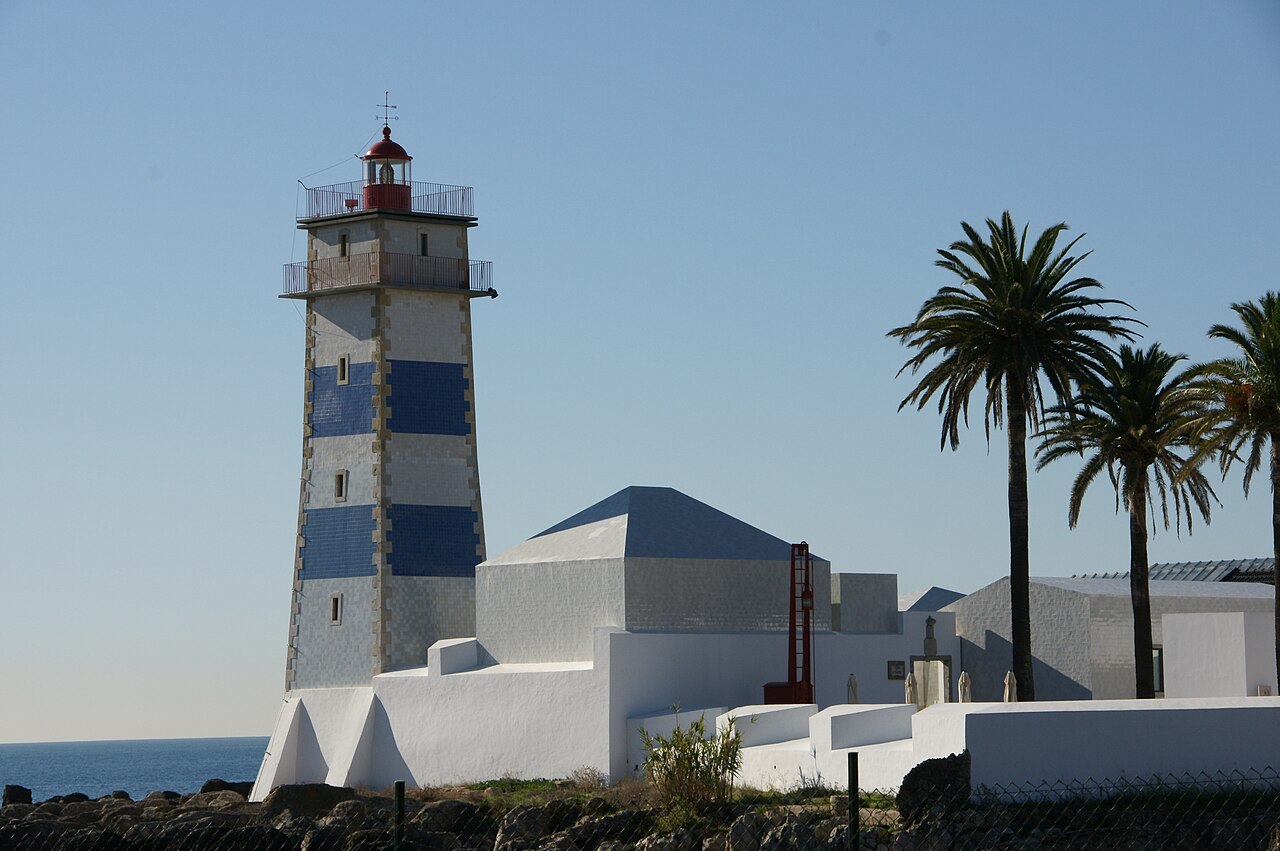
Farol Museu de Santa Marta
Rua do Farol de Santa Marta, 2750-341 Cascais
01 / Historias de edificios
The lighthouse first shone on 1 March 1868 and was automated in 1981. The museum opened in 2007 through cooperation between the municipality and the Navy. Its equipment and keepers’ work reveal the continuing care behind a coastal light.
From the public path, compare the blue-and-white tower with the museum’s low buildings. Imagine what the same light means to someone ashore and someone at sea.
Fuente ↓02 / I Ching reflections
Li: the support and care behind a light.
Above · Li · Fire
Below · Li · Fire
Read the six lines from bottom to top ↑
Zhou Yi · Commentary on the Image · Chinese excerpt
明两作,离。Light rises again: Li. — Editorial translation of the excerpt
Original text and context ↗Two lights rise one after the other. Li suggests attachment: light needs something to rest on before it can illuminate its surroundings. When you see the light, notice also what keeps sustaining it.
This excerpt gives the natural image that opens the Commentary on the Image. The full passage relates it to personal conduct or governance in its historical context. Follow the source to read it in full. Applying it to buildings today is Xiaoxiong’s editorial proposal, not a summary of every meaning of the ancient text.
A visitor sees a coastal scene; a navigator seeks orientation. The same tower takes on different meanings from these positions. Its reading should reach beyond the spot from which it is photographed.
The dependence evoked by Li moves attention from light to its supports. Equipment, automation and keepers’ work make reliability a matter of continuing care beyond a first illumination.
The museum brings navigation equipment and keepers’ work into public view. Beyond the objects, we should ask how that work is recorded. Scenic beauty should not remove its maintainers from the story.
Take a question to the bench
When a light becomes scenery, do we still remember who needs it?
Go to the bench and note what I saw →A contemporary cultural interpretation by Xiaoxiong. The diagram and excerpt have a source; the building connection is editorial, not architectural intent, historical I Ching influence or the venue’s position.
03 / Vida del barrio
Abrir mesas cercanas · filtros y cómo llegar →
Locales a tres kilómetros en línea recta del edificio. Muros, vías y pendientes pueden alargar el recorrido; comprueba la entrada y si el local está abierto.
Comprobando la red Banco y las reclamaciones…
El directorio puede tener omisiones. Los registros no confirman apertura, carta ni reservas. Se muestran primero las direcciones completas.
04 / El Banco
When a light becomes scenery, do we still remember who needs it?
Building reference point: 38.690595, -9.421266. Punto de referencia para buscar lugares cercanos; no confirma la entrada pública.
Jaime Silva · CC BY-SA 3.0 · Ver la fotografía original ↗
La presentación puede recortar la imagen. Consulta el original. La foto no representa el estado actual del lugar.
Consultado: