Clues in the space
Arches alternate mass and space. Observe supports, crowns and terrain without assuming that water still flows today. Present conservation is a separate question. A safe viewing position comes before the photograph.
Parte del contenido está en inglés.Leer el original en portugués →
LRS-005 / Tojal
Rua dos Arcos, Santo Antão do Tojal
01 / Historias de edificios
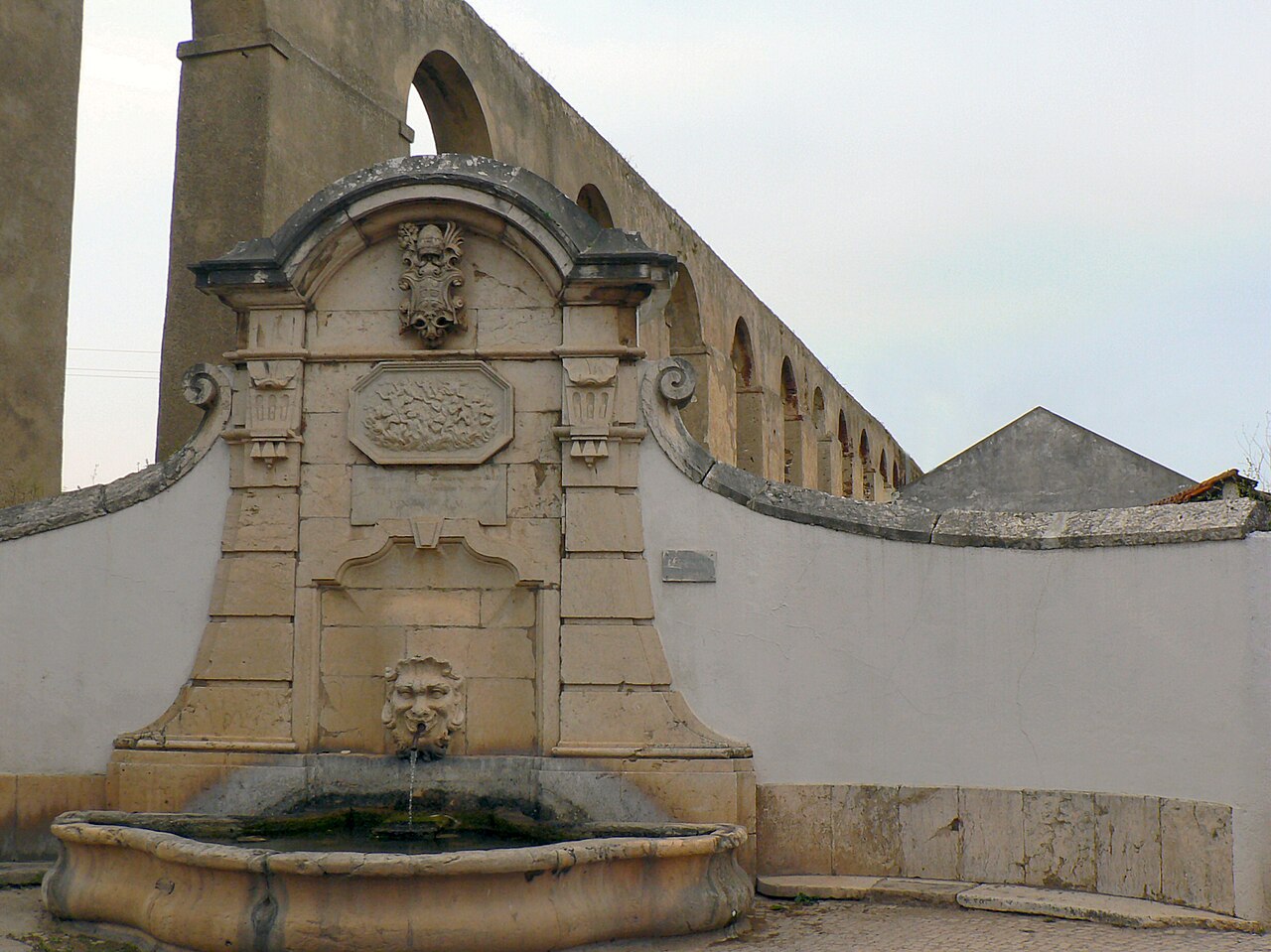
The square’s fountain has a longer route behind it. Tojal’s aqueduct carried water from the Pintéus area to the ensemble. Municipal information describes roughly two kilometres and more than ninety arches. A water-supply need became a visible structural rhythm.
A section seen from a public road raises questions about slopes, supports and distribution. The aqueduct’s survival does not make its whole length an open footpath. Our reference point is on Rua dos Arcos; it guarantees neither a continuous walk nor safe drinking water.
Compare neighbouring arches from a safe pedestrian area. Do not climb, walk on top of the aqueduct or stand in the carriageway for photographs.
Fuente ↓02 / I Ching reflections
Before water reaches our hands, it depends on terrain, infrastructure and maintenance. Recognising these stages makes care for public resources concrete.
Above · Kan · Water
Below · Xun · Wind / wood
Read the six lines from bottom to top ↑
Zhou Yi · Commentary on the Image · Chinese excerpt
木上有水,井。Water is above wood: Jing. — Editorial translation of the excerpt
Original text and context ↗A shared resource needs access and maintenance. Jing looks beyond a facility to relationships of provision: how do water, knowledge or services reach people, and who sustains that continuity?
This excerpt gives the natural image that opens the Commentary on the Image. The full passage relates it to personal conduct or governance in its historical context. Follow the source to read it in full. Applying it to buildings today is Xiaoxiong’s editorial proposal, not a summary of every meaning of the ancient text.
Arches alternate mass and space. Observe supports, crowns and terrain without assuming that water still flows today. Present conservation is a separate question. A safe viewing position comes before the photograph.
Compare neighbouring arches from a safe pedestrian area. Do not climb, walk on top of the aqueduct or stand in the carriageway for photographs.
When opening a tap or turning on a light, much supporting work remains unseen. Learn one stage in a resource’s journey and take a practical step: avoiding waste or reporting damage also cares for shared life.
Take a question to the bench
Which everyday resource would you like to understand at its source?
Go to the bench and note what I saw →A contemporary cultural interpretation by Xiaoxiong. The diagram and excerpt have a source; the building connection is editorial, not architectural intent, historical I Ching influence or the venue’s position.
03 / Vida del barrio
Abrir mesas cercanas · filtros y cómo llegar →
Locales a tres kilómetros en línea recta del edificio. Muros, vías y pendientes pueden alargar el recorrido; comprueba la entrada y si el local está abierto.
Comprobando la red Banco y las reclamaciones…
El directorio puede tener omisiones. Los registros no confirman apertura, carta ni reservas. Se muestran primero las direcciones completas.
04 / El Banco
Which everyday resource would you like to understand at its source?
Paulo Juntas · CC BY-SA 2.5 · Ver la fotografía original ↗
La presentación puede recortar la imagen. Consulta el original. La foto no representa el estado actual del lugar.
Consultado: 2026-10-21