Clues in the space
Doors, passages and courtyards still guide movement, while cases, labels and reception introduce new needs. Observe how they meet: preservation does not mean freezing everything.
Parte del contenido está en inglés.Leer el original en portugués →
LRS-002 / Loures and Conventinho
Estrada Nacional 8, km 4,3, 2660-346 Santo António dos Cavaleiros
01 / Historias de edificios
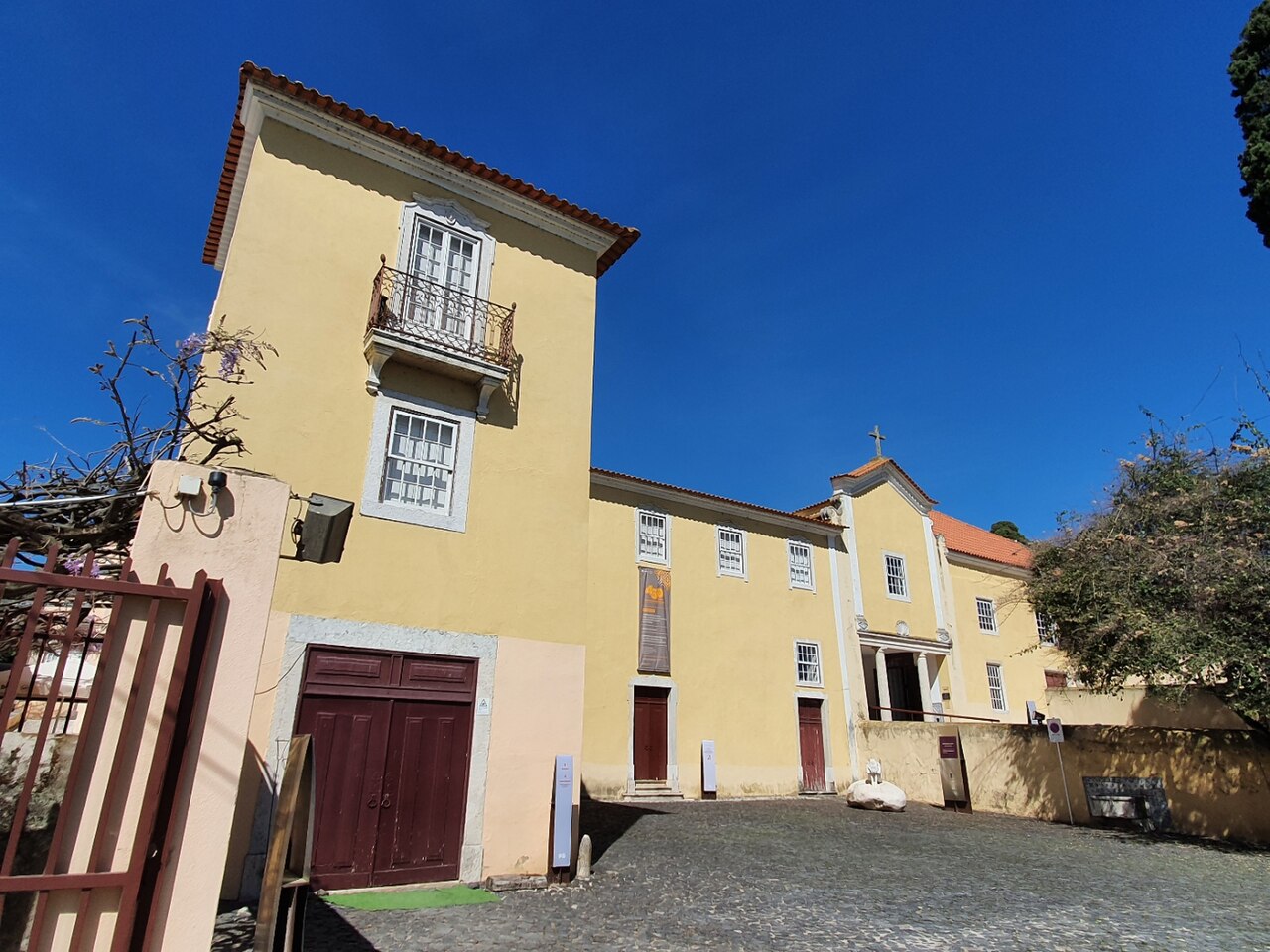
This sixteenth-century Franciscan convent later accommodated different occupants and uses. After acquiring the estate, the municipality turned it into a public place of local memory; the municipal museum opened here in 1998. The transition from convent to museum is another interpretation of the same house.
Between exhibition, chapel and garden, a tool, local record or path to a courtyard brings history closer to ordinary lives. Follow the permitted route and read the building together with its collections.
Compare the scale of courtyard, chapel and open galleries. Choose one local everyday object and read its label carefully.
Fuente ↓02 / I Ching reflections
Turning an old space into a museum requires more than repairing its appearance: memory needs to be understandable and accessible to people today.
Above · Li · Fire
Below · Xun · Wind / wood
Read the six lines from bottom to top ↑
Zhou Yi · Commentary on the Image · Chinese excerpt
木上有火,鼎。Fire is above wood: Ding. — Editorial translation of the excerpt
Original text and context ↗Wood and fire give transformation an image. Ding also suggests a supporting vessel: an old space can hold new activities when structure, use and care work together.
This excerpt gives the natural image that opens the Commentary on the Image. The full passage relates it to personal conduct or governance in its historical context. Follow the source to read it in full. Applying it to buildings today is Xiaoxiong’s editorial proposal, not a summary of every meaning of the ancient text.
Doors, passages and courtyards still guide movement, while cases, labels and reception introduce new needs. Observe how they meet: preservation does not mean freezing everything.
Compare the scale of courtyard, chapel and open galleries. Choose one local everyday object and read its label carefully.
Before renewing an object, identify what it should continue to carry: a memory, a useful function or a way to help someone. A clearly stated need gives change a direction.
Take a question to the bench
Which part of ordinary life would you preserve for those who come later?
Go to the bench and note what I saw →A contemporary cultural interpretation by Xiaoxiong. The diagram and excerpt have a source; the building connection is editorial, not architectural intent, historical I Ching influence or the venue’s position.
03 / Vida del barrio
Abrir mesas cercanas · filtros y cómo llegar →
Locales a tres kilómetros en línea recta del edificio. Muros, vías y pendientes pueden alargar el recorrido; comprueba la entrada y si el local está abierto.
Comprobando la red Banco y las reclamaciones…
El directorio puede tener omisiones. Los registros no confirman apertura, carta ni reservas. Se muestran primero las direcciones completas.
04 / El Banco
Which part of ordinary life would you preserve for those who come later?
GualdimG · CC BY-SA 4.0 · Ver la fotografía original ↗
La presentación puede recortar la imagen. Consulta el original. La foto no representa el estado actual del lugar.
Consultado: 2026-10-21