Clues in the space
Ding holds a new public role. The church retains form while the museum brings questions. Transformation can let use and space explain one another without erasing the past.
Parte del contenido está en inglés.Leer el original en portugués →
MRV-002 / Hilltop village
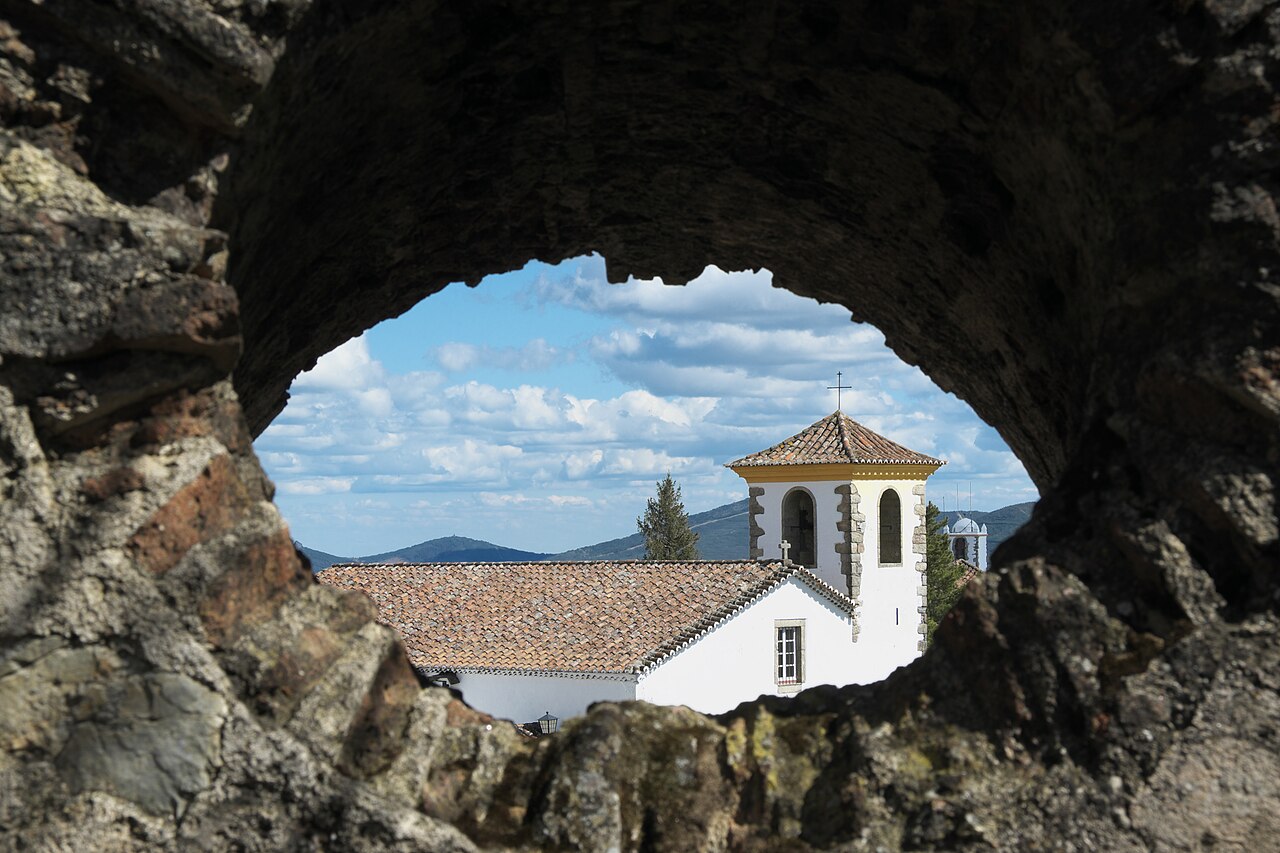
Museu Municipal — Igreja de Santa Maria
Largo de Santa Maria, Marvão
01 / Historias de edificios
Housed in Santa Maria Church, the museum uses a former religious space to preserve and tell local memory. Near the castle approach, it shifts attention from distant landscape to a particular object.
Notice how objects are selected, named and placed. A museum cannot contain a place’s whole life, but it can make overlooked material visible. Give time to both building and display.
Confirm opening and read the former church’s space as well as the exhibits, without touching objects.
Fuente ↓02 / I Ching reflections
Ding offers a metaphor of holding and transformation. A space matters both for what it preserves and for needs it can receive. Change also requires continuing maintenance and use.
Above · Li · Fire
Below · Xun · Wind / wood
Read the six lines from bottom to top ↑
Zhou Yi · Commentary on the Image · Chinese excerpt
木上有火,鼎。Fire is above wood: Ding. — Editorial translation of the excerpt
Original text and context ↗Wood and fire give transformation an image. Ding also suggests a supporting vessel: an old space can hold new activities when structure, use and care work together.
This excerpt gives the natural image that opens the Commentary on the Image. The full passage relates it to personal conduct or governance in its historical context. Follow the source to read it in full. Applying it to buildings today is Xiaoxiong’s editorial proposal, not a summary of every meaning of the ancient text.
Ding holds a new public role. The church retains form while the museum brings questions. Transformation can let use and space explain one another without erasing the past.
Confirm opening and read the former church’s space as well as the exhibits, without touching objects.
Think of something you own but rarely use. Could repair, sharing or adaptation return it to daily life? Even a small transformation needs care for its future users.
Take a question to the bench
Which everyday object would you choose to introduce your home place?
Go to the bench and note what I saw →A contemporary cultural interpretation by Xiaoxiong. The diagram and excerpt have a source; the building connection is editorial, not architectural intent, historical I Ching influence or the venue’s position.
03 / Vida del barrio
Abrir mesas cercanas · filtros y cómo llegar →
Locales a tres kilómetros en línea recta del edificio. Muros, vías y pendientes pueden alargar el recorrido; comprueba la entrada y si el local está abierto.
Comprobando la red Banco y las reclamaciones…
Esta selección abarca el municipio actual. Planifica el trayecto por carreteras y caminos reales.
El directorio puede tener omisiones. Los registros no confirman apertura, carta ni reservas. Se muestran primero las direcciones completas.
04 / El Banco
Which everyday object would you choose to introduce your home place?
GFreihalter · CC BY-SA 3.0 · Ver la fotografía original ↗
La presentación puede recortar la imagen. Consulta el original. La foto no representa el estado actual del lugar.
Consultado: 2026-10-23