Clues in the space
A limited opening asks people to make room for one another. A boundary can exclude, but can also welcome by allowing passage. Jie becomes a practical exercise in sharing space.
Parte del contenido está en inglés.Leer el original en portugués →
OBI-002 / Within the walls
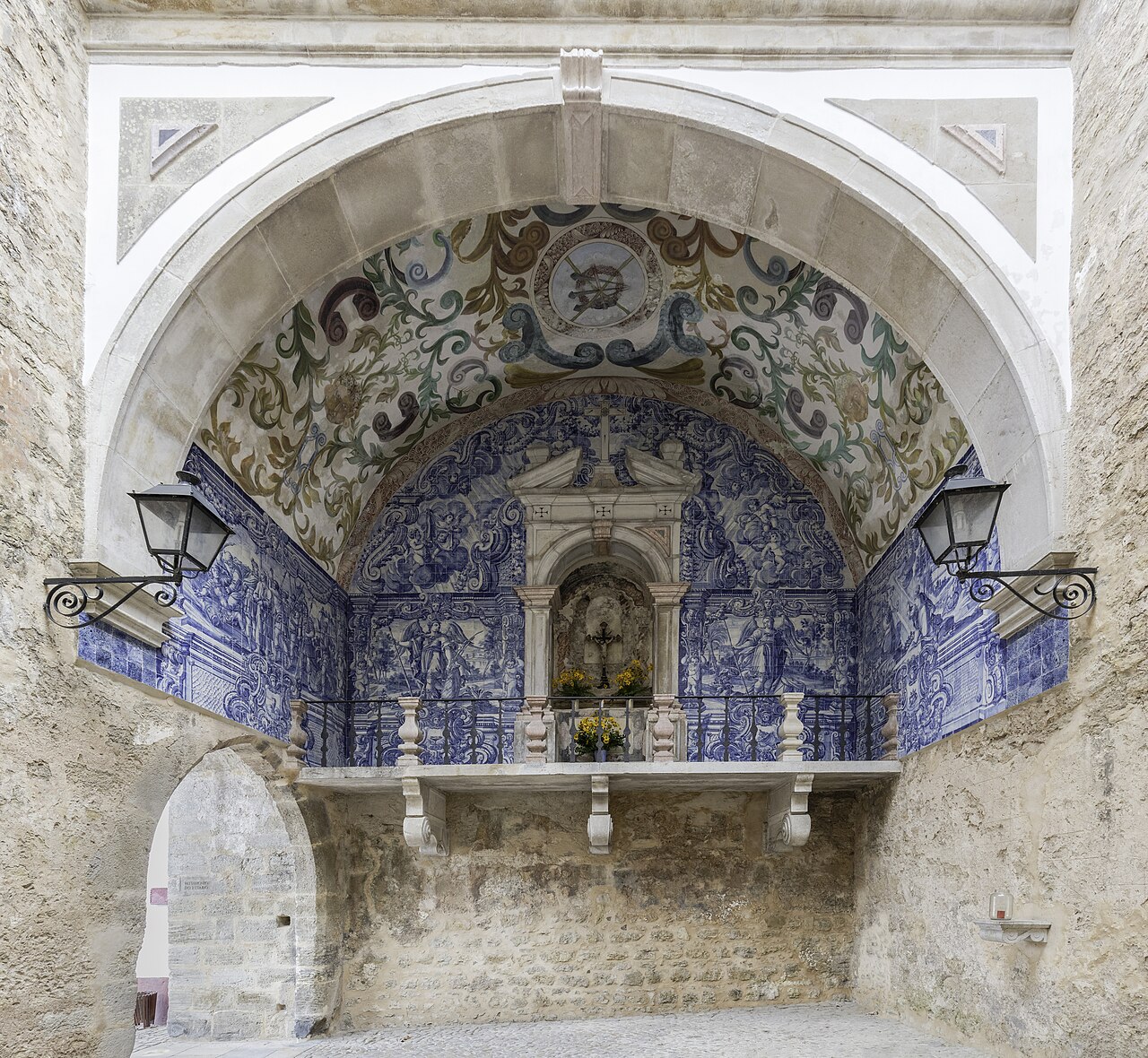
Porta da Vila
Porta da Vila, Óbidos
01 / Historias de edificios
The municipal guide identifies the main entrance and its interior oratory. Defence, devotion and passage meet in a small space.
Without blocking pedestrians, watch how people enter, turn and pause, then look back. A gate also arranges the sequence of a first encounter with a town.
Keep the passage clear and compare light inside and outside. Pause somewhere wider when it is busy.
Fuente ↓02 / I Ching reflections
Jie draws attention to boundaries. Gates, hours and rules distribute space and opportunities. A limit needs reason and clarity; when use changes, rules deserve review too.
Above · Kan · Water
Below · Dui · Lake
Read the six lines from bottom to top ↑
Zhou Yi · Commentary on the Image · Chinese excerpt
泽上有水,节。Water is above the lake: Jie. — Editorial translation of the excerpt
Original text and context ↗Capacity has a measure; both excess and shortage affect use. Jie opens rules, capacity and rhythm to discussion: whom do they support, and what room do they leave for different needs?
This excerpt gives the natural image that opens the Commentary on the Image. The full passage relates it to personal conduct or governance in its historical context. Follow the source to read it in full. Applying it to buildings today is Xiaoxiong’s editorial proposal, not a summary of every meaning of the ancient text.
A limited opening asks people to make room for one another. A boundary can exclude, but can also welcome by allowing passage. Jie becomes a practical exercise in sharing space.
Keep the passage clear and compare light inside and outside. Pause somewhere wider when it is busy.
Choose a familiar rule: what does it protect, and whom does it burden? Measure does not remove principles; it brings them into contact with real situations.
Take a question to the bench
What kind of entrance makes you feel welcome?
Go to the bench and note what I saw →A contemporary cultural interpretation by Xiaoxiong. The diagram and excerpt have a source; the building connection is editorial, not architectural intent, historical I Ching influence or the venue’s position.
03 / Vida del barrio
Abrir mesas cercanas · filtros y cómo llegar →
Locales a tres kilómetros en línea recta del edificio. Muros, vías y pendientes pueden alargar el recorrido; comprueba la entrada y si el local está abierto.
Comprobando la red Banco y las reclamaciones…
Esta selección abarca el municipio actual. Planifica el trayecto por carreteras y caminos reales.
El directorio puede tener omisiones. Los registros no confirman apertura, carta ni reservas. Se muestran primero las direcciones completas.
04 / El Banco
What kind of entrance makes you feel welcome?
Diego Delso · CC BY-SA 4.0 · Ver la fotografía original ↗
La presentación puede recortar la imagen. Consulta el original. La foto no representa el estado actual del lugar.
Consultado: 2026-10-23