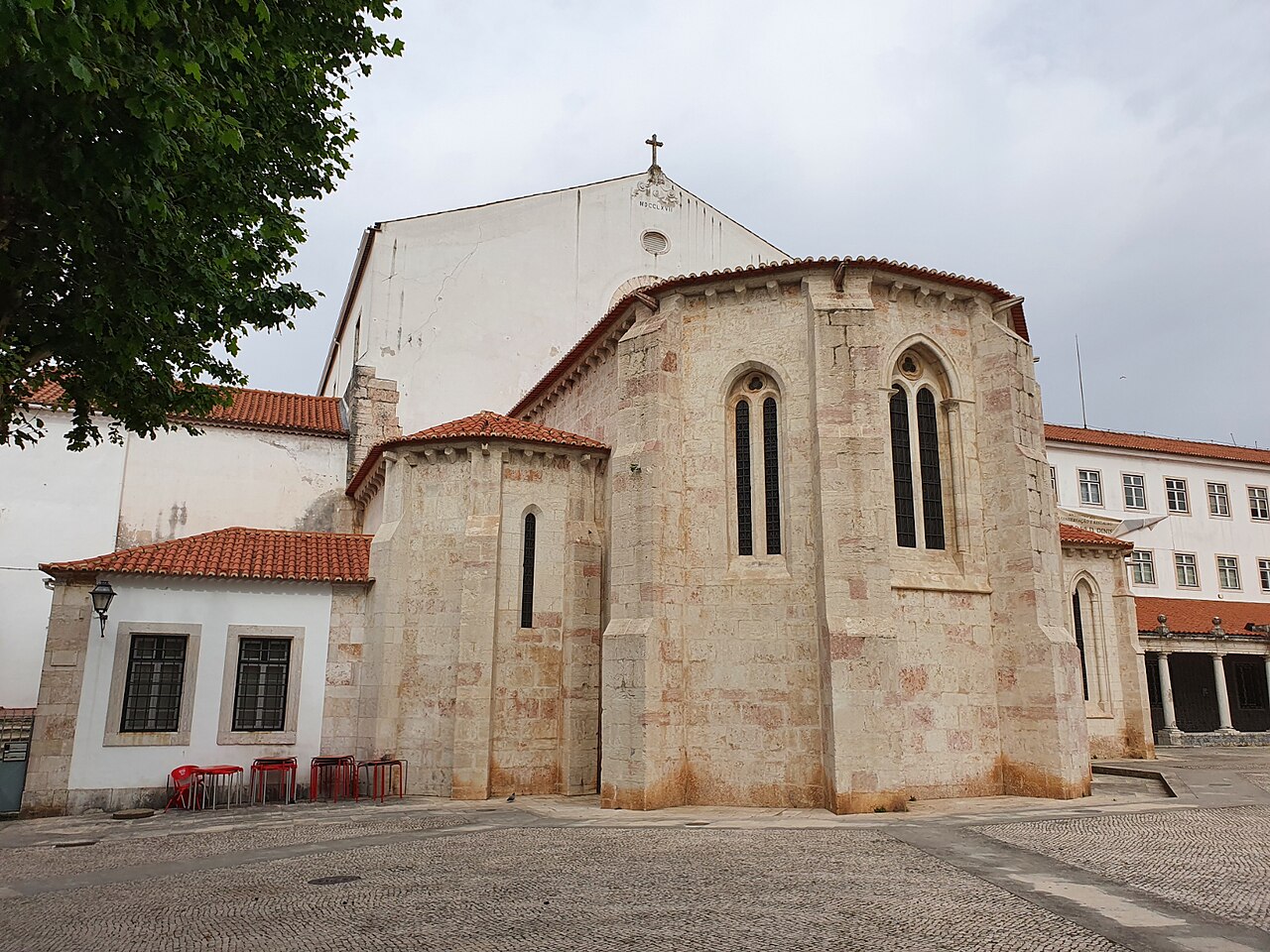
Mosteiro de São Dinis e São Bernardo · Fotografía de archivo · Fecha de la foto 2022-05-21 · GualdimG · CC BY-SA 4.0
01 / Historias de edificios
Lee el lugar, descubre su historia.
Construction of this Cistercian convent began in 1295 with the support of King Dinis. The heritage record links the choice of site to water and terrain, conditions that also shaped the cloisters. The surviving Gothic east end of the church is an important clue to its early architecture.
The complex contains several periods: sixteenth-century cloister works and rebuilding after the 1755 earthquake changed its spaces. King Dinis’s tomb is also preserved here. Look at the junctions between earlier and later work. The king-and-bear story is a foundation legend and should be distinguished from documented dates.
Qué observar
On the authorised route, compare light in the cloister and church, pointed arches, buttresses and later rebuilding. Without a booking, begin with the exterior from the square.
Guan invites us to suspend judgement. The monastery’s scale and order can reveal how quickly we walk and how little a first glance captures. Understanding a place often begins with willingness to stop.
20Guan · 20
Above · Xun · Wind / wood
Below · Kun · Earth
Read the six lines from bottom to top ↑
Solid: yangBroken: yin
Zhou Yi · Commentary on the Image · Chinese excerpt
风行地上,观。
Wind moves over the earth: Guan. — Editorial translation of the excerpt
Looking depends on position and prior experience. Guan invites description before interpretation. Moving to another permitted viewpoint or reading a source may change a first impression.
Original text and context
This excerpt gives the natural image that opens the Commentary on the Image. The full passage relates it to personal conduct or governance in its historical context. Follow the source to read it in full. Applying it to buildings today is Xiaoxiong’s editorial proposal, not a summary of every meaning of the ancient text.
Return to this building · Mosteiro de São Dinis e São Bernardo
01
Clues in the space
The cloister organises movement around a centre. Shade in the gallery contrasts with courtyard light; openings, corners and boundaries guide the feet. Differences between building periods can tell us more than one label for the whole complex.
02
Observe on site
On the authorised route, compare light in the cloister and church, pointed arches, buttresses and later rebuilding. Without a booking, begin with the exterior from the square.
03
Take the question into daily life
Write down what you saw separately from what you think it means. A first glance supplies only a fragment. Ask a specific question before drawing a conclusion in your next conversation, allowing new information to alter your view.
A contemporary cultural interpretation by Xiaoxiong. The diagram and excerpt have a source; the building connection is editorial, not architectural intent, historical I Ching influence or the venue’s position.
Locales a tres kilómetros en línea recta del edificio. Muros, vías y pendientes pueden alargar el recorrido; comprueba la entrada y si el local está abierto.
Comprobando la red Banco y las reclamaciones…
El directorio puede tener omisiones. Los registros no confirman apertura, carta ni reservas. Se muestran primero las direcciones completas.