Clues in the space
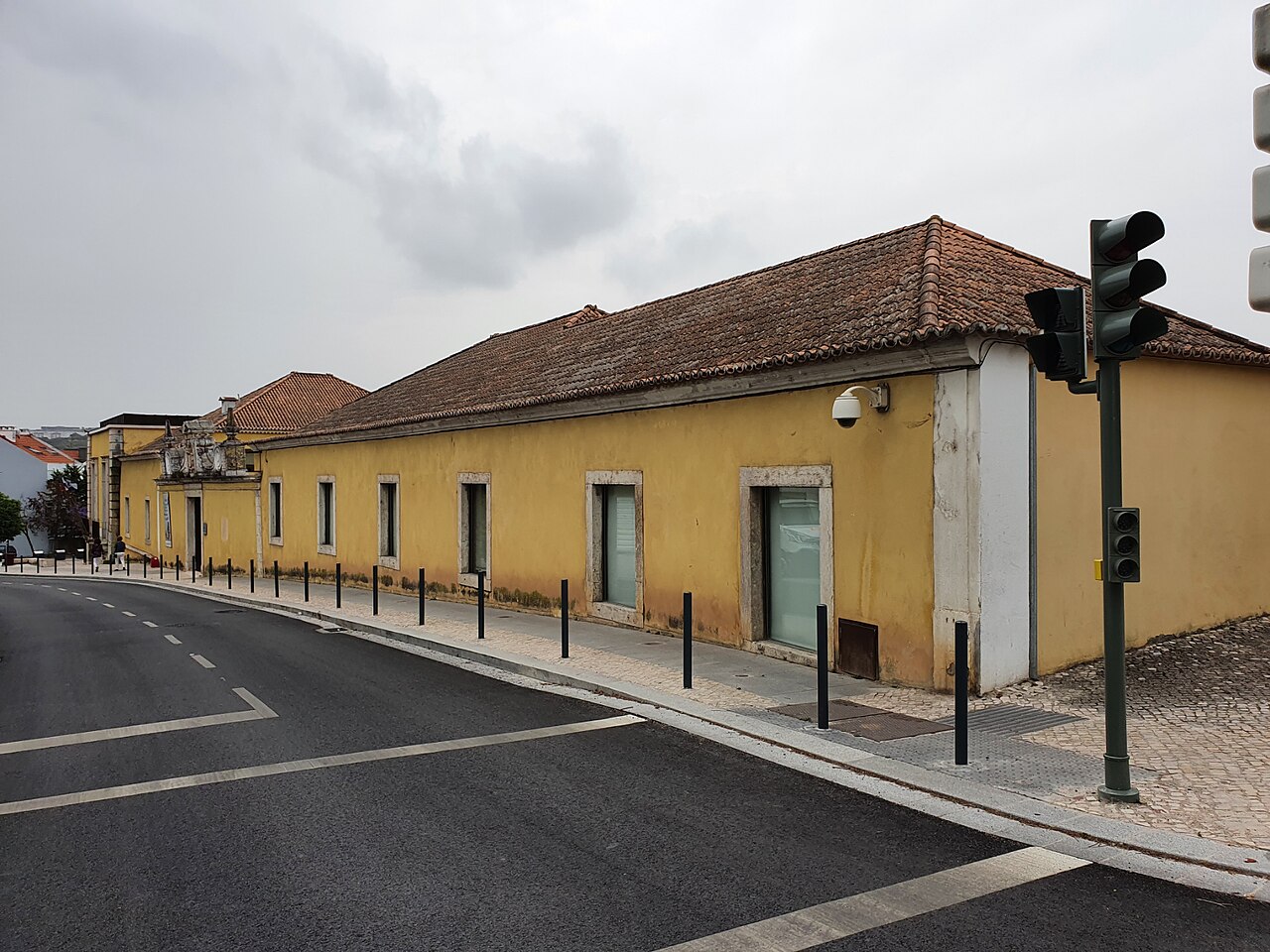
Windows and doors recall the residential scale, while signs and access arrangements serve public administration. Past and present coexist. Continuing use also depends on allowing people’s work to proceed in an orderly way.
Parte del contenido está en inglés.Leer el original en portugués →
ODI-004 / Monastery and old town
Rua Guilherme Gomes Fernandes, Quinta da Memória, 2675-372 Odivelas
01 / Historias de edificios
The municipal tourism guide traces the estate to the seventeenth and eighteenth centuries and records its connection with Rodrigo de Moura Teles. It is consequently also known as the Archbishop’s House. Today it accommodates municipal offices in Odivelas.
Turning a residence into a place for public affairs changes its relationship with the city. From the street, notice how the entrance faces public space and how walls define inside and outside. Continued use keeps history in everyday life, but offices are not a museum open to unrestricted visits.
Compare the façade with the nearby memorial from the public street. Read service notices; an administrative entrance is not automatically a tourist entrance.
Fuente ↓02 / I Ching reflections
Ding offers a way to consider renewal in relation to shared needs. A house may retain its form while its use changes. Ask who benefits from the new use.
Above · Li · Fire
Below · Xun · Wind / wood
Read the six lines from bottom to top ↑
Zhou Yi · Commentary on the Image · Chinese excerpt
木上有火,鼎。Fire is above wood: Ding. — Editorial translation of the excerpt
Original text and context ↗Wood and fire give transformation an image. Ding also suggests a supporting vessel: an old space can hold new activities when structure, use and care work together.
This excerpt gives the natural image that opens the Commentary on the Image. The full passage relates it to personal conduct or governance in its historical context. Follow the source to read it in full. Applying it to buildings today is Xiaoxiong’s editorial proposal, not a summary of every meaning of the ancient text.
Windows and doors recall the residential scale, while signs and access arrangements serve public administration. Past and present coexist. Continuing use also depends on allowing people’s work to proceed in an orderly way.
Compare the façade with the nearby memorial from the public street. Read service notices; an administrative entrance is not automatically a tourist entrance.
Before changing a space, ask what deserves preservation and what needs updating. An unused corner may need a clear purpose, opening hours or regular care more than decoration. Start with a concrete need.
Take a question to the bench
How could an old space you know serve the community again?
Go to the bench and note what I saw →A contemporary cultural interpretation by Xiaoxiong. The diagram and excerpt have a source; the building connection is editorial, not architectural intent, historical I Ching influence or the venue’s position.
03 / Vida del barrio
Abrir mesas cercanas · filtros y cómo llegar →
Locales a tres kilómetros en línea recta del edificio. Muros, vías y pendientes pueden alargar el recorrido; comprueba la entrada y si el local está abierto.
Comprobando la red Banco y las reclamaciones…
El directorio puede tener omisiones. Los registros no confirman apertura, carta ni reservas. Se muestran primero las direcciones completas.
04 / El Banco
How could an old space you know serve the community again?
GualdimG · CC BY-SA 4.0 · Ver la fotografía original ↗
La presentación puede recortar la imagen. Consulta el original. La foto no representa el estado actual del lugar.
Consultado: 2026-10-21