Acknowledging gaps
Unbuilt parts and uncertain authorship should not disappear into a smoother narrative. Leaving a question open can be rigorous.
Parte del contenido está en inglés.Leer el original en portugués →
OPO-022 / Barrios del este
Rua de Bonjóia 185, Porto
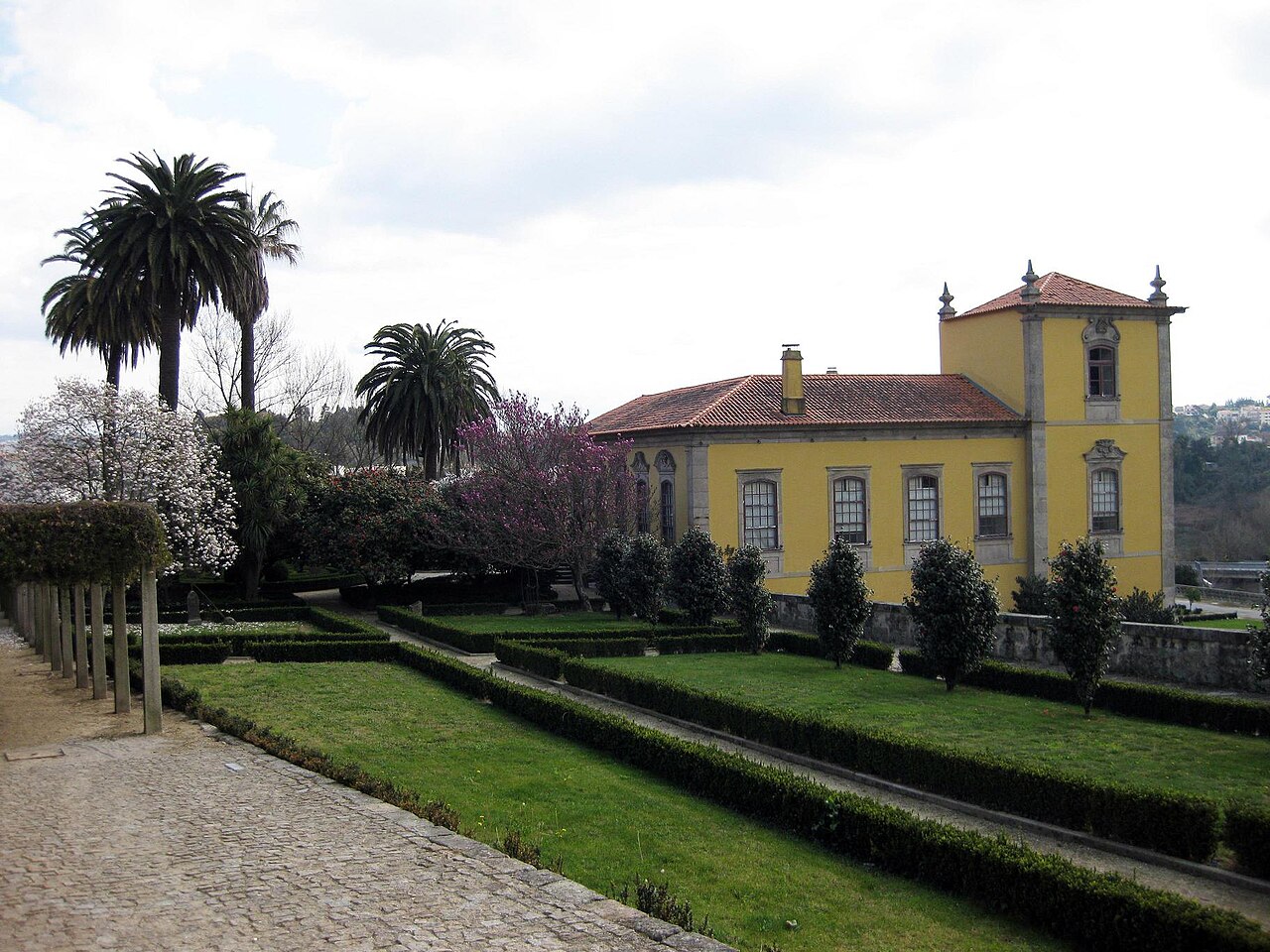
01 / Historias de edificios
Lourenço de Amorim da Gama Lobo commissioned the house in 1759. Its attribution to Nicolau Nasoni remains unconfirmed; Museu do Porto also raises the possibility of a pupil.
The building was never fully completed. Its square tower, southern façade and garden terraces still form a distinctive ensemble. Uncertainty is part of the story too.
Compare tower, façade and terraces from open areas. Keep an attribution separate from proven authorship.
Fuente ↓02 / I Ching reflections
Kun includes recognising limits in both a building and our knowledge of it.
Above · Dui · Lake
Below · Kan · Water
Read the six lines from bottom to top ↑
Zhou Yi · Commentary on the Image · Chinese excerpt
泽无水,困。The lake has no water: Kun. — Editorial translation of the excerpt
Original text and context ↗The water has drained away and the lake runs dry. Kun shows moments of limited conditions: when resources, space or freedom are short, how do people keep their dignity and support one another? Acknowledging hardship is not accepting it as unchangeable.
This excerpt gives the natural image that opens the Commentary on the Image. The full passage relates it to personal conduct or governance in its historical context. Follow the source to read it in full. Applying it to buildings today is Xiaoxiong’s editorial proposal, not a summary of every meaning of the ancient text.
Unbuilt parts and uncertain authorship should not disappear into a smoother narrative. Leaving a question open can be rigorous.
Tower, façade and terraces reward attention without requiring a perfect conclusion.
Take a question to the bench
Can you let the unknown remain unknown in an unfinished story?
Go to the bench and note what I saw →A contemporary cultural interpretation by Xiaoxiong. The diagram and excerpt have a source; the building connection is editorial, not architectural intent, historical I Ching influence or the venue’s position.
03 / Vida del barrio
Abrir mesas cercanas · filtros y cómo llegar →
Locales a tres kilómetros en línea recta del edificio. Muros, vías y pendientes pueden alargar el recorrido; comprueba la entrada y si el local está abierto.
Comprobando la red Banco y las reclamaciones…
El directorio puede tener omisiones. Los registros no confirman apertura, carta ni reservas. Se muestran primero las direcciones completas.
04 / El Banco
Can you let the unknown remain unknown in an unfinished story?
Building reference point: 41.152362, -8.577011. Punto de referencia para buscar lugares cercanos; no confirma la entrada pública.
Henrique Matos · CC BY 2.5 · Ver la fotografía original ↗
La presentación puede recortar la imagen. Consulta el original. La foto no representa el estado actual del lugar.
Consultado: 2026-09-23