Observe on site
Observe water and building as a whole. The wetland is not a backdrop; stay on permitted routes.
Parte del contenido está en inglés.Leer el original en portugués →
SET-019 / Setúbal
01 / Historias de edificios
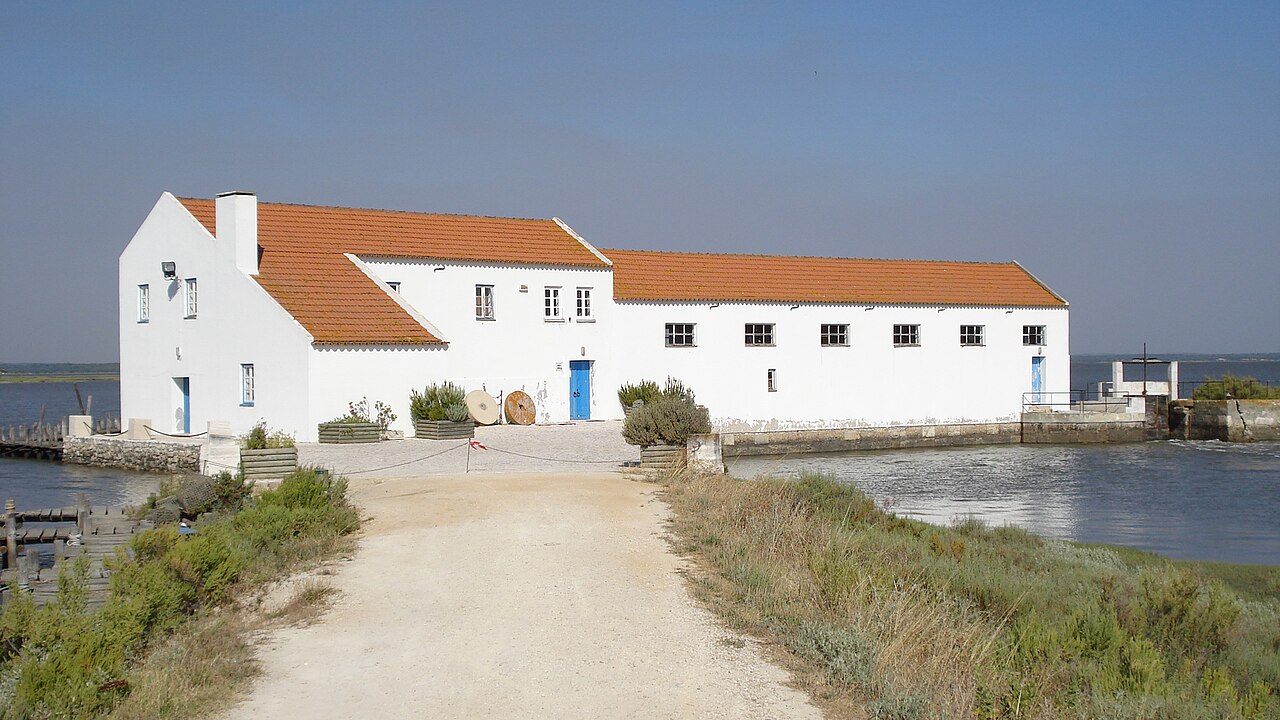
The mill used the difference in water level between tide and reservoir to grind grain. Its interpretation places human activity within the Sado estuary. An inscription dated 1601 is chronological evidence, not proof that every surviving structure dates from that year. The 1601 inscription alone does not establish an exact construction date. The mill once had eight pairs of stones; the surviving installation does not fully reproduce that historical capacity. Distinguish what is described from what remains.
Observe water and building as a whole. The wetland is not a backdrop; stay on permitted routes.
Fuente ↓02 / I Ching reflections
Jing shifts attention from resource users to the conditions sustaining a resource. Caring for the mill also requires caring for water and habitat. Protecting walls while neglecting the estuary would lose the relationship that made the building possible.
Above · Kan · Water
Below · Xun · Wind / wood
Read the six lines from bottom to top ↑
Zhou Yi · Commentary on the Image · Chinese excerpt
木上有水,井。Water is above wood: Jing. — Editorial translation of the excerpt
Original text and context ↗A shared resource needs access and maintenance. Jing looks beyond a facility to relationships of provision: how do water, knowledge or services reach people, and who sustains that continuity?
This excerpt gives the natural image that opens the Commentary on the Image. The full passage relates it to personal conduct or governance in its historical context. Follow the source to read it in full. Applying it to buildings today is Xiaoxiong’s editorial proposal, not a summary of every meaning of the ancient text.
Observe water and building as a whole. The wetland is not a backdrop; stay on permitted routes.
Provision depends on relationships wider than a building. Choose a resource you use and ask where it comes from and which environmental conditions need care.
Take a question to the bench
In protecting the mill, do we also protect life around the tide?
Go to the bench and note what I saw →A contemporary cultural interpretation by Xiaoxiong. The diagram and excerpt have a source; the building connection is editorial, not architectural intent, historical I Ching influence or the venue’s position.
03 / Vida del barrio
Abrir mesas cercanas · filtros y cómo llegar →
Locales a tres kilómetros en línea recta del edificio. Muros, vías y pendientes pueden alargar el recorrido; comprueba la entrada y si el local está abierto.
Comprobando la red Banco y las reclamaciones…
El directorio puede tener omisiones. Los registros no confirman apertura, carta ni reservas. Se muestran primero las direcciones completas.
04 / El Banco
In protecting the mill, do we also protect life around the tide?
Building reference point: 38.528292, -8.803137. Punto de referencia para buscar lugares cercanos; no confirma la entrada pública.
Igiul · CC BY 3.0 · Ver la fotografía original ↗
La presentación puede recortar la imagen. Consulta el original. La foto no representa el estado actual del lugar.
Consultado: 2026-10-04