Observe on site
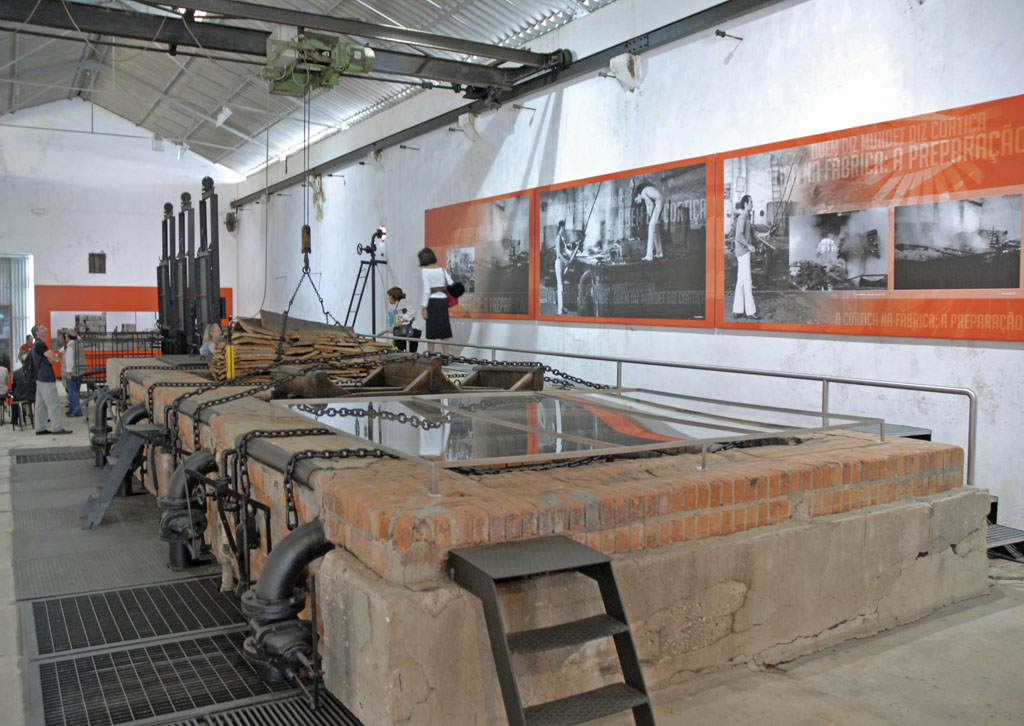
Read the factory as a system: where materials entered, where people worked and how machinery occupied space. Historical interior photographs do not establish current access.
Parte del contenido está en inglés.Leer el original en portugués →
SET-004 / Seixal
01 / Historias de edificios
After production ended, parts of the Mundet cork factory became exhibition spaces within Seixal's municipal ecomuseum. Buildings, machinery and workers' memories connect production with social life. Confirm exhibition access with the museum before visiting. Production ended in 1988; exhibition spaces opened in 1998 and 2000. Read the machinery, power systems and working positions together to understand how production organised the site.
Read the factory as a system: where materials entered, where people worked and how machinery occupied space. Historical interior photographs do not establish current access.
Fuente ↓02 / I Ching reflections
Ge tests a change of use by asking whose experience survives. If a factory displays impressive machines while erasing its workers, transformation can become another form of forgetting. Its new purpose should carry responsibility for the memory of labour.
Above · Dui · Lake
Below · Li · Fire
Read the six lines from bottom to top ↑
Zhou Yi · Commentary on the Image · Chinese excerpt
泽中有火,革。Fire is within the lake: Ge. — Editorial translation of the excerpt
Original text and context ↗Change should respond to changed conditions. Ge subjects new uses to concrete questions: what should remain, what needs renewal and who participates in sustaining the new life?
This excerpt gives the natural image that opens the Commentary on the Image. The full passage relates it to personal conduct or governance in its historical context. Follow the source to read it in full. Applying it to buildings today is Xiaoxiong’s editorial proposal, not a summary of every meaning of the ancient text.
Read the factory as a system: where materials entered, where people worked and how machinery occupied space. Historical interior photographs do not establish current access.
Keeping labour in memory begins with a concrete question: how can today’s visitor learn who worked in this factory?
Take a question to the bench
When the machines stop, whose voices should remain?
Go to the bench and note what I saw →A contemporary cultural interpretation by Xiaoxiong. The diagram and excerpt have a source; the building connection is editorial, not architectural intent, historical I Ching influence or the venue’s position.
03 / Vida del barrio
Abrir mesas cercanas · filtros y cómo llegar →
Locales a tres kilómetros en línea recta del edificio. Muros, vías y pendientes pueden alargar el recorrido; comprueba la entrada y si el local está abierto.
Comprobando la red Banco y las reclamaciones…
El directorio puede tener omisiones. Los registros no confirman apertura, carta ni reservas. Se muestran primero las direcciones completas.
04 / El Banco
When the machines stop, whose voices should remain?
Building reference point: 38.640479, -9.103383. Punto de referencia para buscar lugares cercanos; no confirma la entrada pública.
Jean-Pierre Dalbéra from Paris, France · CC BY 2.0 · Ver la fotografía original ↗
La presentación puede recortar la imagen. Consulta el original. La foto no representa el estado actual del lugar.
Consultado: 2026-10-04